


Many women begin practicing yoga to improve flexibility, reduce stress, or stay physically active. Over time, however, they often discover that yoga offers benefits that extend beyond physical fitness. Regular yoga practice may support emotional well-being, sleep quality, stress management, and overall reproductive health.
As International Yoga Day is observed globally on June 21, it serves as a reminder that long-term health is built through consistent daily habits. For women managing demanding careers, family responsibilities, hormonal fluctuations, fertility concerns, or everyday stress, yoga can become a valuable part of a holistic wellness routine.
At Ferty9 Fertility Center, specialists recognize that women’s health is influenced by multiple interconnected factors, including hormonal balance, sleep, nutrition, physical activity, emotional well-being, and underlying medical conditions. While yoga is not a treatment for infertility, PCOS, or hormonal disorders, it can complement medical care and healthy lifestyle practices.
- Yoga may help reduce stress, improve sleep quality, and support emotional well-being.
- Regular practice may complement medical treatment for PCOS and fertility-related stress.
- Yoga cannot cure infertility or hormonal disorders but may support overall reproductive health.
- Consistency matters more than intensity, and even short sessions can provide benefits.
- Persistent symptoms such as irregular periods, severe menstrual pain, or difficulty conceiving require medical evaluation.
Why Women’s Health Is About More Than Hormones
Women’s health is often discussed in terms of estrogen, progesterone, and reproductive hormones. However, overall well-being involves much more than hormone levels alone.
Sleep quality, nutrition, physical activity, emotional health, stress management, and reproductive function are closely connected. Chronic stress may affect sleep patterns. Poor sleep can influence mood, energy levels, and daily functioning. Lifestyle factors can also impact menstrual health and overall wellness.
This interconnected nature of women’s health is one reason yoga continues to gain popularity. By combining physical movement, breathing techniques, and mindfulness practices, yoga addresses several aspects of well-being simultaneously.
The Growing Importance of Women’s Wellness
According to the World Health Organization (WHO), Polycystic Ovary Syndrome (PCOS) affects an estimated 8% to 13% of women of reproductive age worldwide, and up to 70% of affected women remain undiagnosed.
The WHO also estimates that approximately 1 in 6 people globally experience infertility during their lifetime, highlighting the importance of reproductive health awareness and timely medical evaluation.
These statistics demonstrate why women are increasingly exploring lifestyle practices that support physical and emotional wellness alongside medical care.
How Yoga Supports Physical and Mental Well-Being
Unlike many forms of exercise that focus primarily on cardiovascular fitness or muscle strength, yoga encourages a more balanced approach to health.
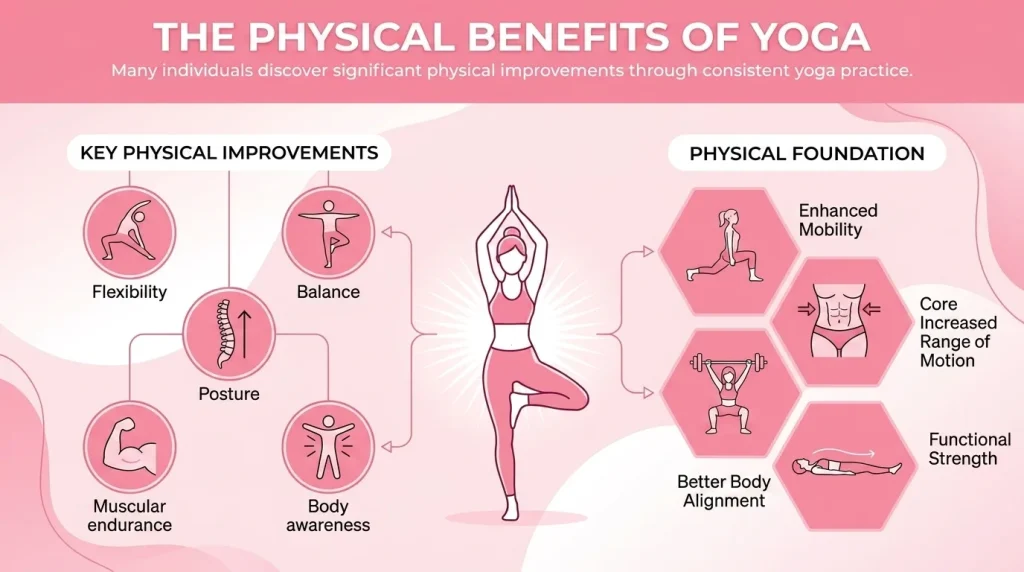
The physical postures help improve:
- Flexibility
- Balance
- Posture
- Muscular endurance
- Body awareness
Yoga also incorporates breathing exercises and mindfulness techniques that promote relaxation and stress management.
According to the National Center for Complementary and Integrative Health (NCCIH), yoga may help improve overall quality of life and reduce perceived stress levels in many individuals.
For women balancing multiple responsibilities, these benefits can contribute significantly to everyday well-being.
The Relationship Between Stress and Women’s Health
Stress affects more than emotional health.
When the body experiences stress, it releases hormones such as cortisol and adrenaline. While these hormones are helpful during short-term challenges, prolonged stress may affect:
- Sleep quality
- Energy levels
- Mood
- Appetite
- General health
Many women notice changes in their menstrual cycles, emotional well-being, or sleep patterns during particularly stressful periods.
Yoga cannot eliminate stress entirely, but it may help improve the body’s response to stress through mindful breathing, movement, and relaxation practices.
Can Yoga Help Balance Hormones?
One of the most common claims about yoga is that it “balances hormones.”
While yoga cannot directly regulate hormone production, it may support lifestyle factors that influence hormonal health, including:
- Stress management
- Sleep quality
- Physical activity
- Weight management
- Emotional well-being
Hormonal health is regulated by complex interactions involving the hypothalamus, pituitary gland, thyroid gland, adrenal glands, and ovaries. No single yoga pose can directly control these systems.
However, maintaining healthy lifestyle habits may contribute to better overall hormonal wellness over time.
Women experiencing symptoms such as irregular periods, excessive hair growth, acne, unexplained weight gain, or fertility difficulties should seek professional medical evaluation.
Yoga and PCOS: Can It Help?
PCOS is one of the most common hormonal disorders affecting women of reproductive age.
Common symptoms include:
- Irregular periods
- Weight gain
- Acne
- Excess facial or body hair
- Insulin resistance
- Difficulty conceiving
While yoga cannot cure PCOS, it may support several aspects of PCOS management.
Potential benefits include:
- Encouraging regular physical activity
- Supporting stress management
- Improving body awareness
- Promoting long-term healthy lifestyle habits
Many women find yoga easier to maintain consistently than intensive workout programs, making it a sustainable wellness practice alongside medical treatment and dietary modifications.
Can Yoga Improve Fertility?
One of the most frequently asked questions among women trying to conceive is whether yoga can improve fertility.
Current scientific evidence does not show that yoga alone can treat infertility or guarantee pregnancy.
Infertility may result from:
- Ovulation disorders
- PCOS
- Endometriosis
- Tubal blockage
- Diminished ovarian reserve
- Uterine abnormalities
- Male factor infertility
- Unexplained infertility
However, yoga may provide valuable indirect benefits.
Women undergoing fertility treatment often experience significant emotional stress. Research published by the American Society for Reproductive Medicine highlights the psychological impact infertility can have on anxiety levels, emotional well-being, and quality of life.
Yoga may help by:
- Supporting relaxation
- Improving sleep quality
- Reducing stress
- Encouraging mindfulness
- Providing a healthy coping mechanism during fertility treatment
Many women undergoing IVF describe yoga as a helpful practice that promotes emotional balance during their fertility journey.
Yoga During Fertility Treatment
Women undergoing fertility treatments such as IVF or IUI often ask whether yoga is safe.
In many cases, gentle yoga may be appropriate. However, activity recommendations can vary depending on:
- Treatment stage
- Ovarian response
- Individual medical history
- Fertility specialist recommendations
Women undergoing treatment should always follow the guidance provided by their fertility specialist.
Also read: How Yoga Can Improve IVF Success Rates
How Yoga May Help During Menstruation
Menstrual experiences vary significantly from one woman to another.
Some women experience mild discomfort, while others face:
- Cramping
- Fatigue
- Bloating
- Headaches
- Mood changes
Gentle yoga may help relieve muscle tension and promote relaxation during menstruation.
However, severe menstrual pain should not be ignored. Pain that disrupts daily life may indicate conditions such as:
- Endometriosis
- Adenomyosis
- Fibroids
- Pelvic inflammatory conditions
Medical evaluation is important when symptoms are severe or persistent.
The Emotional Benefits of Yoga
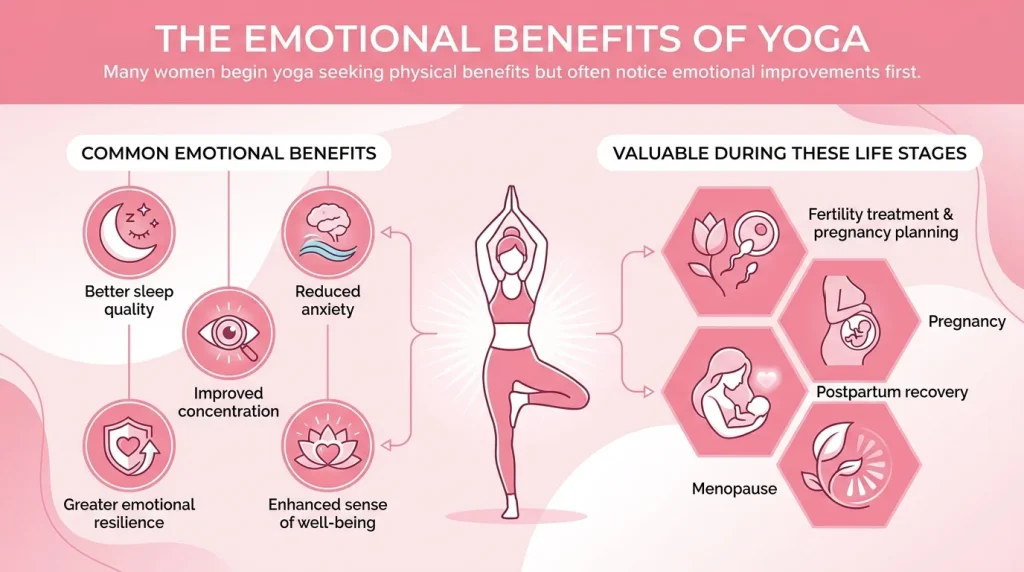
Many women begin yoga seeking physical benefits but often notice emotional improvements first.
Commonly reported benefits include:
- Better sleep quality
- Reduced anxiety
- Improved concentration
- Greater emotional resilience
- Enhanced sense of well-being
These benefits can be especially valuable during fertility treatment, pregnancy planning, postpartum recovery, and menopause.
Best Yoga Poses for Women’s Health
Child’s Pose (Balasana)
Promotes relaxation and gentle stretching of the lower back and hips.
Butterfly Pose (Baddha Konasana)
Supports flexibility in the hips and inner thighs.
Cat-Cow Stretch (Marjaryasana-Bitilasana)
Improves spinal mobility and relieves stiffness.
Legs-Up-The-Wall Pose (Viparita Karani)
Encourages relaxation and may help reduce physical fatigue.
Bridge Pose (Setu Bandhasana)
Strengthens the lower body while improving posture and core engagement.
Reclining Bound Angle Pose (Supta Baddha Konasana)
Frequently used in restorative yoga practices for relaxation.
When Should Women Seek Medical Advice?
Yoga can support overall wellness, but certain symptoms require professional evaluation.
Consult a healthcare professional if you experience:
- Irregular menstrual cycles
- Severe period pain
- Difficulty conceiving after 12 months of trying (or 6 months if over age 35)
- Recurrent pregnancy loss
- Persistent pelvic pain
- Symptoms suggestive of PCOS
Early diagnosis often improves treatment outcomes.
Yoga Supports Wellness, But Fertility Concerns Need Evaluation
While yoga may support stress reduction and overall well-being, it cannot diagnose or treat underlying fertility conditions.
At Ferty9 Fertility Center, fertility specialists evaluate potential causes of infertility, including ovulation disorders, PCOS, endometriosis, tubal factors, and male fertility issues. Personalized treatment plans help couples understand their reproductive health and explore appropriate fertility treatment options.
Yoga can be a valuable complement to medical care, but professional assessment remains essential when pregnancy does not occur as expected.
References
- World Health Organization (WHO) – Polycystic Ovary Syndrome (PCOS)
- World Health Organization (WHO) – Infertility Fact Sheet
- National Center for Complementary and Integrative Health (NCCIH) – Yoga: Effectiveness and Safety
- American Society for Reproductive Medicine (ASRM)
- National Center for Complementary and Integrative Health (NCCIH) – Mind and Body Practices























 No need to worry, your data is 100% safe with us!