


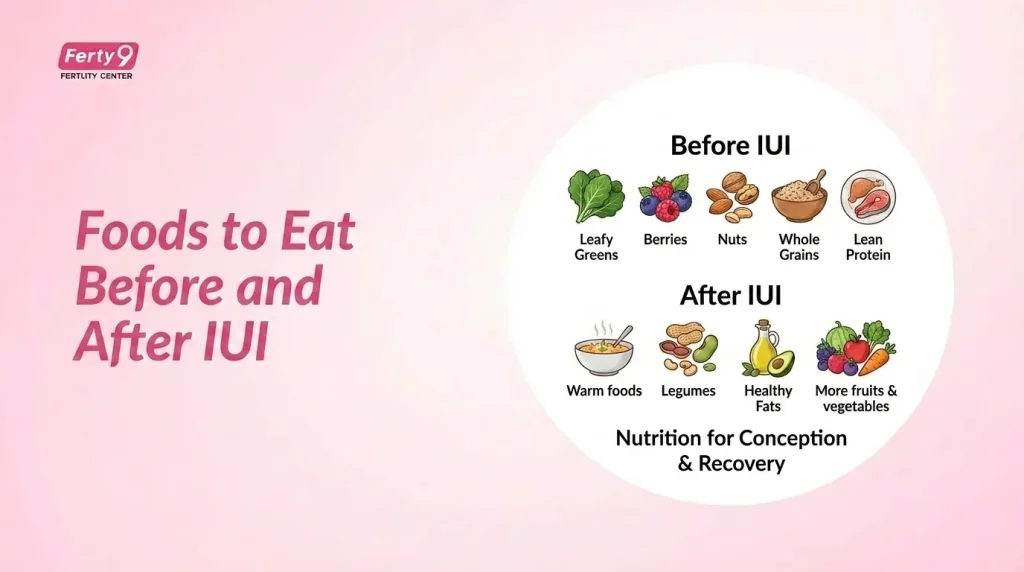
Starting your IUI journey is a deeply personal step – and one of the most empowering things you can do right now is nourish your body for success. While your fertility specialist guides the clinical side of your treatment, what you eat in the weeks around your procedure genuinely matters. Research suggests that a balanced fertility-friendly diet may support reproductive health by reducing oxidative stress, promoting hormonal balance, and supporting overall fertility. However, diet alone cannot guarantee successful implantation or pregnancy.
This blog covers exactly what to eat before and after IUI, what to avoid, a practical 3-day meal plan, and answers to the most common questions patients ask.
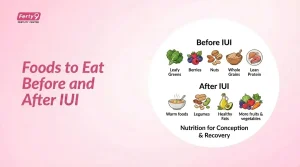
- Eat Well Before IUI – Start eating balanced meals about 2 weeks before IUI. Include leafy greens, dal, eggs, lean protein, whole grains, healthy fats, and enough water.
- Choose Healthy Foods – After IUI, eat foods such as spinach, beetroot, lentils, chickpeas, dairy, ragi, nuts, seeds, and fruits to get important nutrients.
- Avoid Certain Foods – Avoid alcohol, processed and sugary foods, foods high in trans fats, and raw or undercooked meat and fish. Keep caffeine below 200 mg a day.
- Keep Healthy Habits – Drink enough water, sleep for 7–8 hours, and choose gentle activities such as walking or yoga for 20–30 minutes a day. Avoid intense exercise and heavy lifting after IUI.
- Follow Your Doctor – The blog recommends 400–800 mcg of folic acid daily and says supplements such as Vitamin D, CoQ10, or omega-3 may be suggested based on your needs. If you have PCOS, thyroid problems, diabetes, or food intolerances, ask your fertility specialist or dietitian what diet is right for you.
Why Your Diet Matters During IUI Treatment
IUI (Intrauterine Insemination) places sperm directly into the uterus to increase the chances of fertilization. But the success of IUI depends on several factors, including age, ovarian reserve, sperm quality, ovulation, tubal patency, and overall reproductive health. A healthy diet supports general reproductive function but is only one part of the treatment.
Here’s the science: oxidative stress (an imbalance of free radicals in the body) damages egg cells and sperm DNA, and a diet rich in antioxidants directly fights this. Hormones like oestrogen and progesterone, which drive ovulation and prepare the uterine lining, are built from the fats and proteins you eat. Blood sugar instability, often caused by refined carbs and sugar, disrupts hormonal signalling and can reduce fertility.
In short: Every healthy food choice contributes to your overall reproductive health, while long-term unhealthy eating habits may negatively affect fertility.
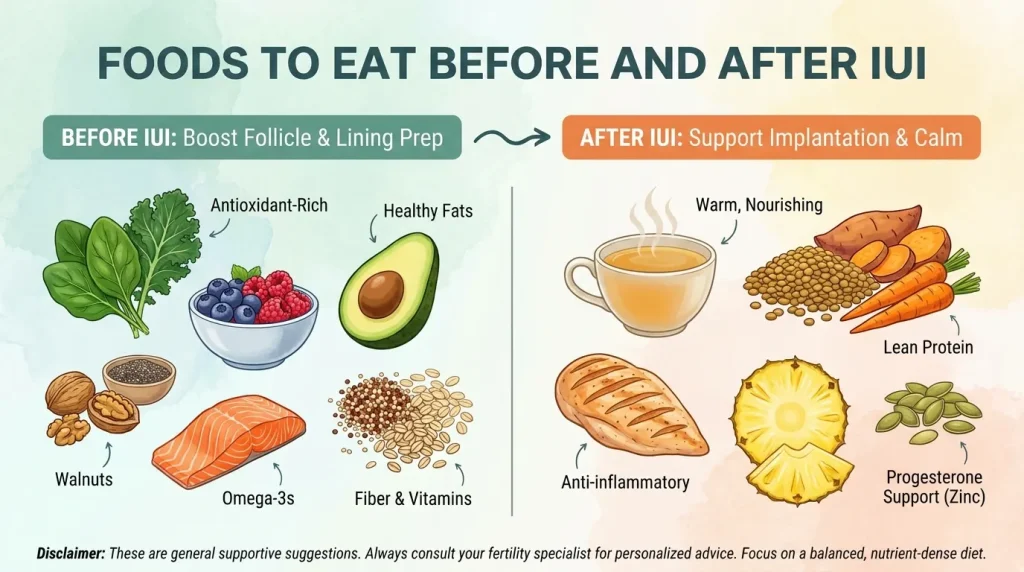
Foods to Eat Before IUI (Starting 2 Weeks Before Your Procedure)
The two weeks leading up to your IUI procedure are a crucial window. Focus on foods that balance hormones, protect egg quality, and prepare your uterine lining.
Folate-Rich Leafy Greens
Spinach, kale, fenugreek (methi), and broccoli are packed with folate – the natural form of folic acid. Folate is essential for DNA synthesis and cell division, both of which are critical in the early stages of conception. One cup of cooked spinach provides roughly 66 mcg of folate.
How to use them: Add a handful of spinach to your morning eggs, blend methi leaves into a dal, or make a simple broccoli stir-fry with olive oil and garlic.
Lean Protein and Eggs
Adequate protein intake supports normal hormone production and tissue repair. Both plant and lean animal protein can be part of a healthy fertility diet.
Great sources: eggs (especially the yolk, which is rich in choline), lentils (dal), chickpeas, paneer, tofu, and skinless chicken. Aim for a protein source at every meal.
Whole Grains for Stable Blood Sugar
Swapping white rice and maida for brown rice, oats, ragi, jowar, or quinoa helps keep your blood sugar steady. Insulin spikes suppress sex hormone-binding globulin (SHBG), which is needed to regulate oestrogen levels. Stable blood sugar = more balanced hormones = better fertility outcomes.
Healthy Fats (Especially Omega-3s)
Healthy fats, particularly omega-3 fatty acids, may help reduce inflammation and support overall reproductive health. Focus on:
- Omega-3 rich foods: Walnuts, flaxseeds, chia seeds, fatty fish (salmon, sardines), and mustard oil
- Monounsaturated fats: Avocado and extra-virgin olive oil
Aim for 1–2 tablespoons of flaxseeds daily, ground into a powder and added to smoothies, yogurt, or roti dough.
Hydration – Water and Water-Rich Foods
Adequate hydration supports cervical mucus quality, which helps sperm reach the egg more easily. Drink 8–10 glasses of water daily. Include cucumber, watermelon, coconut water, and buttermilk (chaas) for an extra hydration boost.
Foods to Eat After IUI (During the Two-Week Wait)
The two-week wait after IUI is the most emotionally charged phase of the cycle. Your focus now shifts to supporting implantation and early pregnancy. Avoid overthinking every symptom – just keep nourishing your body.
Iron-Rich Foods for Implantation Support
Iron supports the growth and maintenance of a thick, healthy endometrial lining – exactly what an embryo needs to implant. Include:
– Beetroot, spinach, lentils, chickpeas, and tofu (non-haem iron – pair with Vitamin C for better absorption)
– Red meat and chicken liver (haem iron – easier to absorb)
Pro tip: Squeeze lemon juice over your dal or salad to increase iron absorption by up to 67%.
Calcium and Vitamin D
Calcium supports muscle function in the uterus, while Vitamin D plays a key role in implantation and early embryo development.Vitamin D plays an important role in reproductive health. While some studies have shown an association between adequate Vitamin D levels and improved fertility outcomes, evidence that supplementation improves IUI success remains inconclusive. .
Sources: Low-fat dairy (curd, paneer, milk), ragi, sesame seeds (til), and 15–20 minutes of morning sunlight daily.
Antioxidant-Rich Fruits
Berries (strawberries, blueberries, raspberries), pomegranate, kiwi, oranges, and papaya (ripe, in moderation) are loaded with Vitamin C, lycopene, and polyphenols that reduce oxidative stress and support healthy cell development.
Try: A small bowl of mixed berries with curd as a mid-morning snack, or pomegranate seeds added to your salad.
Warming, Gut-Friendly Foods
After the IUI procedure, your digestive system may feel slightly sensitive. Choose:
- Warm soups (moong dal soup, vegetable broth)
- Khichdi with ghee
- Porridge (daliya) with milk and nuts
- Lightly cooked sabzi over raw salads for a few days
These are easier to digest and are traditional post-procedure foods in Ayurvedic fertility care, too.
The Pineapple Core Tip – Does It Work?
Pineapple contains bromelain, an enzyme with anti-inflammatory properties. However, there is currently no good-quality scientific evidence that eating pineapple or its core improves implantation or pregnancy rates after IUI. If consumed, it should simply be considered part of a balanced diet.
Foods to Avoid Before and After IUI
Knowing what to remove from your diet is just as important as knowing what to add.
| Food/Drink | Why to Avoid |
| Alcohol | Disrupts hormone levels, reduces egg quality, and increases miscarriage risk |
| Caffeine (>200mg/day) | Linked to reduced fertility; limit to 1 cup of tea/coffee per day |
| Processed and sugary foods | Cause insulin spikes that disrupt ovulation hormones |
| Trans fats | Found in packaged snacks, fried street food, increases inflammation and reduce fertility |
| Raw/undercooked meat and fish | Risk of listeria and toxoplasmosis, which can harm early pregnancy |
| Excess soy | In very large amounts, phytoestrogens in soy may affect hormone balance |
| Very cold foods | Traditional Ayurvedic advice, cold foods are believed to reduce blood flow to the uterus post-procedure |
A Sample 3-Day Fertility Diet Plan for IUI
Here’s a simple, India-friendly meal plan for the days surrounding your IUI procedure.
Day 1
Breakfast: Vegetable oats upma + 1 boiled egg + warm water with lemon
Mid-morning: A handful of walnuts + 1 kiwi
Lunch: Brown rice + moong dal + palak sabzi + curd
Evening snack: Pumpkin seeds + chamomile tea
Dinner: Ragi roti + paneer bhurji + cucumber raita
Day 2
Breakfast: Besan (chickpea flour) chilla + green chutney + 1 glass warm milk
Mid-morning: 1 bowl pomegranate seeds
Lunch: Quinoa pulao with vegetables + dal + mixed salad
Evening snack: Roasted chana + coconut water
Dinner: Khichdi with ghee + steamed vegetables
Day 3
Breakfast: Daliya porridge with almonds and dates + herbal tea
Mid-morning: Smoothie with spinach, banana, flaxseeds, and low-fat milk
Lunch: Jowar roti + chicken curry (light) + beetroot salad
Evening snack: 1 bowl mixed berries with curd
Dinner: Moong dal soup + methi paratha + curd
Lifestyle Tips That Work Alongside Your IUI Diet
Diet is the foundation, but these habits amplify the results:
- Gentle movement: 20-30 minutes of walking or yoga daily improves pelvic blood flow. Avoid intense workouts or heavy lifting after IUI.
- Stress management: Cortisol (the stress hormone) directly suppresses reproductive hormones. Try meditation, deep breathing, or journaling during the two-week wait.
- Sleep: Aim for 7–8 hours of quality sleep each night. Good sleep supports hormonal balance and overall reproductive health.
- Supplements: Commonly prescribed supplements include folic acid (400–800 mcg daily). Depending on individual needs, your doctor may also recommend Vitamin D, CoQ10, or omega-3 fatty acids.
When to Consult Your Doctor About Your Diet
If you have PCOS, thyroid disorders, diabetes, or food intolerances, a standard fertility diet may need to be modified. For example:
PCOS patients benefit from a low-glycaemic diet with reduced simple carbs
Hypothyroid patients should limit raw cruciferous vegetables (goitrogens)
Diabetic patients need carefully managed carbohydrate portions
Your fertility specialist or a registered dietitian can create a plan tailored specifically to your health history. Don’t rely on generic advice alone – your body has unique needs.
Summary
Your IUI journey is a partnership between medical expertise and the care you give your own body. A balanced, nutrient-rich diet supports overall reproductive health and may help optimise your body for conception. However, IUI success also depends on several medical and biological factors, including age, ovarian reserve, sperm quality, ovulation, and underlying fertility conditions. Start with the basics – more whole grains, lean protein, leafy greens, healthy fats, and water – and build from there.
If you have specific dietary needs or health conditions, speak with your fertility specialist for personalised guidance.
Frequently Asked Questions About IUI Diet
What is the best food to eat after IUI for success?
After IUI, focus on iron-rich foods like spinach, beetroot and lentils to support uterine lining, calcium and Vitamin D from dairy and sunlight, and antioxidant-rich fruits like pomegranate and berries. Eat warm, easily digestible meals and stay well hydrated. Avoid alcohol, caffeine above 200mg, and processed foods completely during the two-week wait.
Can I eat before my IUI procedure?
Yes. IUI is not a surgical procedure and does not require fasting. Eat a light, nutritious meal 1–2 hours before. Avoid heavy, oily, or spicy food that might cause discomfort during the procedure. A bowl of oats with fruit or a light idli with sambar works well.
Which fruits should I eat after IUI?
The best fruits after IUI are pomegranate (supports uterine blood flow), berries (high in antioxidants), kiwi and oranges (Vitamin C for iron absorption and immune support), and bananas (potassium, Vitamin B6). Eat pineapple core in moderation for its bromelain content. Avoid raw papaya and pineapple in large quantities.
How long before IUI should I start eating healthy?
Ideally, begin a fertility-focused diet 2–3 months before your IUI procedure, as egg development (folliculogenesis) takes approximately 90 days. However, even starting 2–4 weeks before can meaningfully improve your uterine environment and hormone balance.
Is ghee good to eat after IUI?
Yes, a small amount of desi ghee (1–2 teaspoons daily) is beneficial after IUI. It contains fat-soluble vitamins (A, D, E, K) and healthy saturated fats that support hormone production. It is also traditionally considered warming and nourishing in Indian post-procedure care.
Should I avoid cold foods after IUI?
Many fertility doctors and Ayurvedic practitioners advise against very cold foods (ice cream, cold drinks, refrigerated food eaten cold) after IUI. The reasoning is that cold foods may reduce blood circulation to the uterus. While clinical evidence is limited, warm, freshly cooked food is a safer and more comfortable choice post-procedure.
Can caffeine affect IUI success?
Studies suggest that consuming more than 200mg of caffeine per day (roughly 2 cups of coffee) is linked to reduced fertility and increased miscarriage risk. During your IUI cycle, limit yourself to one small cup of tea or coffee per day, and switch the rest to herbal teas like chamomile, ginger, or peppermint.
What supplements should I take during IUI?
The most commonly recommended supplements for IUI are folic acid (400–800 mcg daily), Vitamin D3 (if deficient), CoQ10 (supports egg energy), and omega-3 fish oil. Always get guidance from your fertility doctor before starting supplements, as the right dose depends on your individual blood levels and health profile.













 No need to worry, your data is 100% safe with us!