


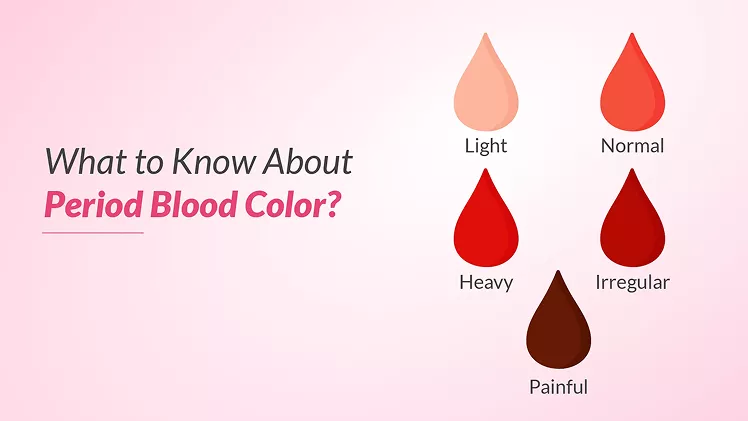
- Period Blood Color Can Vary - Period blood may appear bright red, dark red, brown, pink, or even black depending on blood flow speed, hormone changes, and where a woman is in her menstrual cycle. Most color variations are normal and temporary.
- Bright Red Usually Means Fresh Blood - Bright red blood commonly appears during heavier menstrual flow and indicates fresh blood leaving the uterus quickly. Dark red or brown blood is older blood that has taken longer to exit the body.
- Pink or Orange Blood May Signal Hormonal Changes - Lighter shades like pink can occur from low estrogen levels or mixed cervical fluid, while orange blood may sometimes indicate infection if accompanied by odor, itching, or discomfort.
- Certain Colors May Need Medical Attention - Gray, unusually heavy black discharge, or persistent abnormal colors with pain, fever, or foul smell may suggest infection or reproductive health issues. Women should seek medical evaluation if symptoms continue.
- Tracking Menstrual Changes Supports Health - Specialists at Ferty9 Fertility Center recommend monitoring period color, flow, and cycle patterns to identify hormonal imbalances or gynecological conditions early and support better reproductive health.
What Does Period Blood Colour Indicate?
The period blood color meaning typically indicates how long the blood has remained in the uterus. Bright red blood signifies a fresh, active flow, while dark brown or black shades suggest older blood that has undergone oxidation. Unusual colors like pink can signal low estrogen, while grey or orange may indicate a localized infection requiring medical evaluation.
According to the World Health Organization, menstrual health is an important part of overall reproductive health and well-being. Given that a woman experiences around 450 periods in her lifetime, it’s understandable that changes in period blood colour might lead to questions and concerns.
How to Understand Changes in Period Blood Colour
Period blood colour can vary across your cycle, and in most cases, these changes are completely normal. What often causes confusion is not the variation itself, but understanding what each change actually represents.
In clinical practice, colour variations are usually linked to how quickly the blood is flowing and how long it remains in the uterus before exiting the body. Faster flow tends to appear brighter, while slower flow allows the blood to oxidize, resulting in darker shades.
However, colour alone does not provide a complete picture. It becomes more meaningful when observed alongside other factors such as flow consistency, cycle regularity, and any accompanying symptoms.
In gynecology practice, doctors also assess whether colour changes are associated with clotting, severe cramps, fatigue, missed periods, or unusually heavy flow. A single cycle variation is often harmless, but repeated changes across multiple cycles can sometimes reflect hormonal imbalance, thyroid disorders, PCOS, or changes in ovulation patterns.
Tracking these changes along with your cycle using a period calculator can help you better understand what is normal for your body.
Understanding Period Blood Colours and What They Indicate
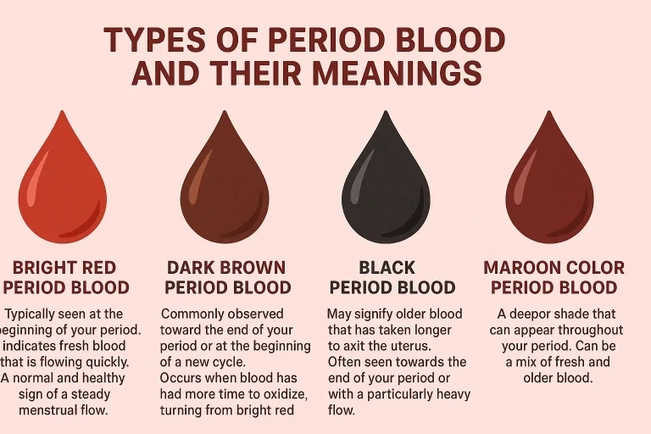
Period blood colour is primarily influenced by how quickly the blood is flowing and how long it remains in the uterus before exiting the body. Different colors of period blood are often connected through patterns such as fresh flow, slower flow, or hormonal changes.
Bright Red Period Blood
Bright red blood is typically seen during the beginning or heavier days of your period. Bright red bleeding is usually associated with an active uterine shed and stronger menstrual flow. However, if bleeding becomes excessively heavy – such as soaking pads every 1-2 hours or passing large clots repeatedly – it may indicate conditions like fibroids, adenomyosis, hormonal imbalance, or ovulatory dysfunction. It indicates that the blood is fresh and flowing quickly without much time for oxidation. Many women wonder why their period blood is bright red. In most cases, this simply indicates fresh blood and a normal, active menstrual flow rather than a cause for concern.
Dark Red Period Blood
Dark red blood often appears during the middle of your period when the flow is steady. It indicates that the blood has had slightly more time to oxidize but is still part of a normal menstrual pattern. This is generally considered normal and reflects a stable menstrual flow.
Dark Brown Period Blood
Dark brown blood is commonly seen at the beginning or end of your cycle. This is especially common during lighter-flow days when older blood leaves the uterus more slowly. Women with longer cycles, irregular ovulation, or very light menstrual flow may notice brown spotting for a longer duration without it necessarily indicating disease. It usually represents older blood that has remained in the uterus longer and undergone oxidation. A common question is why period blood appears dark brown. This typically happens when blood takes longer to leave the uterus, allowing it to oxidize before exiting the body. Dark brown period blood for several days can still be normal, especially during lighter flow days, but persistent changes may need attention.
Black Period Blood
Black blood can appear alarming but is usually just older blood that has taken longer to exit the uterus. Occasionally, black blood may also appear after prolonged spotting, postpartum recovery, or delayed shedding of the uterine lining. Persistent black discharge associated with pelvic pain, fever, or foul odor should not be ignored, as it may require evaluation for infection or retained tissue. It is most commonly seen at the end of a period. Black period blood meaning is often linked to delayed flow rather than a serious issue. However, if it is accompanied by a strong odor, discomfort, or unusual discharge, it may require medical evaluation.
Maroon Colour Period Blood
Maroon blood is typically a mix of fresh and older blood. It can appear during transitional phases of your period when flow patterns are changing. This is generally not a concern unless it occurs frequently along with other symptoms.
Also read: Tips for Maintaining Optimal Vaginal Hygiene
What Does Brown or Dark Period Blood Mean?
Brown or dark period blood usually indicates older blood that has taken longer to leave the uterus. This happens when the flow is slower, allowing the blood to oxidize before exiting the body. In most cases, it is a normal part of the menstrual cycle, especially at the beginning or end of a period.
Unusual Period Blood Colours and What They May Indicate
Sometimes, period blood may appear in shades or textures that feel different from your usual pattern. While occasional variation is normal, consistent changes can offer useful clues about hormonal balance or underlying conditions.
Light Pink Blood
Light pink blood may indicate diluted menstrual flow, often linked to lower estrogen levels, light bleeding, or spotting. Pink spotting is also commonly seen in women using hormonal contraceptives, during breastfeeding, or around ovulation when estrogen levels temporarily fluctuate. In fertility consultations, persistent light spotting before periods may sometimes prompt evaluation of ovulation quality or luteal phase hormonal support. It may also occur during ovulation or early pregnancy (implantation bleeding). If this appears outside your regular cycle or persists over time, it may need further evaluation. Pink spotting before a period is often linked to hormonal fluctuations or ovulation and is usually not a cause for concern.
Bright Red and Watery Period Blood
A common concern many women have is when their period blood appears bright red but unusually watery. This can be associated with lighter flow, hormonal fluctuations, or in some cases, nutritional deficiencies such as low iron levels. Women experiencing persistent watery bleeding along with fatigue, dizziness, hair fall, or shortness of breath may benefit from screening for anemia, especially if periods are frequent or prolonged. It may also be seen in individuals using hormonal contraceptives or experiencing high stress levels. Many people search for “bright red watery period blood” – this is usually linked to lighter flow or hormonal variation rather than a serious issue.
If this pattern is new or occurs repeatedly, it is worth monitoring over a few cycles.
Grey or Orange-Tinted Blood
Grey or orange tones are less common and may indicate infection, particularly if accompanied by unusual odor, discomfort, or discharge. These colour changes become more clinically significant when combined with itching, burning, pelvic pain, fever, or pain during intercourse. In such situations, doctors may evaluate for bacterial vaginosis, sexually transmitted infections, or pelvic inflammatory disease. In such cases, it is advisable to seek medical evaluation to rule out infections.
Also read: Four Phases of Menstrual Cycle
What Do Different Colours of Period Blood Mean?
Different colours of period blood typically reflect variations in flow speed, oxidation, and hormonal changes. Bright red indicates fresh blood, while darker shades like brown or black suggest older blood. Lighter shades such as pink may be linked to hormonal fluctuations. Understanding the meaning of period blood colour helps you identify whether a change is part of a normal cycle or something that needs attention.
Is It Normal for Period Blood Colour to Change?
Yes, it is completely normal for period blood colour to change throughout your cycle. Many women notice predictable colour patterns within the same cycle — brighter red during heavier days and darker shades toward the end of menstruation. Tracking these changes over several months often provides more useful insight than focusing on a single unusual period. Variations in colour are usually linked to changes in flow, hormone levels, and how long the blood remains in the uterus. However, sudden or persistent changes along with other symptoms may require medical attention.
Period Blood Colour Chart
The table below provides a general reference to help you understand what different period blood colours may indicate. However, it’s important to remember that colour alone is not diagnostic and should always be interpreted along with other factors such as flow, timing, and symptoms.
| Period Blood Colour | What It May Indicate |
| Bright Red | Fresh blood and normal menstrual flow |
| Dark Red | Steady flow during the middle of your period |
| Dark Brown | Older blood that has oxidized |
| Black | Blood that has taken longer to leave the uterus |
| Pink | Light bleeding, hormonal changes, or spotting |
| Maroon | A mix of fresh and older blood |
While this chart offers a quick overview, your menstrual pattern should be assessed over multiple cycles rather than a single occurrence. If you notice sudden or persistent changes along with symptoms such as pain, odor, or unusual discharge, it is advisable to consult a healthcare provider.
Also read: Irregular Periods: A warning sign to be taken care of
How Period Blood Colour May Differ in Early Pregnancy?
In early pregnancy, bleeding patterns are usually different from a regular menstrual cycle. The most common form is implantation bleeding, which typically appears as light pink or brown spotting. Unlike a regular period, this bleeding is usually lighter, shorter in duration, and does not follow the same flow pattern. It may occur around the time your period is expected, which can sometimes cause confusion.
If you are unsure whether the bleeding is menstrual or pregnancy-related, taking a pregnancy test or consulting a healthcare provider can help provide clarity.
Also read: Menstrual Cycle and Fertility
Other Factors That Affect Period Blood Colour
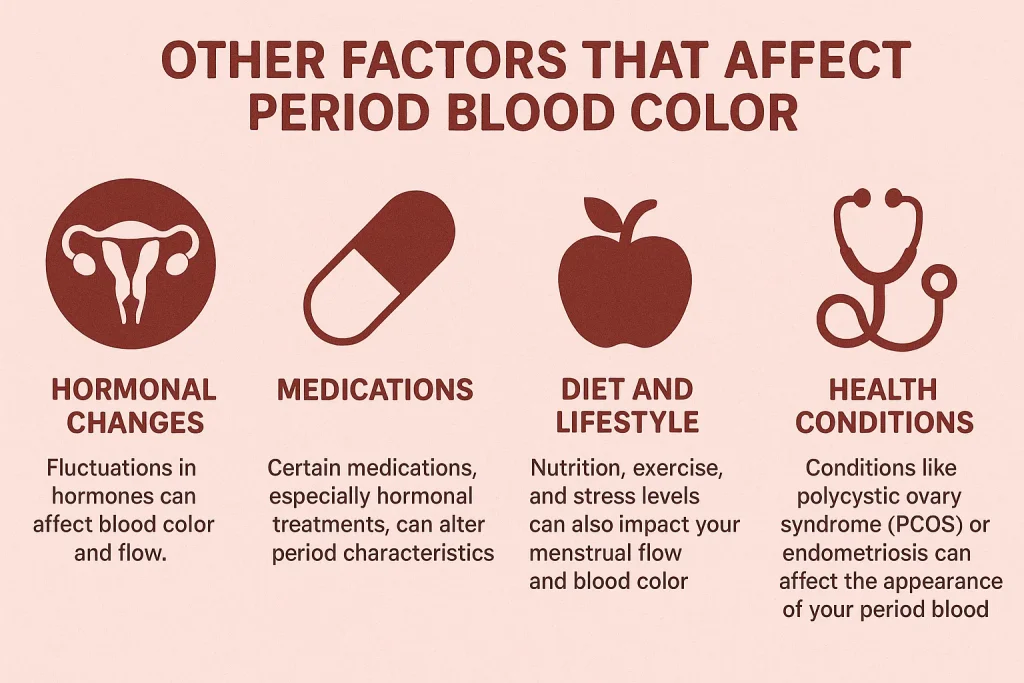
Several internal and external factors can influence the colour and consistency of menstrual blood.
Age and reproductive stage can also influence menstrual colour patterns. Teenagers in the first few years after menarche and women approaching perimenopause commonly experience irregular ovulation, which may lead to unpredictable spotting, brown discharge, or cycle variability.
- Hormonal fluctuations are the most common cause, as they directly affect the timing and intensity of menstrual flow. Changes in estrogen and progesterone levels can lead to noticeable variations in colour.
- Medications, particularly hormonal treatments such as birth control, can alter bleeding patterns and flow consistency.
- Lifestyle factors such as stress, diet, and physical activity levels also play an indirect role by influencing hormonal balance.
- In some cases, underlying conditions such as polycystic ovary syndrome (PCOS) or endometriosis may contribute to changes in menstrual characteristics. For example, women with PCOS may experience prolonged gaps between periods followed by darker or heavier bleeding because the uterine lining has built up over a longer duration. Endometriosis, on the other hand, is more commonly associated with severe pain, clotting, and difficult periods rather than colour change alone. If these changes are persistent or accompanied by other symptoms, medical evaluation may be necessary.
Also read: How to stop period’s pain? – Effective Diet for painful periods
When Should You See a Doctor?
While variations in period blood colour are often harmless, certain signs should not be ignored.
According to the Centers for Disease Control and Prevention, you should consider consulting a healthcare provider if you notice:
- Persistent or sudden changes in blood colour especially if the change continues for multiple cycles without an obvious explanation such as stress, medication change, or contraceptive use
- Unusual odor or abnormal discharge
- Severe pain or discomfort during your period
- Extremely heavy or unusually light bleeding compared to your normal cycle
These symptoms, when combined with noticeable changes in colour or flow, may indicate underlying conditions that require medical evaluation.
Final Thoughts
Understanding what different period blood colours indicate can help you become more aware of your menstrual and reproductive health. While period colour alone usually does not diagnose a medical condition, observing consistent changes in flow, timing, pain, and associated symptoms can help identify reproductive health issues earlier. Many gynecological conditions are diagnosed not from one symptom alone, but from patterns that develop over time. While most variations are normal, paying attention to patterns over time can help you identify when something may need attention. If you’re unsure about changes in your cycle, seeking guidance from a specialist can help you better understand your reproductive health.
References
- Cleveland Clinic: What Does the Color of Your Period Mean?
- NIH (MedlinePlus): Vaginal Bleeding – Menstrual Cycle
- NHS: Menstrual Cycle and Period Blood Color
- Mayo Clinic: Menstrual Cycle: What’s Normal and What’s Not






















 No need to worry, your data is 100% safe with us!