


Understanding the Differences: A Guide to Fertility Treatments
When you first start looking into fertility treatments, hearing all the complex medical terms can feel completely overwhelming. If your doctor has suggested you need a little extra help getting pregnant, you might be looking at your choices and wondering which path is right for you.
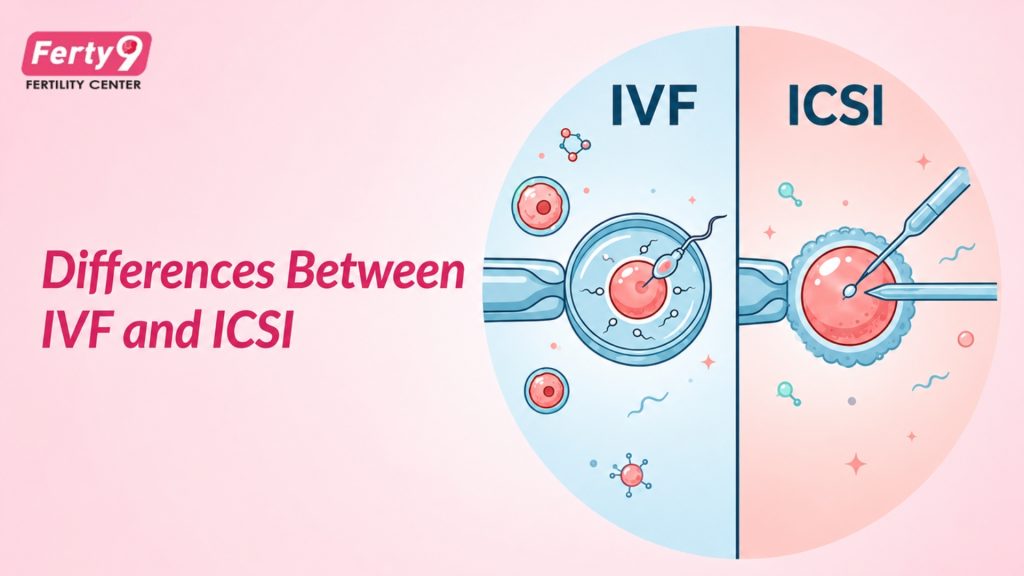
Two of the most successful treatments today are IVF and ICSI. Both share the exact same beautiful goal—helping you bring a baby home—and both involve carefully bringing the egg and sperm together outside your body. However, the way our lab team helps them combine is slightly different.
Let’s look at IVF vs. ICSI in simple, everyday terms so you can feel totally confident when discussing the next steps with your doctor.
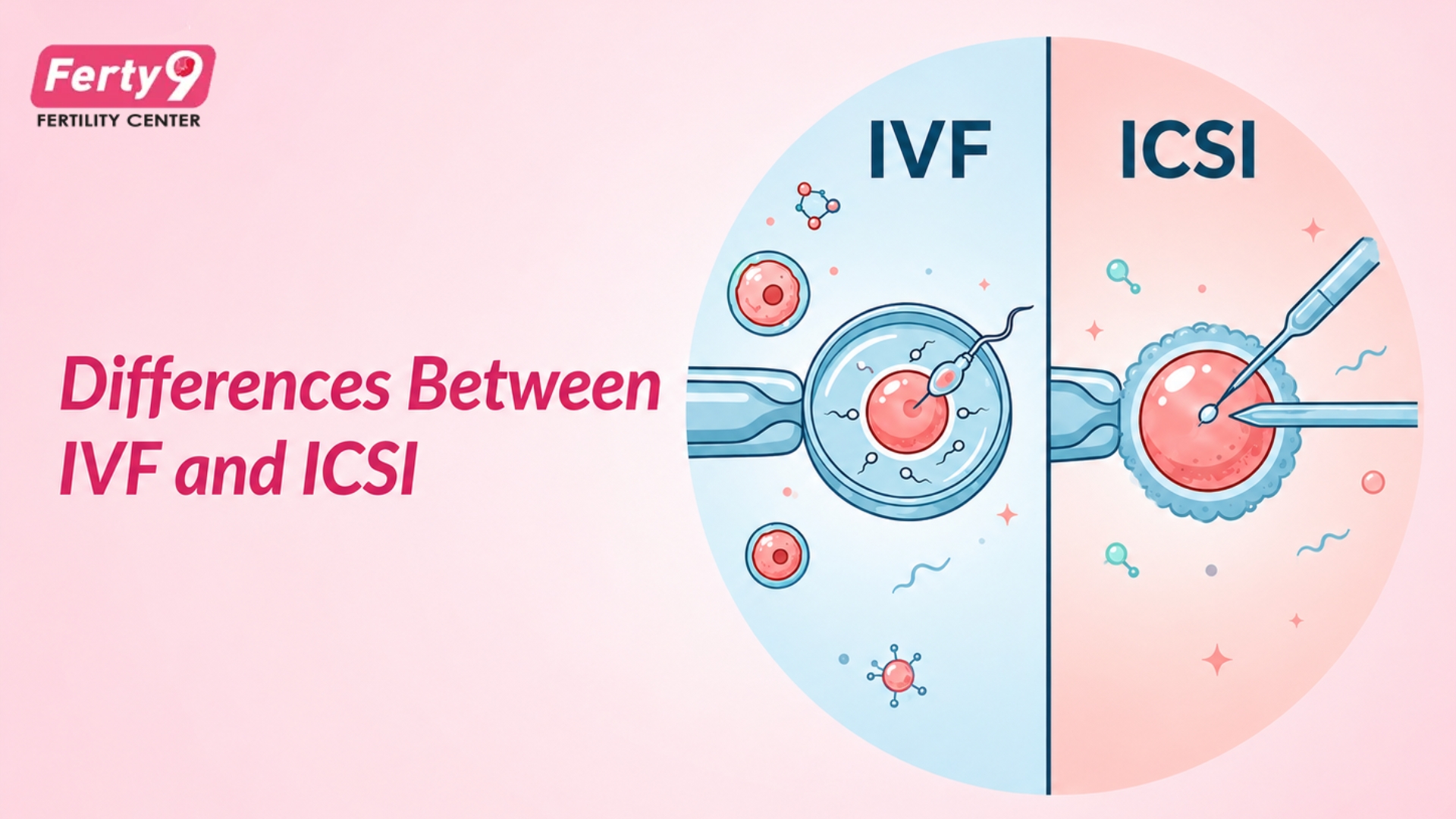
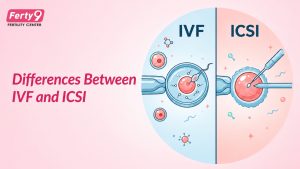
- IVF Lets Sperm Fertilise Naturally – Eggs and sperm are placed together in a laboratory dish, allowing one sperm to fertilise the egg on its own.
- ICSI Directly Injects One Sperm – An embryologist selects a single healthy-looking sperm and carefully injects it into the centre of the egg.
- ICSI Helps With Sperm Problems – It is used when sperm count, movement, or shape makes fertilisation difficult, or when standard IVF has not worked.
- IVF Suits Several Fertility Challenges – Standard IVF may be suitable for blocked pathways, irregular ovulation, womb conditions, or unexplained delays in pregnancy.
- Neither Treatment Is Always Better – The right choice depends on individual fertility needs, with ICSI offering extra help when sperm struggles to fertilise the egg.
What exactly is IVF (In Vitro Fertilisation)?
In standard IVF, you will take some helpful medicine that encourages your body to grow a few healthy eggs all at once. Once they are ready, your doctor will gently collect them while you take a short, comfortable nap.
Next, those eggs are placed in a safe, warm dish alongside thousands of your partner’s sperm. From there, nature completely takes over! The sperm swim around the egg, and one strong sperm naturally makes its way inside to combine with it. Once a tiny embryo begins to grow, it is gently placed right back into your womb to settle in.
What exactly is ICSI (Intracytoplasmic Sperm Injection)?
ICSI is simply a highly advanced extra step added to the regular IVF process. For the woman, the preparation is exactly the same—you still take the medicine to grow your eggs, and the doctor still gently collects them.
The big difference happens under the microscope. Instead of leaving the sperm and egg in a dish to meet naturally, a skilled lab expert carefully picks up just one single, healthy-looking sperm. They then gently place that specific sperm straight into the center of the egg to make absolutely sure they combine.
How do they compare? (The IVF Vs ICSI Comparison Table)
To make things as simple as possible, here is a clear, side-by-side breakdown of what makes these two options different:
| What to Expect | IVF | ICSI |
| How do they combine? | Naturally. We place the eggs and sperm together in a safe dish and let them combine on their own. | With a little help. Our lab team carefully places one single sperm directly inside the egg. |
| What is needed from the sperm? | You need a good amount of healthy, strong-swimming sperm. | You only need a very small handful of healthy sperm to make this work. |
| Who is this best for? | Couples facing hurdles like blocked pathways, irregular periods, or unexplained delays in getting pregnant. | Couples where the sperm needs extra help doing its job, or if standard IVF hasn’t worked in the past. |
| What does the lab team do? | Our experts safely watch over the dish to make sure everything is growing beautifully. | It is very hands-on! It takes extra time, an incredibly steady hand, and special equipment from our experts. |
| General Cost in India | The standard cost for this type of treatment. | A little bit higher than regular IVF because of the extra time, skill, and special tools needed. |
Which procedure is closer to a natural pregnancy?
When weighing IVF against ICSI, many couples naturally want to know which one feels closest to how a baby is usually conceived.
- Standard IVF: This approach is much closer to what naturally happens inside the body. Once the eggs and sperm are placed together in a safe dish, our lab experts completely step back. The strongest, healthiest sperm naturally finds its own way inside the egg without any extra human help.
- ICSI: This method involves a lot more hands-on work from our team. It is an absolute lifesaver if the sperm are struggling to swim or do their job! However, because our experts specifically choose one sperm and gently place it right inside the egg, it skips the natural “race” of the sperm finding their own way.
When is standard IVF the best choice?
For many couples, standard IVF is the perfect, highly successful starting point. Your doctor will usually recommend this path if the male partner has a healthy sperm count and the sperm swim well on their own.
Standard IVF works beautifully for couples facing hurdles like:
- Blocks: Any blocked or damaged pathways where the egg and sperm would normally travel to meet.
- Womb conditions: Dealing with painful, heavy periods or other physical conditions that affect the health of the womb.
- Unpredictable cycles: When the body struggles to regularly release an egg, even after trying simple medicines.
- Unexplained delays: When all your test results come back perfectly healthy, but you are still waiting for that positive pregnancy test.
When Do Doctors Highly Recommend ICSI?
ICSI is an absolute game-changer for couples where the sperm just needs a little extra help. Because our lab team skips the hard work of making the sperm swim and break through the egg’s tough outer shell, it gives men with sperm challenges a wonderful chance to have a biological child.
Your doctor will likely suggest ICSI if:
- Low Numbers: There just aren’t quite enough sperm available to try standard IVF.
- Struggling to Swim: The sperm are a bit sluggish and have a hard time swimming all the way to the egg on their own.
- Unusual Shapes: A large number of the sperm don’t have the ideal shape needed to naturally push into the egg.
- Collected Directly: The sperm had to be gently collected straight from the source by a doctor because of a physical blockage.
- Past Hurdles: You tried standard IVF before, but the eggs and sperm struggled to combine on their own.
Is ICSI Actually “Better” Than Standard IVF?
Because ICSI sounds so advanced, many people assume it must simply be the “better” option with higher success rates for everyone. But the truth is, there is no single superior choice!
If the sperm are healthy and strong, standard IVF works beautifully and has fantastic results. Using ICSI when you don’t actually need it just adds extra costs and requires unnecessary handling of your eggs. The “best” option entirely depends on what your unique body needs.
Can You Do Both Procedures at the Same Time?
Yes! Many top clinics offer a fantastic strategy known as a “split cycle” to give you the absolute best of both worlds.
If you grow a large number of eggs, but the doctor is slightly unsure if the sperm can do the job on their own, they can divide the eggs into two groups. Half of the eggs are placed with sperm naturally using standard IVF, and the other half get the hands-on ICSI treatment to guarantee they combine. This is a brilliant way to create as many healthy little embryos as possible while keeping your risks low.
Which One Has a Higher Success Rate?
Here is the most reassuring part: once the egg and sperm combine and become a growing embryo, your chances of getting pregnant with standard IVF and ICSI are exactly the same!
The only real benefit of ICSI is that it acts as a guarantee that the sperm makes it inside the egg, which is a huge relief when sperm health is the main hurdle.
At the end of the day, there is no “winning” option between the two. There is only the right path for your family. The best thing you can do is have an open, relaxed chat with your doctor to decide which route gives you the highest chance of bringing home a healthy baby.
References
What Is ICSI (Intracytoplasmic Sperm Injection)? – Verywell Family
https://www.verywellfamily.com/intracytoplasmic-sperm-injection-icsi-1960209














 No need to worry, your data is 100% safe with us!