


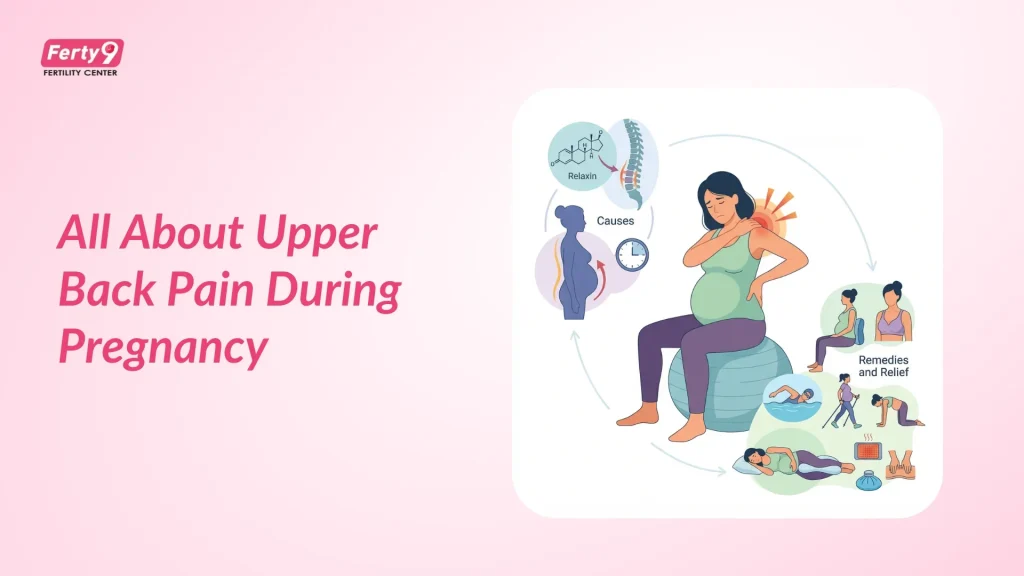
As your baby grows, your entire body shifts and adapts. These physical and hormonal changes place a new kind of stress on your upper spine and shoulders. The good news is that with a few simple lifestyle tweaks, posture corrections, and traditional home remedies, you can find immense relief. Let’s explore why this happens and how you can manage it safely.
Understanding Upper Back Pain in Pregnancy
What Upper Back Pain Feels Like During Pregnancy
Upper back pain usually strikes in the area between your shoulder blades, the base of your neck, or along your ribcage. For some women, it feels like a constant, dull, and heavy ache. For others, it might present as a sharp, sudden pinch when taking a deep breath, or a burning, tight sensation in the shoulder muscles after a long day.
How Common Upper Back Pain Is in Pregnancy
While everyone talks about lower back pain, upper back pain in pregnancy is just as frequent. A large majority of women experience this discomfort, especially as they progress into their second and third trimesters. It is a completely normal part of the body’s journey to accommodate a growing baby.
Why Upper Back Pain Happens During Pregnancy
Hormonal Changes Affecting Muscles and Ligaments
From the moment you conceive, your body starts producing a hormone called “Relaxin.” Just as the name suggests, this hormone relaxes the ligaments and joints in your pelvic area to prepare for childbirth. However, Relaxin travels through your whole body, loosening the joints and ligaments in your spine too. This makes your back less stable, forcing your upper back muscles to work overtime to keep you upright.
Postural Changes and Shift in Center of Gravity
As your belly grows outward, your center of gravity shifts forward. To keep from falling over, your natural instinct is to lean back slightly. This constant backward leaning, combined with the extra weight pulling your spine forward, puts a tremendous amount of strain on the muscles of your upper back and neck.
Weight Gain and Breast Enlargement
Your body is preparing to nourish your baby. As your milk ducts develop and your breasts become fuller and heavier, the extra weight on your chest pulls your shoulders forward. This constant forward pull causes the muscles between your shoulder blades to overstretch and ache.
Risk Factors That Increase Upper Back Pain
Poor Posture and Sedentary Lifestyle
If you work a desk job, spend hours looking down at your phone, or tend to slouch while sitting on the sofa, you are much more likely to develop upper back pain. Slouching forces your upper spine into a “C” shape, irritating the muscles and nerves.
Previous Back Problems
If you had a history of spinal issues, neck stiffness, or shoulder pain before getting pregnant, you are at a higher risk of these problems flaring up as your body undergoes the physical stress of pregnancy.
Stress and Muscle Tension
Pregnancy brings a lot of emotional changes. When we feel stressed or anxious, we unconsciously tighten our shoulder and neck muscles. In India, where the pressure to manage household duties alongside work is often high, this physical manifestation of stress is very common.
Upper Back Pain Across Pregnancy Trimesters
First Trimester Back Discomfort
In the early weeks, your baby is still tiny, so weight isn’t the issue. Upper back pain right now is usually caused by the sudden rush of hormones, early breast tenderness, and the physical tension that comes with pregnancy fatigue and stress.
Second Trimester Structural Changes
This is when your bump starts to show. Your center of gravity shifts, and your breasts continue to grow. You might find that your upper back aches more frequently by the evening after you have been standing or sitting for long periods.
Third Trimester Pressure and Fatigue
During the final stretch, the baby is taking up a lot of room. The expanding uterus pushes up against your diaphragm and ribs, which can cause pain to radiate to your upper back. Carrying the maximum pregnancy weight also leads to severe muscle fatigue by the end of the day.
Effective Remedies for Upper Back Pain During Pregnancy
Safe Exercises and Stretching
Gentle movement is one of the best cures for a stiff back.
- Prenatal Yoga: Simple poses like the Cat-Cow stretch (Marjaryasana) are excellent for releasing tension between the shoulder blades.
- Shoulder Rolls: Sitting up straight and gently rolling your shoulders backward 10 times can instantly relieve the forward-pulling strain.
Posture Correction Techniques
- Sit Smart: When sitting, use a small cushion behind your lower back to support your spine. Avoid sitting cross-legged on the floor for long hours without back support.
- Sleep Smart: Sleep on your left side with a pillow between your knees to keep your spine naturally aligned.
Supportive Maternity Products
- The Right Bra: Switch to a wide-strapped, highly supportive, wire-free maternity bra. Taking the weight off your shoulders is the quickest way to stop upper back pain.
- Warm Compress & Oil Massage: An age-old Indian remedy that works wonders is applying a hot water bag to the sore area for 15 minutes. You can also ask your partner to gently massage your upper back with warm mustard oil or coconut oil to increase blood circulation and relax tight muscles.
When Upper Back Pain Needs Medical Attention
Warning Signs That Should Not Be Ignored
While standard muscle ache is normal, you should never ignore pain that feels unnatural. Please consult your doctor immediately if your upper back pain is accompanied by:
- Severe pain on the upper right side: Right-sided pain under the ribs or near the right shoulder blade can be a sign of a liver issue or a serious condition called Preeclampsia.
- Numbness or tingling: If the pain shoots down your arms or causes your fingers to go numb, it could be a pinched nerve.
- Fever or burning during urination: This could indicate a kidney infection, which often causes pain in the mid-to-upper back.
Summary
Upper back pain during pregnancy is a demanding but incredibly common part of the journey to motherhood. As your body miraculously adapts to support new life, your muscles bear the brunt of the changes. By wearing a supportive bra, practicing good posture, indulging in gentle warm oil massages, and doing light stretches, you can keep the pain at bay. Always listen to your body, rest when you need to, and don’t hesitate to reach out to your healthcare provider if the pain feels wrong.




















 No need to worry, your data is 100% safe with us!