


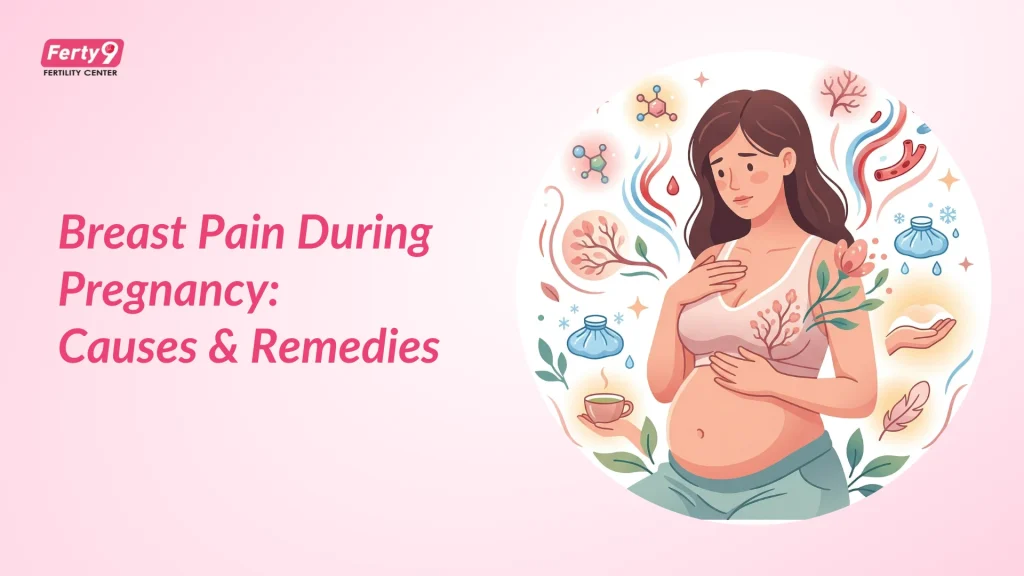
If your breasts feel heavy, sore, or overly sensitive to even the brush of your clothes, do not worry—you are not alone. This is your body’s completely natural way of preparing to nourish your little one. Let’s break down exactly why this happens, how it changes throughout the nine months, and the best, simple home remedies to bring you comfort.
Understanding Breast Pain in Pregnancy
What Breast Pain Feels Like During Pregnancy
Every woman experiences this differently. For some, it feels like a dull, heavy ache, similar to the soreness you might feel right before your period, but much stronger. For others, it is a sharp tingling sensation or extreme tenderness where even taking a shower or putting on a bra feels uncomfortable.
When Breast Pain Typically Starts
You might be surprised to know that breast tenderness is often the earliest symptom of pregnancy. For many women, it begins as early as one to two weeks after conception—sometimes even before you miss your period or take a pregnancy test!
Key Takeaways
- Breast Pain Can Be an Early Pregnancy Sign – Breast tenderness may begin 1 to 2 weeks after conception, sometimes before a missed period or pregnancy test.
- Hormonal Changes Cause Breast Tenderness – Rising estrogen and progesterone help breast tissue grow and prepare for breastfeeding, which can cause soreness and sensitivity.
- Breast Pain Can Change During Pregnancy – Pain is often strongest during the first trimester, usually eases in the second trimester, and may return in the third trimester as the breasts become heavier.
- Simple Remedies Can Ease Breast Discomfort – A supportive cotton maternity bra, warm or cold compresses, reduced salt intake, good hydration, and gentle massage can help relieve soreness and swelling.
- Some Breast Symptoms Need Medical Attention – A hard lump that does not go away, redness with fever, bloody discharge, or severe localized left-sided chest pain should be checked by a doctor.
Why Breast Pain Happens During Pregnancy
Hormonal Changes and Breast Tissue Growth
The moment you become pregnant, your body turns into a hormone-producing factory. The sudden surge in estrogen and progesterone is the main reason behind breast pain during pregnancy. These hormones signal the breast tissue to grow and expand to get ready for the baby.
Increased Blood Flow to the Breasts
Your body produces extra blood during pregnancy to support your growing baby. A lot of this blood is directed to your chest area. You might even notice prominent blue veins appearing under the skin of your breasts. This extra blood flow causes a feeling of fullness and aching.
Milk Duct Development and Preparation for Lactation
Even though your baby is months away from being born, your body starts preparing for breastfeeding immediately. The milk ducts and milk-producing cells inside your breasts begin to multiply and expand. This internal “construction work” naturally leads to soreness.
Common Causes of Breast Pain During Pregnancy
Hormonal Fluctuations
Hormones are responsible for the constant shifts in how you feel. Because your hormone levels are rising rapidly in the first few months, your breasts react strongly, causing constant aching.
Breast Enlargement
As the fat layer thickens and milk ducts grow, your cup size will increase. The rapid stretching of the skin to accommodate this growth can cause itchiness and a heavy, dragging pain.
Nipple Sensitivity and Areola Changes
You will likely notice that your nipples become extremely sensitive. The dark circle around your nipple (the areola) will also become darker and wider. Little bumps may appear on the areola—these are completely normal glands that produce oil to keep your nipples moisturized.
Fluid Retention and Breast Swelling
Pregnancy hormones cause your body to hold onto more water. This fluid retention leads to breast swelling during pregnancy, making your breasts feel unusually heavy and swollen, especially at the end of a long day.
Breast Pain Across Different Pregnancy Trimesters
First Trimester Breast Changes
The first three months are usually when the pain is the sharpest. Your body is shocked by the sudden hormonal changes, making your breasts feel swollen, tingly, and very sore to the touch.
Second Trimester Breast Sensations
For most Indian women, the second trimester (months 4 to 6) brings a lot of relief. Your body gets used to the hormone levels, and the sharp tenderness usually fades. However, your breasts will continue to grow, so you might feel a heavy sensation instead of sharp pain.
Third Trimester Breast Discomfort
In the final stretch, your breasts are fully gearing up for feeding. You might experience the return of soreness simply because of how heavy they have become. You may also notice a thick, yellowish fluid leaking from your nipples. This is colostrum (your baby’s first milk) and is a wonderful, normal sign!
Effective Remedies for Breast Pain During Pregnancy
Wearing the Right Supportive Bra
Ditch your old underwire bras—they restrict blood flow and cause more pain. Invest in good quality, seamless, 100% cotton maternity bras. Wide shoulder straps and a supportive under-band will take the weight off your chest and shoulders. Since the Indian climate can be hot and humid, breathable cotton is essential to prevent sweat-induced rashes.
Warm and Cold Compress Therapy
Temperature therapy works wonders. If your breasts feel stiff and achy, taking a warm shower or placing a warm towel over your chest can relax the tissues. If you are experiencing severe breast swelling during pregnancy, wrapping an ice pack in a cloth and applying it for 10 minutes can numb the pain and reduce inflammation.
Lifestyle Adjustments and Diet
To reduce fluid retention, cut back on your salt intake. This means not eating papads, pickles (achar), and salty namkeens. Drink plenty of plain water, fresh coconut water, or lemon water to flush out excess toxins and reduce swelling.
Safe Exercises and Gentle Massage
After a bath, gently massage your breasts with pure coconut oil or almond oil. Use very light, circular strokes. This not only soothes the pain but also keeps the skin moisturized, reducing stretch marks and itchiness. Mild stretching exercises for your arms and shoulders can also relieve chest tension.
When Breast Pain Could Signal a Medical Concern
While soreness is expected, it is important to listen to your body if things feel wrong.
Symptoms That Require Medical Attention
You should consult your gynaecologist if you notice:
- A hard, distinct lump that doesn’t go away (while some lumpiness is normal, a hard mass should be checked).
- Redness, heat, or a fever, which could indicate a breast infection.
- Unexplained discharge that contains blood.
- Severe, localized left breast pain during pregnancy. While this can sometimes just be muscular or related to severe gas and acidity (which is very common due to Indian spicy foods and pregnancy hormones), sharp left-sided chest pain that radiates to your arm or back should be evaluated immediately by a doctor to rule out any heart-related issues.
Summary
Experiencing breast pain during pregnancy can be uncomfortable, but it is a beautiful reassurance that your body is doing exactly what it needs to do to care for your baby. By upgrading your bra size, using gentle home remedies like coconut oil massages, and managing your diet to reduce breast swelling during pregnancy, you can make this journey much more comfortable. Always remember to be gentle with yourself, and never hesitate to reach out to your healthcare provider if you feel uneasy about any symptom.











 No need to worry, your data is 100% safe with us!