


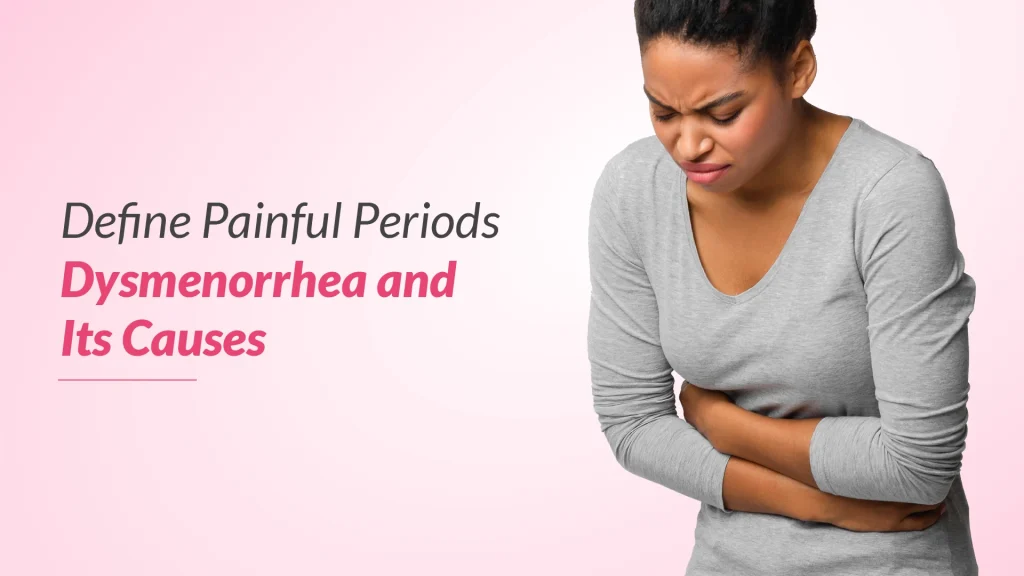
Many women experience mild cramping during their menstrual cycle, but period pain that interferes with work, school, sleep, or daily activities should not be considered normal. Severe menstrual pain, medically known as dysmenorrhea, can sometimes signal an underlying gynecological condition that requires medical attention.
At Ferty9, specialists help women understand whether their menstrual pain is part of a normal cycle or a sign of a condition such as endometriosis or uterine fibroids. Identifying the underlying cause is the first step toward effective treatment and better reproductive health.
Learn more about the Period Calculator in our detailed guide.
- Dysmenorrhea is painful menstrual cramping that may occur without an underlying disease (primary dysmenorrhea) or because of conditions such as endometriosis or fibroids (secondary dysmenorrhea).
- High levels of prostaglandins cause stronger uterine contractions, making primary dysmenorrhea the most common form of period pain. (Source: American College of Obstetricians and Gynecologists)
- Pain that worsens over time, begins before menstruation, or is associated with heavy bleeding or infertility should be evaluated by a gynecologist.
- Most women find relief through lifestyle changes, anti-inflammatory medications, or hormonal therapy, while secondary dysmenorrhea requires treatment of the underlying condition.
- Severe menstrual pain should not be ignored, as early diagnosis can improve quality of life and help protect fertility.
What is Dysmenorrhea?
Dysmenorrhea is the medical term for painful menstrual cramps that occur just before or during menstruation. The pain is usually felt in the lower abdomen but may also spread to the lower back, hips, or inner thighs. While some women experience mild discomfort, others have severe cramps that disrupt everyday activities.
The pain occurs because the uterus contracts to shed its lining each month. These contractions are triggered by prostaglandins, hormone-like chemicals produced in the uterine lining. Higher prostaglandin levels cause stronger contractions, temporarily reducing blood flow to the uterus and leading to cramping pain. (Source: American College of Obstetricians and Gynecologists)
Although painful periods are common, persistent or worsening pain should not be ignored, particularly if it affects your daily routine.
Also read: How to stop period’s pain?
Types of Dysmenorrhea
Doctors classify dysmenorrhea into two main types based on its cause.
Primary Dysmenorrhea
Primary dysmenorrhea occurs without any disease affecting the reproductive organs. It usually begins during adolescence, within a few years after regular menstrual cycles start.
The pain is caused by increased prostaglandin production, which triggers stronger uterine contractions. Symptoms generally begin just before or at the start of menstruation and last one to three days. Many women notice that the pain becomes less severe with age or after childbirth.
Secondary Dysmenorrhea
Secondary dysmenorrhea results from an underlying medical condition affecting the uterus or other pelvic organs. Unlike primary dysmenorrhea, it often develops later in life after years of relatively painless periods.
Common causes include:
- Endometriosis
- Uterine fibroids
- Adenomyosis
- Pelvic inflammatory disease (PID)
- Cervical stenosis
The pain often begins several days before menstruation, lasts longer than a normal period, and may worsen over time. Treating the underlying condition usually provides long-term relief.
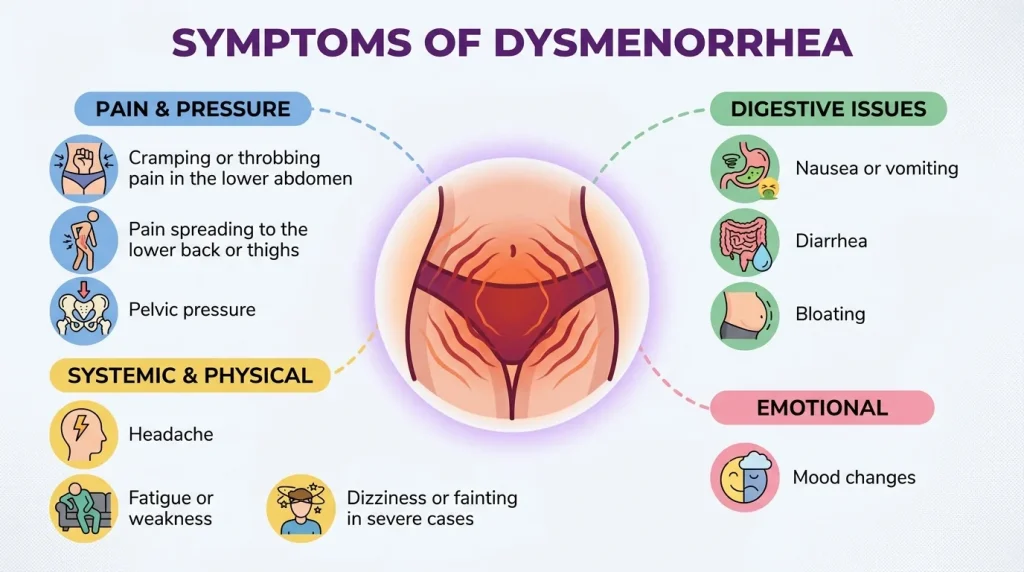
Symptoms of Dysmenorrhea
Symptoms vary from woman to woman, but the pain is usually most intense during the first one or two days of menstruation.
Common symptoms include:
- Cramping or throbbing pain in the lower abdomen
- Pain spreading to the lower back or thighs
- Pelvic pressure
- Nausea or vomiting
- Diarrhea
- Bloating
- Headache
- Fatigue or weakness
- Dizziness or fainting in severe cases
- Mood changes
If your menstrual pain repeatedly prevents you from attending work, school, or normal daily activities, it’s advisable to consult a gynecologist.
Also read: Irregular Periods: A warning sign to be taken care of
Causes of Dysmenorrhea
The causes differ depending on whether dysmenorrhea is primary or secondary.
Causes of Primary Dysmenorrhea
Primary dysmenorrhea is mainly caused by increased production of prostaglandins during menstruation. These chemicals cause stronger uterine contractions, reducing blood flow and oxygen to the uterine muscles, which leads to cramping pain.
Other factors that may contribute include:
- Family history of painful periods
- Increased sensitivity to pain
- Hormonal changes during adolescence
Causes of Secondary Dysmenorrhea
Secondary dysmenorrhea occurs because of an underlying gynecological condition.
Endometriosis
Endometriosis occurs when tissue similar to the uterine lining grows outside the uterus. It can cause severe menstrual pain, chronic pelvic pain, pain during intercourse, and fertility problems. According to the World Health Organization, it affects around 10% of women and girls of reproductive age worldwide. (Source: World Health Organization)
Uterine Fibroids
Fibroids are non-cancerous growths in the uterus that may cause heavy bleeding, pelvic pressure, and painful periods.
Adenomyosis
This condition develops when the uterine lining grows into the muscular wall of the uterus, leading to painful, heavy periods and an enlarged uterus.
Pelvic Inflammatory Disease (PID)
PID is a bacterial infection of the reproductive organs that may cause pelvic pain, fever, unusual vaginal discharge, and painful menstruation. Prompt treatment is important to reduce the risk of infertility.
Cervical Stenosis
A narrowed cervix can make it difficult for menstrual blood to flow normally, increasing pressure inside the uterus and causing painful cramps.
Also Read: Gynecological Disorders that Women Must Never Ignore
Who Is More Likely to Experience Painful Periods?
Although dysmenorrhea can affect women of any age after menstruation begins, the risk is higher if you:
- Started menstruating before age 12
- Are younger than 30 years
- Have heavy or prolonged periods
- Have a family history of dysmenorrhea
- Smoke cigarettes
- Experience irregular menstrual cycles
- Have never been pregnant
Having these risk factors does not necessarily mean you’ll develop severe period pain, but they may increase your chances of experiencing dysmenorrhea.
How Is Dysmenorrhea Diagnosed?
If your menstrual pain is severe, keeps getting worse, or interferes with your daily routine, it’s important to consult a gynecologist. Identifying whether the pain is primary dysmenorrhea or caused by an underlying condition helps determine the most effective treatment.
Your doctor will begin by reviewing your menstrual history, symptoms, medical history, and any family history of painful periods. A pelvic examination may also be performed to check for signs of infection, fibroids, ovarian cysts, or other abnormalities.
If secondary dysmenorrhea is suspected, your doctor may recommend one or more of the following tests:
- Pelvic ultrasound to detect fibroids, ovarian cysts, or adenomyosis.
- MRI if more detailed imaging is required.
- Hysteroscopy to examine the inside of the uterus.
- Laparoscopy, the gold standard for diagnosing endometriosis when other tests are inconclusive.
Not every woman requires all these investigations. Your gynecologist will recommend the appropriate tests based on your symptoms.
Find Hope and Solutions for Female Infertility and Male infertility
Difference Between Normal Period Cramps and Dysmenorrhea
| Normal Menstrual Cramps | Dysmenorrhea |
| Mild to moderate pain | Moderate to severe pain |
| Begins with menstruation | May begin 1–3 days before the period |
| Lasts 1–2 days | Can last up to 72 hours or longer |
| Usually relieved with rest or pain relievers | May require medical treatment |
| Minimal impact on daily activities | Can interfere with work, school, or sleep |
| Pain stays in the lower abdomen | Pain may spread to the lower back and thighs |
| Few additional symptoms | May cause nausea, vomiting, diarrhea, headache, fatigue, or dizziness |
If period pain consistently disrupts your normal activities, it’s time to seek medical advice.
Related Read: Signs and Symptoms of Female Infertility
Treatment and Self-Care for Painful Periods
Treatment depends on the underlying cause and the severity of your symptoms.
Medications
Nonsteroidal anti-inflammatory drugs (NSAIDs), such as ibuprofen and naproxen, are usually the first treatment for primary dysmenorrhea. They work by reducing prostaglandin production, helping relieve menstrual cramps. (Source: American College of Obstetricians and Gynecologists)
Hormonal contraceptives, including birth control pills, hormonal IUDs, injections, or implants, may also reduce menstrual pain by suppressing ovulation and decreasing prostaglandin production.
Related read: Birth Control Pills and Their Effect on Menstrual Cycles and Women’s Health
Home Remedies
Simple lifestyle measures can also help reduce discomfort:
- Apply a heating pad or hot water bottle to the lower abdomen.
- Stay physically active with walking, yoga, stretching, or light exercise.
- Eat a balanced diet and stay hydrated.
- Get enough sleep and manage stress through relaxation techniques.
- Avoid smoking, as it may worsen menstrual cramps.
Some women may benefit from omega-3 fatty acids or magnesium supplements, although these should only be taken after consulting a healthcare provider.
Treating Secondary Dysmenorrhea
If an underlying condition is responsible, treatment focuses on addressing the cause. Depending on the diagnosis, this may include:
- Hormonal therapy for endometriosis
- Medication or surgery for uterine fibroids
- Antibiotics for pelvic inflammatory disease
- Surgery for severe endometriosis or adenomyosis
Your treatment plan will depend on your age, symptoms, overall health, and future pregnancy plans.
When Should You See a Gynecologist?
Consult a healthcare professional if you experience:
- Severe cramps that interfere with daily activities
- Pain that worsens with each menstrual cycle
- Heavy or irregular menstrual bleeding
- Pain during sexual intercourse
- Pelvic pain even after your period ends
- Fever or foul-smelling vaginal discharge
- Difficulty conceiving along with painful periods
- Little or no relief from over-the-counter pain medications
Early diagnosis can help identify conditions such as endometriosis or fibroids before they affect your reproductive health or quality of life.
Can Painful Periods Affect Fertility?
Primary dysmenorrhea does not usually affect fertility because it is caused by hormonal changes rather than abnormalities in the reproductive organs. However, secondary dysmenorrhea may be associated with conditions that can affect fertility.
For example:
- Endometriosis may damage the ovaries or fallopian tubes and make conception more difficult.
- Fibroids can interfere with embryo implantation depending on their size and location.
- Pelvic inflammatory disease (PID) may cause scarring of the fallopian tubes, increasing the risk of infertility.
Painful periods alone do not mean you’ll have fertility problems. However, if menstrual pain is accompanied by infertility, chronic pelvic pain, or pain during intercourse, it’s important to seek a specialist evaluation.
Conclusion
Painful periods, or dysmenorrhea, are a common gynecological concern, but severe menstrual pain should never be considered something you simply have to live with. While primary dysmenorrhea is usually caused by increased prostaglandin production, secondary dysmenorrhea may indicate conditions such as endometriosis, adenomyosis, uterine fibroids, or pelvic inflammatory disease.
Fortunately, effective treatments are available. Lifestyle changes, medications, and hormonal therapies can help manage primary dysmenorrhea, while treating the underlying cause often provides long-term relief in secondary dysmenorrhea. If your period pain is becoming more severe, affecting your daily life, or occurring alongside heavy bleeding or fertility concerns, consult a gynecologist for a proper evaluation and personalized treatment plan.
References
- American College of Obstetricians and Gynecologists (ACOG): Dysmenorrhea: Painful Periods
- PubMed: Dysmenorrhea and Endometriosis in the Adolescent
- Johns Hopkins Medicine: Dysmenorrhea
- WHO: Endometriosis


















 No need to worry, your data is 100% safe with us!