


Experiencing painful menstrual cramps every month can make even simple daily activities feel overwhelming. While mild cramping is a normal part of menstruation for many women, severe pain shouldn’t be ignored or simply accepted as something you have to live with. The good news is that the foods you eat, along with a few healthy lifestyle habits, may help reduce the intensity of menstrual cramps and improve your overall well-being during your period.
At Ferty9, our specialists often encourage women to look beyond temporary pain relief and adopt long-term lifestyle strategies that support hormonal health. Alongside medical treatment when needed, a balanced diet rich in anti-inflammatory nutrients can play an important role in managing period pain naturally.
Also read: Menstrual Cycle and Fertility
- Period pain is primarily caused by hormone-like chemicals called prostaglandins, which trigger uterine contractions during menstruation.
- A diet rich in magnesium, calcium, omega-3 fatty acids, fibre, and vitamin D may help reduce inflammation and ease menstrual cramps.
- Staying hydrated and limiting highly processed foods, excessive caffeine, and alcohol may help minimise bloating and discomfort.
- Regular exercise, heat therapy, and adequate sleep can complement dietary changes for better menstrual pain relief.
- Severe or worsening menstrual pain that disrupts daily life may indicate an underlying condition such as endometriosis or fibroids and should be evaluated by a healthcare provider.
Causes of period cramps
Bad period cramps (dysmenorrhea) occur due to the oxygen inability to reach the uterus tissue due to muscle contraction of one’s uterus walls.
First of all, if one suffers suffer from period cramps one should contact one’s doctor or health care provider to exclude such serious problems as endometriosis, fibroids or pelvic inflammatory disease which do need special treatment.
But if serious causes of period cramps are excluded one can think about methods of reducing the pain as well as discomfort. The use of prescribed or over-the-counter medications can work well but non-medicinal activities do better.
How to Stop Period Pain
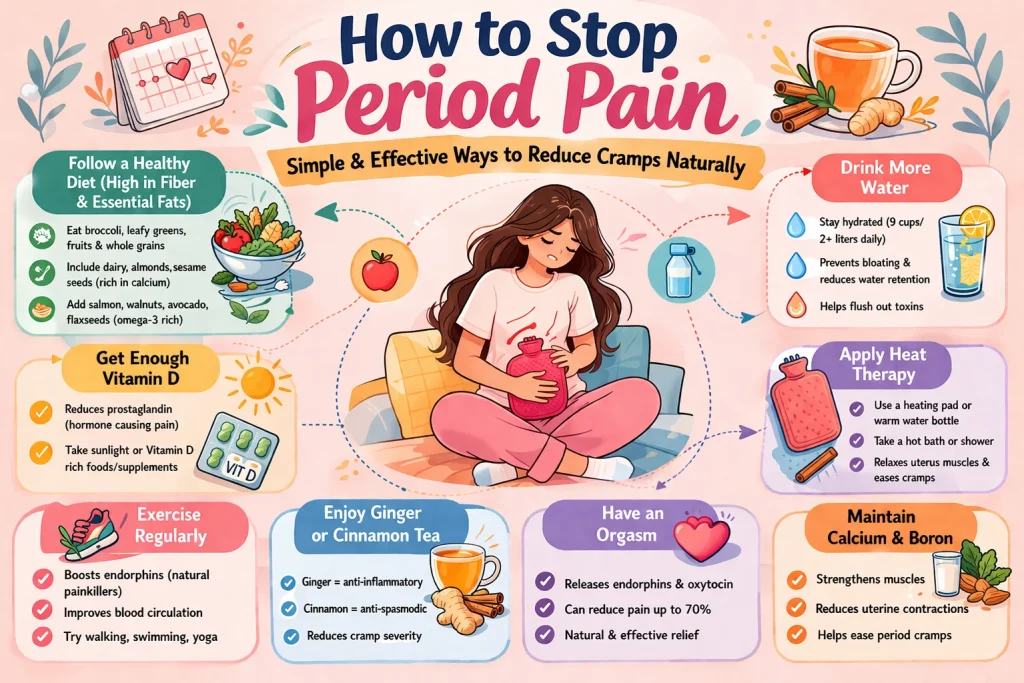
If you are struggling with period cramps, here is a simple and effective visual guide that summarizes the best natural ways to reduce menstrual pain. These methods focus on diet, lifestyle, and natural remedies that can provide fast relief.
Can Diet Really Help Stop Period Pain?
Yes, in many cases it can. While food alone may not completely eliminate menstrual cramps, a nutritious, anti-inflammatory diet can help reduce the body’s inflammatory response, support healthy hormone function, and improve muscle relaxation. These changes may lessen the severity of cramps over time, especially when combined with regular exercise, good hydration, and appropriate medical care.
Research suggests that women who regularly consume diets rich in fruits, vegetables, whole grains, healthy fats, and lean protein often report less severe menstrual pain than those who frequently eat ultra-processed foods. Current evidence also supports the role of nutrients such as magnesium, calcium, omega-3 fatty acids, and vitamin D in menstrual health (Source: American College of Obstetricians and Gynecologists).
Why Do Period Cramps Happen?
Period pain, medically known as primary dysmenorrhea, occurs because the uterus contracts to shed its lining during menstruation. These contractions are triggered by naturally occurring chemicals called prostaglandins. Higher prostaglandin levels usually cause stronger uterine contractions, leading to more intense cramps.
Many women describe the pain as a dull ache or throbbing sensation in the lower abdomen that may spread to the lower back or thighs. Some also experience nausea, diarrhoea, headaches, fatigue, or dizziness during the first one to three days of their period.
Not all menstrual pain is the same. Some women develop secondary dysmenorrhea, where an underlying medical condition causes painful periods. Common causes include:
- Endometriosis
- Uterine fibroids
- Adenomyosis
- Pelvic inflammatory disease (PID)
- Ovarian cysts
Unlike primary dysmenorrhea, secondary dysmenorrhea often worsens over time and may occur outside the menstrual cycle. If your pain suddenly becomes more severe or doesn’t improve with home remedies, it’s important to seek medical advice.
Best Diet for Menstrual Pain Relief
Your diet influences inflammation, muscle function, hormone balance, and overall health. Including nutrient-rich foods throughout the month, not just during your period, may help reduce menstrual discomfort over time.
1. Eat Magnesium-Rich Foods
Magnesium helps relax muscles and may reduce the intensity of uterine contractions. It also supports healthy nerve function, which can make cramps feel less severe.
Good dietary sources include:
- Pumpkin seeds
- Almonds
- Cashews
- Spinach
- Dark leafy greens
- Black beans
- Dark chocolate (70% cocoa or higher)
Magnesium may also help improve sleep quality, which is often disrupted during menstruation.
2. Increase Your Calcium Intake
Calcium supports normal muscle contraction and relaxation. Research suggests women with adequate calcium intake may experience fewer menstrual symptoms.
Include foods such as:
- Milk
- Yoghurt
- Cheese
- Fortified plant-based milk
- Tofu
- Sesame seeds
- Broccoli
- Kale
If you avoid dairy products, speak with your healthcare provider about whether calcium supplementation may be appropriate.
3. Include Omega-3 Fatty Acids
Omega-3 fatty acids have well-established anti-inflammatory properties. Several clinical studies suggest they may reduce menstrual pain by lowering inflammatory compounds involved in cramping (Source: National Institutes of Health).
Aim to include:
- Salmon
- Sardines
- Mackerel
- Walnuts
- Chia seeds
- Flaxseeds
Replacing saturated fats with healthy omega-3 fats also supports heart health and overall wellbeing.
4. Fill Your Plate with Colourful Fruits and Vegetables
Fresh fruits and vegetables provide antioxidants, vitamins, minerals, fibre, and water, all of which support overall health during menstruation.
Excellent choices include:
- Broccoli
- Bell peppers
- Carrots
- Spinach
- Berries
- Oranges
- Bananas
- Sweet potatoes
Bananas are particularly rich in potassium, which may help reduce bloating and support normal muscle function.
5. Choose High-Fibre Whole Grains
Whole grains provide steady energy while supporting digestive health. Fibre may also help regulate oestrogen levels, contributing to better hormonal balance.
Choose:
- Oats
- Brown rice
- Whole wheat bread
- Quinoa
- Millets
Replacing refined carbohydrates with whole grains may also help reduce energy crashes and sugar cravings during your period.
6. Stay Well Hydrated
Although it may seem counterintuitive, drinking more water can actually help reduce water retention and bloating.
Most women should aim for approximately 2 to 2.7 litres of fluids daily, although individual needs vary depending on activity level and climate (Source: U.S. National Academies of Sciences, Engineering, and Medicine).
Water, coconut water, lemon water, and unsweetened herbal teas are all good choices.
Foods to Limit During Your Period
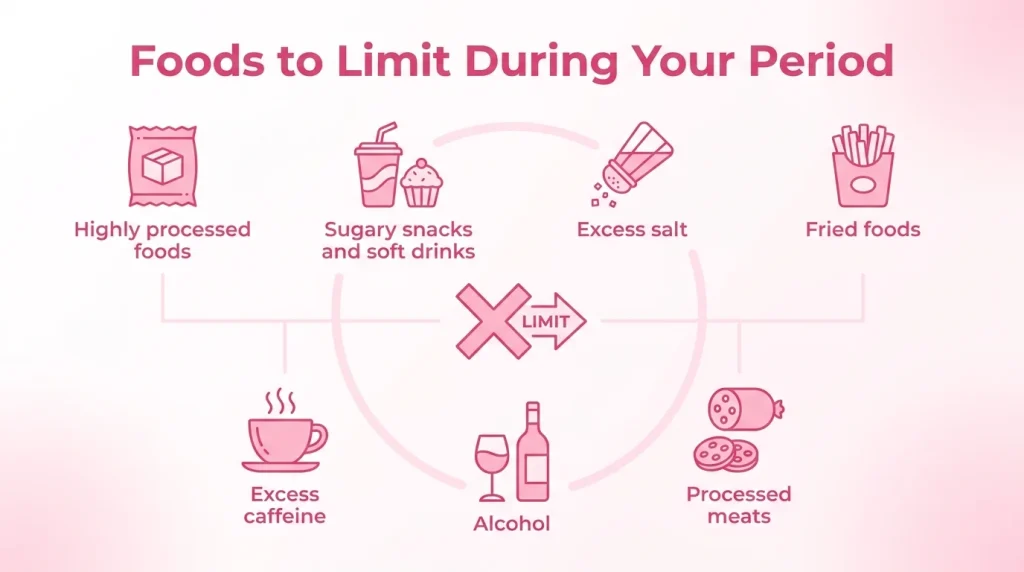
Some foods may contribute to inflammation, bloating, or fluid retention, potentially making cramps feel worse.
Consider limiting:
- Highly processed foods
- Sugary snacks and soft drinks
- Excess salt
- Fried foods
- Processed meats
- Alcohol
- Excess caffeine, particularly if it worsens anxiety or breast tenderness
You don’t need to eliminate these foods completely. Simply reducing them during your menstrual cycle may help some women feel more comfortable.
Other Natural Ways to Relieve Period Pain
While diet forms the foundation of long-term menstrual health, combining healthy eating with simple lifestyle measures can provide even greater relief. Many women find that using multiple strategies together helps reduce both the intensity and duration of cramps.
Get Enough Vitamin D
Vitamin D plays an important role in regulating inflammation and supporting muscle function. Some studies suggest that women with low vitamin D levels are more likely to experience painful menstrual cramps. Improving vitamin D status, either through safe sunlight exposure, diet, or supplements prescribed by a healthcare provider, may help reduce pain in some women.
Good dietary sources include:
- Fatty fish such as salmon and mackerel
- Egg yolks
- Fortified milk and cereals
- Mushrooms exposed to sunlight
If you’re considering vitamin D supplements, it’s best to discuss the appropriate dosage with your doctor, as excessive supplementation can also have health risks.
Sip Ginger or Cinnamon Tea
Certain herbal remedies have shown promising results in easing menstrual discomfort.
Ginger contains natural anti-inflammatory compounds that may help reduce the production of prostaglandins, the chemicals responsible for uterine contractions. Several clinical studies have found ginger to be comparable to some over-the-counter pain medications for mild to moderate menstrual pain when taken at the beginning of the menstrual cycle (Source: National Center for Complementary and Integrative Health).
Cinnamon contains natural compounds with anti-inflammatory and antispasmodic properties that may help relieve cramps and reduce bloating.
While herbal teas can be soothing, they should complement, not replace, medical treatment if your pain is severe.
Apply Heat to Relax Uterine Muscles
Heat therapy is one of the simplest and most effective home remedies for menstrual cramps. Applying warmth to the lower abdomen helps relax the uterine muscles, improve blood flow, and reduce pain.
You can try:
- A heating pad
- A hot water bottle
- Warm compresses
- A warm bath or shower
Research suggests that heat therapy may provide pain relief comparable to certain pain-relieving medications for some women with primary dysmenorrhea (Source: American College of Obstetricians and Gynecologists).
Stay Physically Active
Exercise may be the last thing you feel like doing during painful periods, but gentle movement often helps reduce discomfort.
Physical activity stimulates the release of endorphins, the body’s natural pain-relieving chemicals. Exercise also improves circulation, reduces stress, and may decrease inflammation.
Suitable activities include:
- Walking
- Yoga
- Swimming
- Cycling
- Light stretching
You don’t need an intense workout. Even 20 to 30 minutes of moderate activity can make a noticeable difference for many women.
Prioritise Sleep and Stress Management
Stress doesn’t directly cause menstrual cramps, but it can make pain feel more intense. Poor sleep may also lower your pain threshold, making even mild cramps seem worse.
Simple habits that may help include:
- Sleeping 7 to 9 hours each night
- Practising deep breathing or meditation
- Gentle stretching before bed
- Limiting screen time before sleep
Looking after your emotional well-being is just as important as managing the physical symptoms.
Can Sex or Orgasm Help Relieve Period Pain?
For some women, yes. During orgasm, the body releases endorphins and oxytocin, which are natural chemicals associated with pain relief and feelings of well-being. Some women report temporary improvement in menstrual cramps after sexual activity or masturbation.
However, the evidence remains limited, and the effect varies considerably between individuals. It should be viewed as a possible complementary strategy rather than a proven treatment for dysmenorrhea.
When Should You See a Doctor?
Although mild to moderate menstrual cramps are common, severe pain is not something you should simply tolerate every month.
Speak with a healthcare provider if:
- Your pain prevents you from attending work, school, or daily activities.
- Pain medications no longer provide relief.
- Your cramps suddenly become much worse than usual.
- Pain continues even after your period ends.
- You experience unusually heavy bleeding or bleeding between periods.
- You develop fever, foul-smelling vaginal discharge, or severe pelvic pain.
These symptoms may indicate an underlying condition such as endometriosis, adenomyosis, uterine fibroids, or pelvic inflammatory disease that requires medical evaluation and treatment.
Early diagnosis often leads to more effective management and can also help protect future reproductive health.
References
- American College of Obstetricians and Gynecologists (ACOG). Dysmenorrhea: Painful Periods
- National Institutes of Health, Office of Dietary Supplements. Magnesium Fact Sheet for Health Professionals.
- National Institutes of Health, Office of Dietary Supplements. Vitamin D Fact Sheet for Health Professionals.
- National Center for Complementary and Integrative Health (NCCIH). Ginger.
- National Health Service (NHS). Period Pain.










 No need to worry, your data is 100% safe with us!