


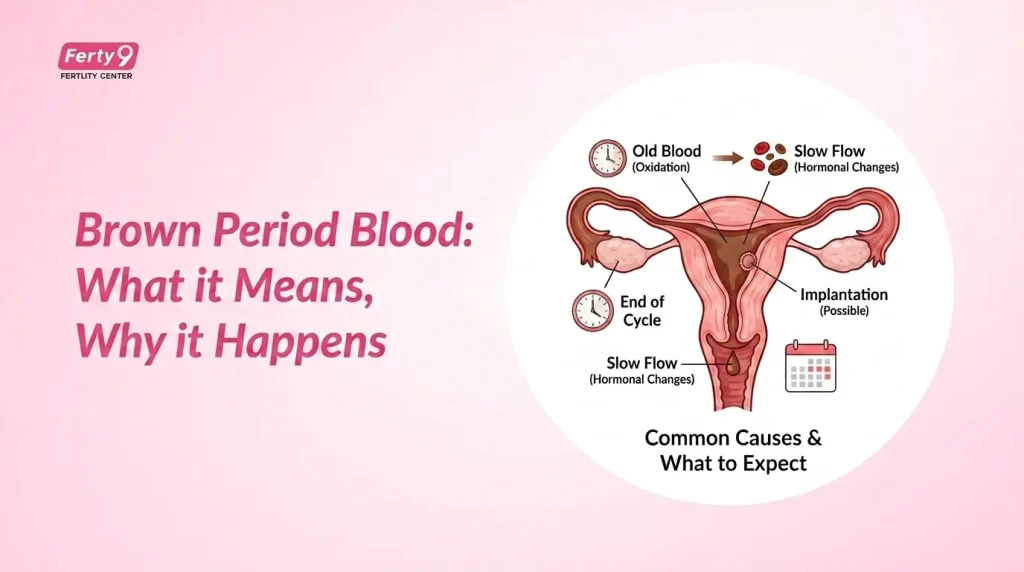
Many women notice brown period blood at some point and immediately worry that something is wrong with them. In most cases, though, brown blood during a period is completely normal and simply means that the blood is older and has taken longer to leave the body.
Period blood changes colour depending on how quickly it flows from the uterus through the cervix and vagina. Fresh blood is usually bright red, while older blood turns dark red, brown, or even almost black because it has been exposed to oxygen for longer. This process is called oxidation.
In this blog, we’ll explain:
- The brown period blood meaning
- Why do some women notice dark brown period blood
- What different shades can tell you?
- Whether pregnancy can cause brown spotting and
- When it’s worth speaking to a doctor.
Key Takeaways
- Brown Period Blood Usually Means Old Blood – Blood that takes longer to leave the uterus can oxidise and turn brown. This is usually normal.
- Brown Blood Is Common at the Start or End of a Period – Lighter, slower flow gives blood more time to oxidise, which can make it appear brown.
- Dark Brown Blood Usually Means Older Blood – A darker shade generally means the blood has remained longer before leaving the body.
- Brown Spotting Does Not Always Mean Pregnancy – Brown spotting can sometimes occur with implantation, but hormonal changes and other cycle changes can also cause it.
- Some Changes Need Medical Attention – Speak with a doctor if brown bleeding comes with severe pelvic pain, heavy bleeding, fever, foul-smelling discharge, bleeding after menopause or sex, or lasts longer than 7 to 10 days regularly.
What Is Brown Period Blood?
Brown period blood is usually menstrual blood that has taken longer to leave the uterus. As blood ages, it oxidises and changes from bright red to darker shades like maroon, dark brown, or light brown. Many women notice brown blood during their period days with lighter flow because the blood moves more slowly. Gynaecologists often explain that this is one of the most common and harmless period colour changes.
The Science Behind Blood Colour Changes
Blood changes colour when it reacts with oxygen outside the body. Fresh menstrual blood is typically bright or dark red because it leaves the uterus quickly. Blood that remains inside the uterus longer or vagina longer and gradually turns brown. This is the same reason a cut on your skin darkens as it dries. In clinical practice, doctors frequently reassure patients that brown blood alone is rarely a sign of disease.
Brown period blood is old menstrual blood that has oxidised over time. When blood leaves the uterus more slowly, oxygen changes its colour from red to brown. This commonly happens at the beginning or end of a period and is usually completely normal. – Dr. Anusha Kushanapally
Is Brown Period Blood Normal?
Yes, brown period blood is usually normal. Many women experience it occasionally, especially during lighter flow days or around the beginning and end of menstruation.
Hormonal fluctuations, stress, contraceptive use, and changes in cycle timing can all influence menstrual colour. If the blood has no unusual smell and isn’t accompanied by severe pain, it is generally not a cause for concern.
Dark Brown Period Blood – What Does It Mean?
Dark brown period blood usually means the blood has remained in the uterus longer and has remained in the uterus longer before leaving the body. The darker the colour, the longer the oxidation process has occurred.
Women often notice dark brown period blood during slow-flow days. It may appear thick, sticky, or mixed with small clots. In most cases, this is completely harmless.
Why Is My Period Blood Dark Brown?
Dark brown period blood happens when menstrual blood leaves the body slowly. This commonly occurs at the start or end of a cycle when the uterine lining is shedding more gradually.
Hormonal birth control, stress, perimenopause, and irregular cycles can also slow menstrual flow. Many women ask, “Why is my period blood brown?” after missing a period or experiencing delayed bleeding, and delayed menstrual flow is often the explanation .
Dark Brown Discharge Between Periods
Dark brown discharge between periods is often caused by leftover blood leaving the uterus slowly. It may happen after ovulation, after sex, or before a period begins.
Hormonal contraception, stress, and cycle changes are common causes. However, persistent spotting between periods can sometimes be linked to conditions like polyps, infections, or hormonal imbalances.
Brown Period Blood at Different Times of Your Cycle
Brown blood during different stages of your cycle is usually linked to how quickly menstrual blood leaves the uterus. Timing often provides important clues about whether the change is normal.
Brown Blood at the Start of Your Period
Brown blood at the start of your period is usually blood from the previous cycle that is leaving the uterus later. The uterus naturally clears out older blood first before fresh bleeding begins.
This type of bleeding is especially common after a lighter month or a delayed period. Many women notice only a small amount of brown spotting before normal red bleeding starts.
Brown Blood at the End of Your Period
Brown blood at the end of a period is one of the most common menstrual colour changes. Flow becomes lighter during the final days of menstruation, which gives blood more time to oxidise.
This is why women often see brown streaks, spotting, or discharge instead of bright red bleeding near the end of their cycle. It is usually completely harmless.
Brown blood at the beginning or end of a period is usually normal. It simply means the blood is leaving the uterus more slowly and has had time to oxidise before exiting the body.
Brown Period Blood for a Week – Should You Be Worried?
Brown period blood for a week can be normal if your periods are naturally light or slow-flowing. Some women consistently experience longer spotting phases before or after menstruation.
However, if brown bleeding lasts longer than seven days regularly, becomes heavy, or appears with pelvic pain, it’s worth getting checked. Conditions like hormonal imbalance, fibroids, or polycystic ovary syndrome (PCOS) can sometimes affect bleeding patterns.
Different Shades of Brown Period Blood Explained
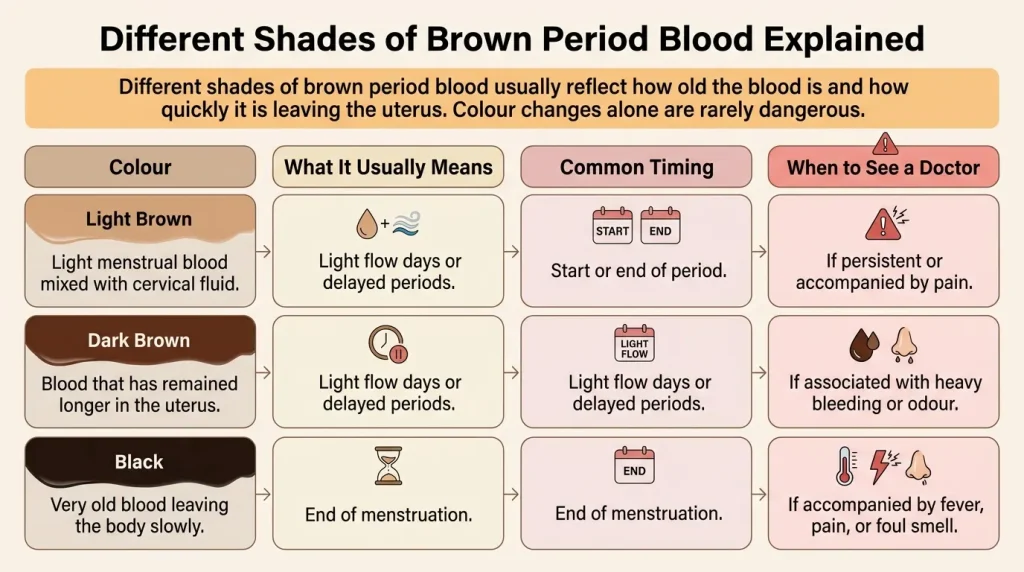
Different shades of brown period blood usually reflect how old the blood is and how quickly it is leaving the uterus. Colour changes alone are rarely dangerous.
| Colour | What It Usually Means | Common Timing | When to See a Doctor |
|---|---|---|---|
| Light Brown | Light menstrual blood mixed with cervical fluid | Start or end of period | If persistent or accompanied by pain |
| Dark Brown | Blood that has remained longer in the uterus | Light flow days or delayed periods | If associated with heavy bleeding or odour |
| Black | Very old blood leaving the body slowly | End of menstruation | If accompanied by fever, pain, or foul smell |
Light Brown Period Blood
Light brown period blood is typically mildly oxidised blood mixed with cervical fluid. It often appears during very light flow days or spotting.
Some women notice light brown discharge around ovulation or before their period starts. In many cases, this is simply the body clearing small amounts of retained menstrual blood .
Dark Brown Period Blood
Dark brown period blood usually indicates blood that has stayed in the uterus longer before leaving the body . The colour may appear chocolate brown, deep maroon, or almost black.
This commonly happens during slow-flow days and is usually harmless. However, persistent dark brown bleeding with pain or unusual discharge should be evaluated.
Brown Period Blood With Clots
Brown period blood with clots can happen when slow-moving menstrual blood mixes with pieces of the uterine lining. Small clots are common during menstruation and are usually not dangerous.
Larger clots, very heavy bleeding, dizziness, or severe cramps may suggest conditions such as fibroids or adenomyosis. If this happens regularly, a medical review is sensible.
Brown Period Blood and Pregnancy
Brown blood can sometimes be linked to pregnancy, especially during early implantation or hormonal changes. Light brown spotting is often less concerning than heavy red bleeding.
Still, any bleeding during pregnancy deserves attention if it becomes painful, heavy, or persistent.
Can Brown Blood Be a Sign of Pregnancy?
Yes, brown blood can occasionally be an early sign of pregnancy. Some women experience implantation bleeding when a fertilised egg attaches to the uterine lining.
Implantation bleeding is usually light pink or brown and lasts one to two days. It is typically much lighter than a normal period.
Brown Blood During Early Pregnancy
Brown blood during early pregnancy is often blood leaving the uterus more slowly. Many pregnant women notice light brown spotting after exercise, sex, or hormonal changes.
Although mild spotting can be normal, heavy bleeding, cramping, or tissue-like discharge should always be assessed urgently. Doctors may recommend an ultrasound or hormone testing for reassurance.
When Brown Period Blood Is Usually Harmless
Brown period blood is usually harmless when it appears at the beginning or end of your period and is not accompanied by severe symptoms. In most cases, it simply reflects blood that has taken longer to leave the uterus.
Many women notice brown spotting after stress, travel, hormonal contraception changes, or delayed periods. These temporary shifts are common and often settle naturally within one or two cycles.
You can usually monitor brown bleeding at home if:
- It lasts only a few days
- There is no strong smell
- You do not have severe pelvic pain
- The flow remains light
- Your cycle returns to normal afterwards
When Should You See a Doctor About Brown Period Blood?
Brown period blood is usually harmless, but certain symptoms should not be ignored. Paying attention to associated symptoms matters more than colour alone.
Signs That Brown Blood Is Normal
Brown blood is usually normal when it appears briefly and without severe symptoms. Common reassuring signs include:
- Brown spotting at the start or end of a period
- Light flow without severe pain
- No strong or unpleasant odour
- Occasional colour changes during stress or hormonal shifts
- Mild spotting while using hormonal contraception
Many women notice temporary cycle changes after stress, travel, illness, or stopping birth control. These changes often settle naturally within a few months.
Warning Signs to Watch For
Brown period blood may need medical attention if it appears with unusual symptoms. You should speak to a doctor if you experience:
- Severe pelvic pain
- Heavy bleeding or large clots
- Fever or chills
- A foul-smelling discharge
- Bleeding after menopause
- Bleeding after sex
- Brown bleeding lasting longer than 7–10 days regularly
- Sudden major changes to your normal cycle
Gynaecologists often emphasise that your “normal” cycle matters most. If something feels significantly different for your body, it deserves attention.
| Myth | Fact |
| Brown blood always means infection | Most cases are completely normal |
| Dark brown blood means unhealthy blood | A darker colour usually means older menstrual blood |
| Brown spotting always means pregnancy | Hormonal changes are a more common cause |
| Brown blood means infertility | Menstrual colour changes rarely affect fertility |
| Only red blood is normal | Period blood naturally ranges from red to brown |
Summary
Brown period blood is usually just oxidised blood that has taken longer to leave the uterus that has taken longer to leave the uterus. It commonly appears at the beginning or end of a period and is rarely a sign of a serious problem. Many women notice occasional colour changes throughout their reproductive years, especially during stress, hormonal shifts, or lighter cycles.
Trust your instincts about your body. If brown bleeding comes with pain, unusual odour, heavy flow, or persistent changes, it’s sensible to speak with a healthcare professional for reassurance.
Explore more women’s health articles on ferty9.com






















 No need to worry, your data is 100% safe with us!