


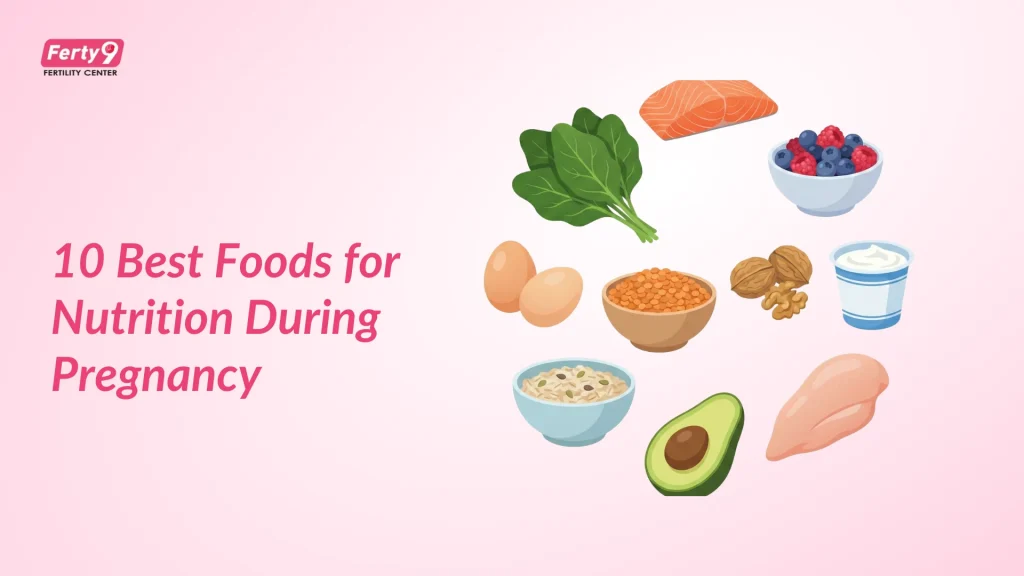
“You are eating for two now!” Every pregnant woman in India has heard this advice from her mother or grandmother. But does it mean you should eat double the food? Absolutely not. It means you need double the quality.
Your baby is building a brain, bones, and organs from scratch, and the raw materials come entirely from your plate. What you eat today directly impacts your baby’s health tomorrow.
At Ferty9 Fertility Center, we believe that pregnancy nutrition isn’t just about weight gain; it’s about “nourishment.” Here is a simple, practical guide to the Top 10 Foods every Indian mother should include in her diet for a smart & healthy baby.
- Best Foods for Pregnancy – A healthy pregnancy diet includes leafy greens, eggs, dairy, fruits, whole grains, nuts, seeds, beans, and fish to support the baby’s growth and the mother’s health.
- Essential Nutrients Matter – Iron, folic acid, calcium, protein, omega-3 fats, and fiber help support brain development, strong bones, healthy blood, and overall pregnancy health.
- Eat a Balanced Diet – Include a mix of proteins, whole grains, fruits, vegetables, and healthy fats every day instead of relying on a single “superfood.”
- Stay Hydrated and Limit Junk Food – Drink plenty of water and reduce sugary, processed, and high-fat foods to support healthy weight gain and better nutrition during pregnancy.
- Follow Your Doctor’s Advice – Choose foods based on your health needs and take prenatal supplements only if recommended by your healthcare provider.
Why Nutrition Matters So Much During Pregnancy
How Food Directly Impacts a Baby’s Growth
Think of food as building blocks. Protein builds the baby’s muscles; Calcium forms their skeleton; Iron creates their blood supply. If your diet l, the baby will literally “borrow” these nutrients from your own bones and blood, leaving you exhausted.
Nutrition and a Mother’s Energy Levels
Pregnancy can be draining. A balanced diet prevents common issues like anaemia (low haemoglobin), morning sickness, and extreme fatigue, helping you enjoy this beautiful journey rather than just enduring it.
Understanding Pregnancy Nutrition Basics
Calories vs Nutrients—What Matters More
You only need about 300 extra calories per day (roughly equivalent to two rotis and a bowl of dal) during the second and third trimesters. Focus on Nutrient Density (vitamins per bite) rather than just “filling your stomach.”
Common Pregnancy Nutrition Myths
- Myth: “Eat lots of ghee for a smooth delivery.”
- Fact: Excess ghee only adds fat, not lubrication for birth. Use it in moderation.
- Myth: “Avoid papaya completely.”
- Fact: Fully ripe papaya is safe; only raw/unripe papaya (which contains latex) causes contractions.
Key Nutrients Every Pregnant Woman Needs
Protein, Iron, Calcium, and Folate
- Protein: The “growth nutrient” for the baby’s tissues.
- Iron: Essential because your blood volume doubles.
- Calcium: For baby’s strong bones and teeth.
- Folate (Folic Acid): Crucial in the first 3 months to prevent spinal defects.
DHA, Choline, and Iodine Explained Simply
These are the “Brain Boosters.” DHA (an Omega-3 fatty acid) and Iodine are critical for developing your baby’s intelligence and vision.
Food #1 – Leafy Green Vegetables
Spinach, Kale, and Fenugreek (Methi) Benefits
Dark green vegetables are nature’s multivitamins. They are packed with Folate, Iron, and Fiber. In India, we are lucky to have Palak (Spinach), Methi (Fenugreek), and Moringa (Drumstick leaves).
Best Ways to Eat Greens During Pregnancy
- Avoid raw salads due to infection risk.
- Cook them well in Dal Palak or Methi Paratha. Adding a squeeze of lemon (Vitamin C) helps your body absorb the iron better.
Food #2 – Eggs
Why Eggs Are a Pregnancy Superfood
Eggs are one of the few foods that contain almost every nutrient you need. They are rich in Choline, which boosts baby’s brain development and memory.
How Many Eggs Are Safe Per Day
1 to 2 fully cooked eggs daily are perfectly safe and recommended.
- Note: Avoid half-boiled or raw eggs to prevent Salmonella infection.
Food #3 – Dairy Products
Milk, Curd, and Paneer for Bone Health
Your baby needs calcium to grow bones. If you don’t eat enough, your body will take calcium from your teeth and bones. Dairy provides easy-to-absorb calcium and protein.
- Curd (Yogurt): Great for digestion and cooling the body.
- Paneer: A high-protein snack for vegetarians.
Lactose Intolerance Alternatives
If milk makes you gassy, try Buttermilk (Chaas), fortified almond milk, or Tofu.
Food #4 – Lean Proteins
Chicken, Fish, and Plant-Based Proteins
- Chicken: Excellent source of high-quality protein and iron.
- Fish: Low-mercury fish like Salmon or Pomfret provide DHA for the brain.
- Vegetarians: Soya chunks and Tofu are great alternatives.
Protein Needs Trimester by Trimester
Your protein requirement increases as the baby grows. Aim for 70–80 grams per day in the third trimester (when the baby gains the most weight).
Food #5 – Fruits Rich in Vitamin C
Oranges, Guava, and Kiwi
Vitamin C is the “Immunity Builder.” It protects you and the baby from infections. Guava (Amrood) is a superstar fruit in India, having 4x more Vitamin C than an orange!
Fruits That Help Iron Absorption
Eating an orange or drinking Mousambi juice along with your lunch helps your body absorb the iron from your dal or vegetables.
Food #6 – Whole Grains
Brown Rice, Oats, and Whole Wheat
Swap white bread and maida for whole grains. They release energy slowly, preventing sudden hunger pangs and keeping your sugar levels stable (important for preventing Gestational Diabetes).
Managing Constipation With Fiber
Pregnancy hormones slow down digestion. The fibre in oats, Daliya (broken wheat), and brown rice keeps your bowel movements regular.
Food #7 – Nuts and Seeds
Almonds, Walnuts, and Flaxseeds
- Walnuts & Flaxseeds: Rich in Omega-3 (DHA) for baby’s eyes and brain.
- Almonds: Packed with Vitamin E and Magnesium.
Portion Control Matters
Nuts are high in calories. A small fistful (soaked overnight to improve digestion) is enough.
Food #8 – Legumes and Pulses
Lentils, Chickpeas, and Beans
For Indian vegetarians, Dal, Rajma, and Chana are the primary sources of protein and folate.
Affordable Nutrition Powerhouses
Sprouting your pulses (Moong sprouts) increases their vitamin content and makes them easier to digest, reducing gas/bloating.
Food #9 – Healthy Fats
Avocado, Ghee, and Olive Oil
Fat is necessary for the baby’s brain growth.
- Ghee: One teaspoon on your roti is healthy and aids digestion.
- Avocado: Full of good monounsaturated fats and potassium (helps leg cramps).
Fats That Support Baby’s Brain
Focus on unsaturated fats (nuts, seeds, olive oil) rather than saturated fats (fried snacks, vanaspati).
Food #10 – Iron-Rich Foods
Dates, Beets, and Lean Meats
Anaemia is very common in Indian pregnancies.
- Dates & Figs: Excellent natural sweeteners rich in iron.
- Beetroot: Helps boost haemoglobin levels naturally.
Preventing Anaemia in Pregnancy
Combine these iron-rich foods with Vitamin C (lemonade) for maximum absorption. Avoid drinking tea/coffee immediately after meals, as caffeine blocks iron absorption.
Foods to Avoid During Pregnancy
Raw, Undercooked, and Processed Foods
- Raw Meat/Sushi: Risk of bacteria.
- Unpasteurized Milk/Cheese: Risk of Listeria infection.
Hidden Risks in Everyday Items
Be careful with “street food” or salads from outside, which might be washed with unclean water.
Foods to Limit—Not Completely Avoid
Caffeine and Sugar
- Coffee/Chai: Limit to 1–2 small cups (200mg caffeine) per day.
- Sugar: Too much sugar increases the risk of a large baby and difficult delivery.
Packaged Snacks and Junk Food
Chips and biscuits are “empty calories”—they give weight but no nutrition.
Pregnancy Diet by Trimester
First Trimester Nutrition Tips
Focus on Folate (Greens, Citrus) to prevent birth defects. Eat bland foods (crackers, toast) if you have nausea.
Second Trimester Energy Needs
The “honeymoon phase.” Focus on Calcium and Vitamin D (Milk, Eggs) as the baby’s bones start hardening.
Third Trimester Growth-Focused Foods
Focus on Protein and Omega-3 (Nuts, Fish, Dal) to support rapid brain growth and weight gain for the baby.
Hydration and Pregnancy
How Much Water Is Enough
Aim for 8–10 glasses (2.5 liters) daily. Water forms the amniotic fluid around the baby and carries nutrients to them.
Coconut Water and Natural Fluids
Coconut water is an excellent electrolyte drink that helps prevent dehydration and urinary tract infections (UTIs).
Common Pregnancy Diet Mistakes
Eating for Two—The Wrong Way
Don’t double your portion size. Just add one extra healthy snack (like a bowl of yogurt or a fruit) to your daily routine.
Ignoring Micronutrients
Don’t skip your prenatal vitamins ! Even the best diet might lack enough Iron or Folic Acid, so supplements are a safety net.
Simple Daily Meal Planning Tips
Balanced Indian Pregnancy Diet Example
- Breakfast: Oats Upma with veggies + 1 Egg.
- Mid-Morning: Fruit + Soaked Almonds.
- Lunch: 2 Roti + Bowl of Dal/Chicken + Palak Sabzi + Curd.
- Evening: Roasted Chana or Makhana + Coconut Water.
- Dinner: Khichdi with Ghee + Salad.
Making Nutrition Practical, Not Perfect
Some days you will only want to eat toast. That is okay. Aim for balance over the whole week, not just one meal.
Summary
Pregnancy is a journey of creating life, and your diet is the fuel. By including these Top 10 Superfoods—Leafy Greens, Eggs, Dairy, Proteins, Fruits, Whole Grains, Nuts, Legumes, Healthy Fats, and Iron-rich foods—you are giving your baby the best possible start in life. Confused about your diet? Visit Ferty9 Fertility Center to speak with our nutrition experts who can create a personalised pregnancy diet chart just for you.



















 No need to worry, your data is 100% safe with us!