


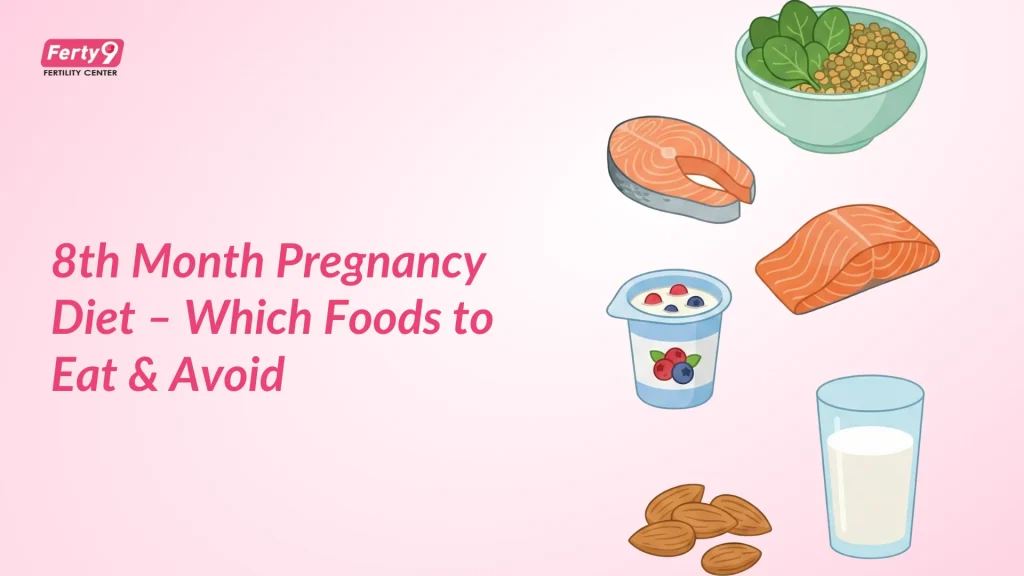
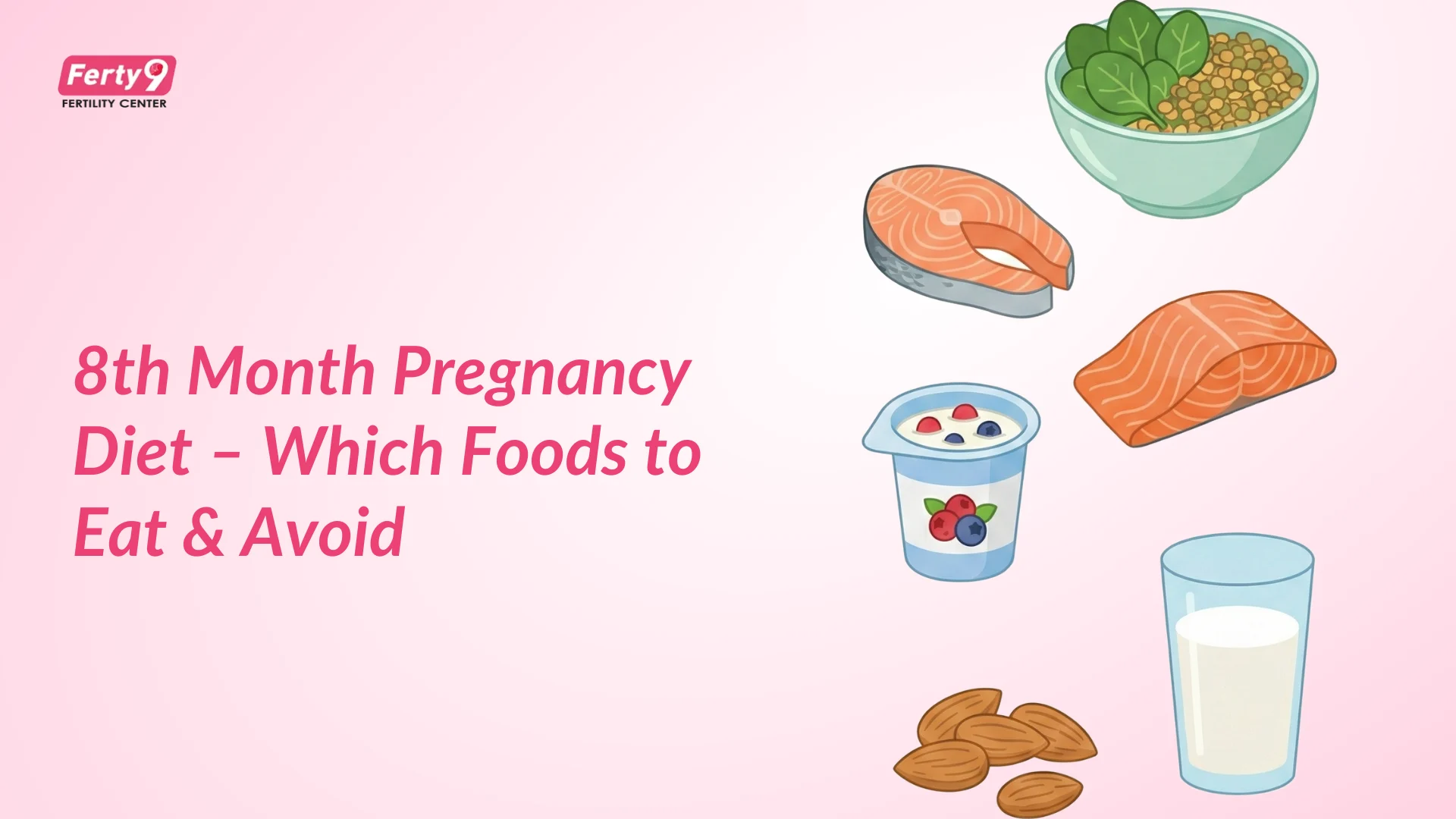
Welcome to the home stretch! Entering the 8th month of pregnancy (Weeks 29 to 32) is a major milestone. Your baby is now fully formed and is focused on one big job: gaining weight. In fact, your baby will likely double in weight during these final weeks!
This rapid growth puts a lot of demand on your body. You might be feeling heavier, dealing with acidity, or noticing your feet swelling up. This is why your 8th-month pregnancy diet is not just about “eating more”-it is about eating smart.
At Ferty9 Fertility Center, we believe that the right nutrition in this phase can help reduce labour complications, prevent anemia, and ensure your baby reaches a healthy birth weight. Here is your complete guide to fuelling the final lap.
- Prioritize Nutrient-Dense Foods – During the eighth month of pregnancy, focus on a balanced diet that includes protein, whole grains, fruits, vegetables, dairy, and healthy fats to support your baby’s rapid growth.
- Increase Iron and Calcium Intake – Iron-rich foods help support healthy blood production, while calcium-rich foods contribute to the development of your baby’s bones and teeth during the final trimester.
- Stay Well Hydrated – Drinking enough water throughout the day helps maintain amniotic fluid levels, supports digestion, and may reduce common pregnancy discomforts such as constipation.
- Choose Smaller, Frequent Meals – Eating smaller meals at regular intervals can help manage heartburn, bloating, and indigestion, which become more common during the eighth month of pregnancy.
- Follow Your Doctor’s Nutrition Advice – Continue taking prescribed prenatal supplements and follow your healthcare provider’s dietary recommendations to meet your nutritional needs and support a healthy pregnancy.
Why the 8th Month Diet is Critical
In the 8th month, the baby’s brain and lungs are maturing rapidly.
- Brain Development: Needs Omega-3 fats.
- Bone Strengthening: Needs Calcium (the baby is storing calcium now for life).
- Blood Supply: Needs Iron (to prevent maternal anemia before birth).
If you don’t eat enough, your baby will take these nutrients from your body, leaving you exhausted and weak for delivery.
Top Foods to Eat in the 8th Month
1. Calcium-Rich Foods (For Strong Bones)
Your baby’s skeleton is hardening.
- Eat: Milk, Curd (Dahi), Paneer, and Ragi (Finger Millet).
- Tip: Have a bowl of curd with lunch daily. It provides calcium and helps with digestion/heartburn.
2. Iron-Rich Foods (To Prevent Bleeding Risks)
You need your hemoglobin to be high for delivery.
- Eat: Spinach (Palak), Dates, Figs (Anjeer), Pomegranate, and Jaggery.
- Tip: Squeeze lemon on your palak or salads to help your body absorb the iron better.
3. Healthy Fats (For Brain Growth)
- Eat: Walnuts, Almonds (soaked), Flaxseeds, and Ghee (in moderation).
- Tip: 1 teaspoon of Ghee on your roti is healthy; 1 cup of Ghee is unnecessary!
4. Fiber-Rich Foods (To Fight Constipation)
Constipation is very common in the 8th month of pregnancy as the uterus presses on the intestines.
- Eat: Oats, Brown Rice, Broken Wheat (Daliya), and Green Leafy Vegetables.
- Tip: Drink 3 litres of water to help the fibre work.
5. Vitamin C (For Immunity)
- Eat: Oranges, Guavas, Amla, and Lemons. This keeps your amniotic sac strong and prevents infections.
Foods to Avoid or Limit in the 8th Month
While you need nutrition, some foods can cause discomfort or risk.
1. High-Sodium (Salty) Foods
- Avoid: Pickles (Achar), Papad, Chips, and Canned Soups.
- Why: Salt causes water retention. If your feet are swelling (Edema), cut the salt immediately.
2. Spicy and Oily Foods
- Avoid: Heavy curries, Samosas, and excessive chillies.
- Why: The baby is pushing against your stomach, making heartburn and acidity very severe in the 8th month. Eat bland, home-cooked meals.
3. Caffeine
- Limit: Tea/Coffee to 1 small cup a day.
- Why: Caffeine increases heart rate and acts as a diuretic (makes you pee more), leading to dehydration.
4. Raw or Uncooked Foods
- Avoid: Raw sprouts, half-boiled eggs, or sushi.
- Why: Risk of bacterial infection (Salmonella/Listeria), which can trigger premature labour.
Sample 8 Month Pregnancy Food Chart (Indian Diet)
Here is a simple, balanced plan to keep you energetic and full.
Common 8th Month Worries Solved
“I feel full after just two bites.”
This is normal because the uterus is squeezing your stomach. Solution: Switch to the “Grazing Method.” Instead of 3 big meals, eat 6 small mini-meals throughout the day.
“I have terrible heartburn.”
Solution:
- Do not lie down immediately after eating. Walk for 10 minutes.
- Finish your dinner 2 hours before sleeping.
- Sleep with your head elevated on two pillows.
Summary
The goal of your 8th-month pregnancy diet is simple: Light on the stomach, heavy on nutrition. Prioritize Iron and Calcium, cut down on Salt, and stay hydrated. You are just a few weeks away from meeting your little one—stay strong and eat well! Feeling unusually tired or swollen? Don’t skip your antenatal checkups. Visit Ferty9 Fertility Center to monitor your blood pressure and baby’s growth safely.


















 No need to worry, your data is 100% safe with us!