


Asthenozoospermia is a male fertility condition characterized by low sperm motility, meaning the sperm move too slowly or improperly to reach and fertilize an egg. While it presents no physical symptoms, it is a leading cause of male infertility. It is typically diagnosed through a standard semen analysis and, in many cases, can be effectively managed with appropriate treatment such as lifestyle changes, medications, or assisted reproductive techniques like IUI and IVF.
If you’ve recently come across this term in your semen analysis report, understanding what it means and what steps to take next can help you make informed decisions about your fertility journey.
- Asthenozoospermia Means Low Sperm Motility – Sperm may move too slowly, swim in circles, or fail to move properly, making it harder to travel through the female reproductive tract and reach the egg.
- Low Sperm Motility Often Has No Visible Symptoms – Sexual function and semen appearance can remain normal, with difficulty conceiving often being the main sign that leads to fertility testing.
- Several Factors Can Reduce Sperm Movement – Varicocele, infections, excessive heat, smoking, alcohol use, nutritional deficiencies, chronic stress, poor sleep, and hormonal problems are among the causes discussed.
- Semen Analysis Is the Main Diagnostic Test – A semen analysis checks sperm count, shape, and movement, with the article using progressive motility of at least 32% and total motility of at least 40% as reference values.
- Treatment Depends on the Underlying Cause – Lifestyle changes, fertility supplements, treatment for infections, varicocele surgery, IUI, and IVF with ICSI may be considered based on the severity and cause of low sperm motility.
What Is Asthenozoospermia?
When a couple faces difficulty in conceiving, the focus often turns to the female partner first. However, male fertility issues are equally responsible for delayed pregnancies in India. Sometimes, a man may have a normal sperm count, but his sperm struggle to swim effectively toward the egg. This specific condition is known medically as Asthenozoospermia.
If you have recently seen this term on your semen analysis report, do not panic. Here is a simple, comprehensive guide to help you understand the asthenozoospermia meaning, why it happens, and how it can be successfully treated.
Understanding the Asthenozoospermia Meaning
To achieve a natural pregnancy, sperm must be fast and strong swimmers. They have to travel from the vagina, through the cervix and uterus, and into the fallopian tubes to meet and fertilize the egg.
The asthenozoospermia meaning simply refers to “low sperm motility.” It means that a large percentage of a man’s sperm are either moving too slowly, swimming in circles, or not moving at all. When sperm cannot swim in a straight, forward direction (progressive motility), the chances of natural conception drop significantly.
What are the Types of Asthenozoospermia?
Did you know that not all low sperm motility issues are exactly the same? Doctors generally divide the asthenozoospermia meaning into two main categories:
- Primary Asthenozoospermia: This occurs when poor sperm movement is the main, underlying issue from the very beginning. It is usually caused by rare genetic factors or birth (congenital) defects that affect the physical structure of the sperm’s tail.
- Secondary Asthenozoospermia: This is far more common in India. It means the sperm were originally healthy and capable, but their movement has been slowed down by an external factor—such as a pelvic infection, hormonal imbalance, varicocele, or poor lifestyle habits.
Who Can Get Asthenozoospermia and Does It Affect Fertility?
Any sexually mature male can develop this condition at any point in his life. In fact, it is one of the most common issues discovered when Indian men undergo routine fertility testing.
Yes, it can significantly impact fertility, especially if a large percentage of sperm are unable to move effectively. Because the sperm lack the energy or direction to swim efficiently, they fail to travel through the female reproductive tract to reach the waiting egg. This makes natural conception very difficult. However, once the specific asthenozoospermia causes are identified, modern medical treatments can easily help couples overcome this hurdle.
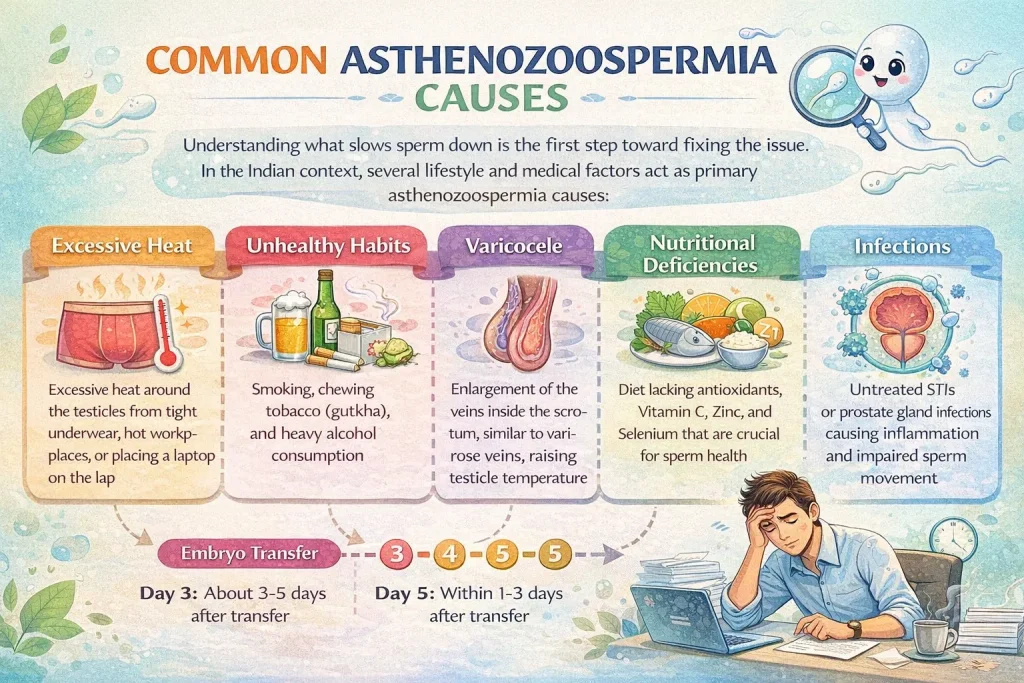
Common Asthenozoospermia Causes
Understanding what slows sperm down is the first step toward fixing the issue. In the Indian context, several lifestyle and medical factors act as primary asthenozoospermia causes:
- Excessive Heat: The testicles need to be cooler than the rest of the body to produce healthy, active sperm. Wearing tight underwear, working in high-temperature environments (like factory boilers or hot kitchens), or keeping a hot laptop directly on your lap can damage sperm movement.
- Unhealthy Habits: Smoking cigarettes, chewing tobacco (gutkha), and heavy alcohol consumption are massive contributors to poor sperm motility in Indian men.
- Varicocele: This is an enlargement of the veins inside the scrotum (similar to varicose veins in the legs). It increases the temperature in the testicles and lowers sperm quality.
- Nutritional Deficiencies: A diet lacking in essential antioxidants, Vitamin C, Zinc, and Selenium can leave sperm weak.
- Infections: Untreated sexually transmitted infections (STIs) or infections in the prostate gland can cause inflammation that impairs sperm movement.
- Chronic Stress: High-pressure jobs and poor sleep cycles disrupt the delicate balance of reproductive hormones like testosterone.
If you identify with any of these risk factors, it may be helpful to undergo a semen analysis and consult a fertility specialist for further evaluation.
Symptoms of Asthenozoospermia
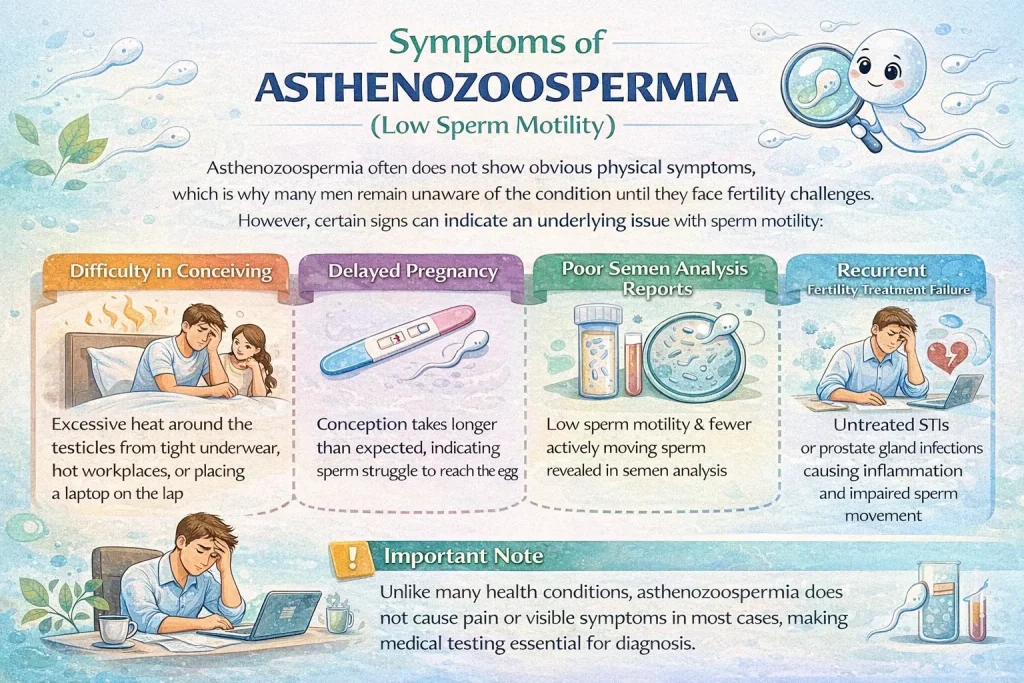
One of the trickiest parts of this condition is that it is completely silent. There are no visible physical symptoms. A man with low sperm motility will still have a normal sexual intimacy, normal erectile function, and his semen will look entirely normal to the naked eye.
The only “symptom” is the inability to get your partner pregnant after one year of regular, unprotected intercourse.
When Should You See a Fertility Specialist?
You should consider consulting a fertility specialist if:
- You have been trying to conceive for more than 12 months without success
- A semen analysis shows low sperm motility
- You have a history of varicocele, infections, or hormonal imbalance
- You have lifestyle risk factors such as smoking, alcohol use, or high stress
- Early evaluation can help identify the cause and improve your chances of successful treatment.
How is Asthenozoospermia Diagnosed?
Diagnosis is straightforward, painless, and relatively inexpensive in India. You will need to visit a fertility clinic or a pathology lab for a Semen Analysis (often called a sperm test).
You will provide a semen sample in a sterile cup, which is then analysed under a microscope. The lab technician will check how many sperm you have (count), their shape (morphology), and how well they are swimming (motility). According to standard medical guidelines, if less than 32% to 40% of your sperm are swimming forward properly, you will be diagnosed with the condition.
Normal Sperm Motility Reference Values
| Parameter | Normal Range |
| Progressive Motility | ≥32% |
| Total Motility | ≥40% |
These values are based on widely accepted WHO laboratory guidelines for semen analysis.
Effective Asthenozoospermia Treatment Options
The good news is that poor sperm motility is highly treatable. Depending on the root cause, your urologist or fertility specialist will recommend the best asthenozoospermia treatment for you.
If you are planning for pregnancy and have concerns about sperm health, early evaluation and timely treatment can make a meaningful difference.
1. Lifestyle and Dietary Changes
For many men, simple changes can significantly improve in many cases sperm movement within 3 to 6 months (the time it takes for new sperm to mature).
- Quit Tobacco and Alcohol: Stopping the use of smoking and chewing tobacco is the fastest way to improve sperm health.
- Antioxidant-Rich Diet: Incorporate Indian superfoods like amla (Indian gooseberry), walnuts, pumpkin seeds, and fresh green leafy vegetables to fight oxidative stress in the body.
- Yoga and Exercise: Moderate daily exercise and specific Yoga asanas (like Bhujangasana or Surya Namaskar) improve blood circulation to the pelvic region and reduce stress.
2. Medical Treatments and Supplements
- Fertility Supplements: Doctors frequently prescribe antioxidant supplements containing Coenzyme Q10 (CoQ10), L-carnitine, Zinc, and Vitamin E to act as an energy booster for slow sperm.
- Antibiotics: If a prostate or urinary tract infection is causing the low motility, a simple course of antibiotics can clear it up.
3. Surgical Intervention
If your poor motility is caused by a severe Varicocele, a minor surgical procedure to repair the enlarged veins can significantly improve both sperm count and movement.
4. Assisted Reproductive Technology (ART)
If lifestyle changes and medications do not work, modern Indian fertility clinics offer excellent backup options:
- IUI (Intrauterine Insemination): The lab washes and concentrates your best-moving sperm and places them directly into your partner’s uterus, giving them a head start.
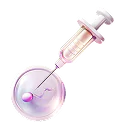
- Advanced fertility treatments such as IVF with ICSI (Intracytoplasmic Sperm Injection): For severe cases where sperm barely move, doctors can pick up a single living sperm using a microscopic needle and inject it directly into the egg to guarantee fertilization.
Final Thought
Receiving a diagnosis of low sperm motility can feel overwhelming, but it is not the end of your parenthood journey. In many cases, the condition can be managed effectively with the right treatment approach.
If you are facing difficulty conceiving or have concerns about your semen analysis report, consulting a fertility specialist can help you understand your options and choose the most suitable path forward.
Reference Sources
Standard Treatment Workflow for Male Infertility – Indian Council of Medical Research (ICMR)
https://www.icmr.gov.in/icmrobject/uploads/STWs/1725952326_urology_male_infertility.pdf
Good Clinical Practice Recommendations on Infertility – Federation of Obstetric and Gynaecological Societies of India (FOGSI)
National Guidelines for Accreditation, Supervision & Regulation of ART Clinics in India – Indian Council of Medical Research (ICMR)
https://main.icmr.nic.in/sites/default/files/art/ART_Clinics_in_India.pdf
Clinical Evaluation of the Infertile Male – Indian Journal of Urology (via NCBI/NIH)
https://www.ncbi.nlm.nih.gov/pmc/articles/PMC3114587/


















 No need to worry, your data is 100% safe with us!