


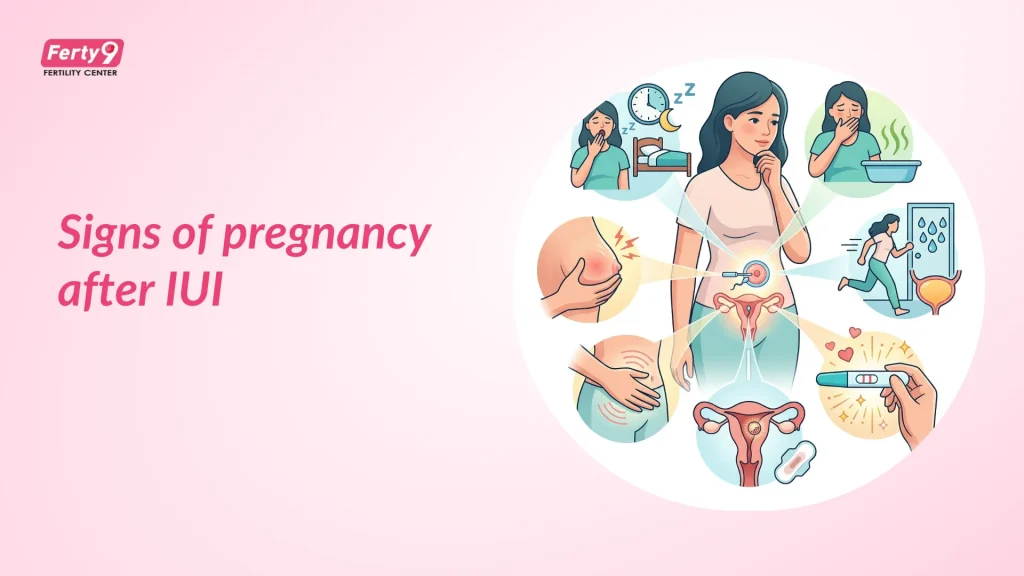
The two weeks following an Intrauterine Insemination (IUI) can feel like the longest wait of your life. Every little flutter, cramp, or wave of tiredness makes you wonder: “Is this it? Am I finally pregnant?” At Ferty9 Fertility Center, we understand how emotionally exhausting this waiting period can be. It is completely natural to over-analyze every change in your body after IUI. However, because the fertility medications you take can mimic the exact signs of early pregnancy, it can be tricky to tell what is real and what is just a side effect.
Here is a clear, simple guide to help you understand what your body is going through, which symptoms are normal, and when you can finally take that pregnancy test after IUI.
What Happens During an IUI Procedure
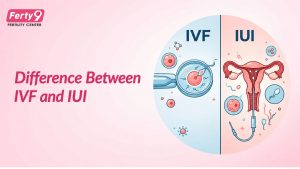
IUI is a simple, highly effective fertility treatment. On the day you ovulate, your doctor uses a thin, soft tube to place a sample of concentrated, “washed” sperm directly into your uterus. This bypasses the cervix and gives the sperm a massive head start to reach the egg. The procedure takes only a few minutes and is virtually painless.
Fertilisation and Implantation Timeline
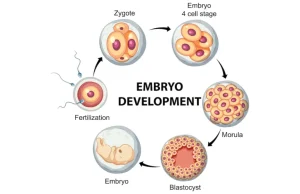
The actual magic happens after you leave the clinic. If an egg is successfully fertilized in the fallopian tube, it becomes an embryo. Over the next few days, this embryo travels down into the uterus. Between days 6 and 10 after IUI, the embryo attempts to bury itself into the thick, soft lining of your uterus. This process is called implantation, and it marks the true beginning of pregnancy.
The Two-Week Wait After IUI
Why This Waiting Period Matters
Your body does not instantly know it is pregnant the moment fertilization happens. It only starts producing hCG (the pregnancy hormone) after the embryo successfully implants into the uterine lining. This hormone needs several days to build up in your bloodstream and urine before an IUI pregnancy test can detect it.
When Pregnancy Symptoms Typically Begin
Because hCG levels start very low, most women do not feel true pregnancy symptoms until right before their period is due, or even a few days after a missed period. If you feel intense symptoms just two or three days after IUI, it is likely due to medications, not pregnancy.
Common Early Signs of Pregnancy After IUI
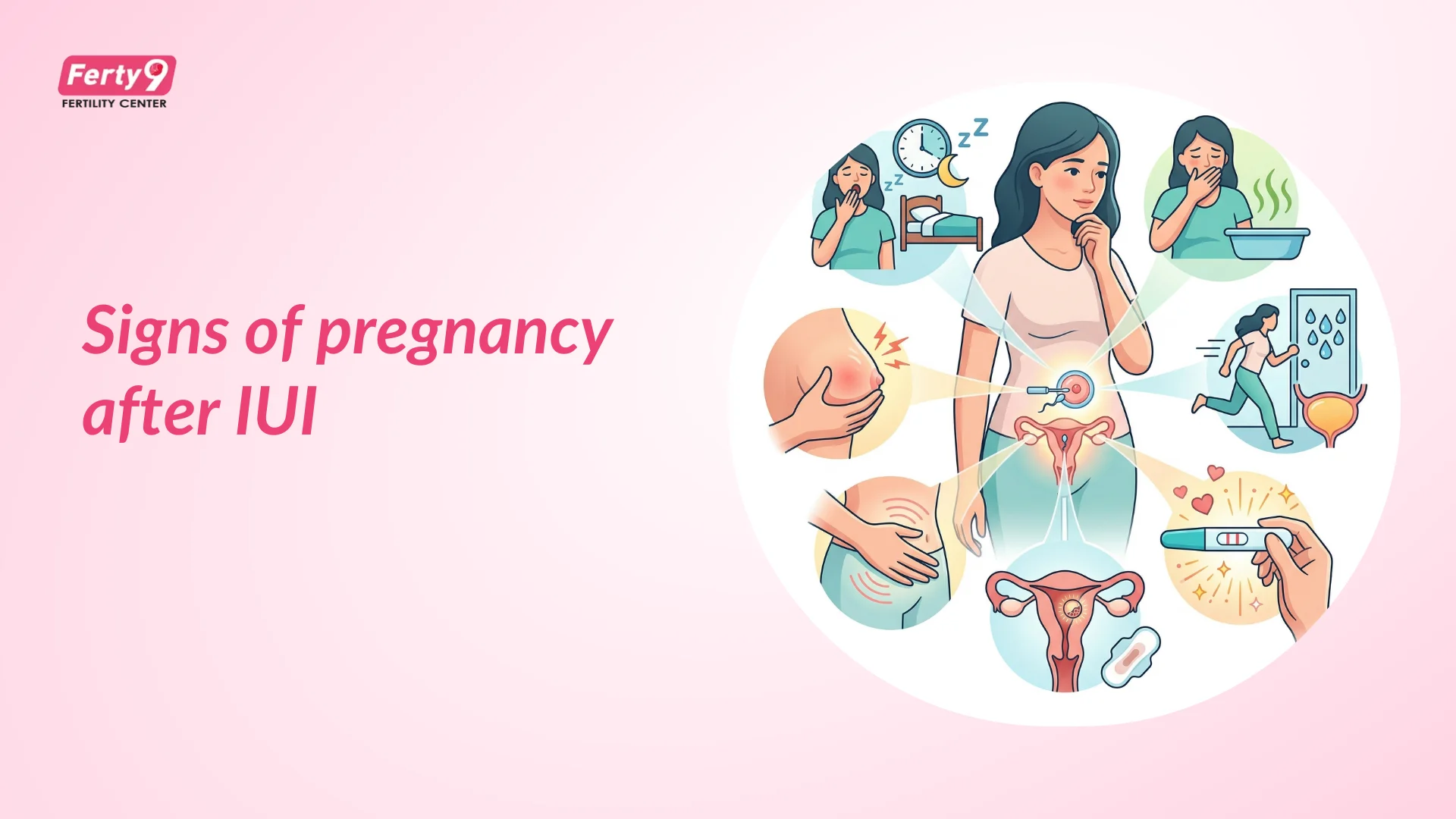
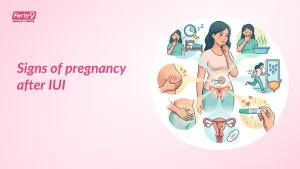
If the cycle is successful, you might notice a few subtle clues as your hormone levels shift.
Implantation Bleeding
About a week or so after your procedure, you might see a few drops of light pink or brown spotting on your underwear. This happens when the tiny embryo burrows into the blood-rich lining of your uterus. It is usually very light and stops within a day or two.
Mild Cramping
You may feel a mild pinching, pulling, or light cramping sensation in your lower belly. This is often associated with implantation or the uterus beginning to stretch.
Breast Tenderness
As estrogen and progesterone levels rise to support the pregnancy, your breasts may feel swollen, heavy, or sensitive to the touch.
Fatigue and Low Energy
The sudden surge in progesterone acts like a natural sedative. You might find yourself feeling completely exhausted by the afternoon, even if you had a full night’s sleep.
Nausea or Morning Sickness
Mild queasiness, especially when smelling certain strong Indian spices or foods cooking, can be an early sign. However, full-blown morning sickness usually doesn’t peak until a few weeks later.
Frequent Urination
As blood flow increases to your pelvic region to support the growing uterus, your bladder gets squeezed, making you need to use the washroom more often than usual.
Symptoms That Are Normal After IUI but Not Pregnancy
It is vital to remember that not every symptom means a baby is growing.
Bloating and Hormonal Changes
Feeling puffy or bloated is incredibly common. The fertility drugs used to help you ovulate cause your ovaries to enlarge slightly, which can make your jeans feel tight.
Side Effects of Fertility Medications
If your doctor gave you an hCG “trigger shot” to induce ovulation, or if you are taking progesterone tablets/gels for uterine support, your body is flooded with pregnancy-like hormones. These medications cause breast tenderness, fatigue, and cramping—even if you are not pregnant.
Symptoms That May Need Medical Attention
While mild discomfort is normal, certain signs should never be ignored. Please contact your fertility specialist immediately if you experience:
Heavy Bleeding
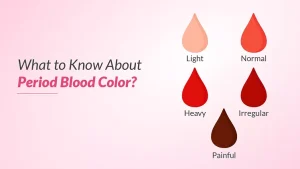
Light spotting is fine, but bright red bleeding that fills a sanitary pad is not a typical sign of implantation and requires a doctor’s check.
Severe Abdominal Pain
Sharp, unbearable pain on one side of your stomach, especially if accompanied by dizziness or vomiting, could be a sign of an ectopic pregnancy (when the embryo implants outside the uterus) or an ovarian cyst.
Timeline of Symptoms After IUI (Day-by-Day)
Days 1–5 After IUI
You will likely feel some bloating and mild pelvic twinges. This is your body recovering from ovulation and the IUI procedure itself.
Days 6–10 After IUI
This is the critical window for implantation. You might notice the famous implantation spotting or light cramping.
Days 11–14 After IUI
This is when true pregnancy symptoms begin to emerge as hCG levels rise. You may feel unusually tired, notice darker nipples, or feel a slight wave of nausea.
When to Take a Pregnancy Test After IUI
The urge to test early is overwhelming, but patience is your best friend here. If you take a test too early, the leftover hormones from your ovulation trigger shot can give you a “false positive,” leading to heartbreak later.
The earliest positive pregnancy test after IUI that you can somewhat trust is usually around day 12, but even then, it might be too faint to read clearly. For a truly accurate pregnancy test after IUI, you should wait the full 14 days. We highly recommend coming into the clinic for a Beta-hCG blood test, as it is far more accurate than any at-home urine kit.
Tips to Manage the Two-Week Wait
- Stay Busy: Distract yourself with light hobbies, reading, or watching your favourite movies.
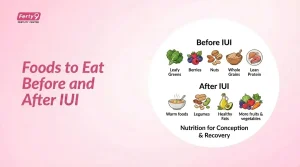
- Eat Warm, Home-Cooked Meals: Focus on a balanced Indian diet rich in lentils, fresh vegetables, and whole grains. Avoid extremely spicy or outside food to prevent acidity, which can mimic nausea.
- Step Away from the Internet: Do not spend hours analyzing every single cramp on fertility forums. Every woman’s body reacts differently.
- Gentle Movement: Strict bed rest is not required. Gentle evening walks are great for blood circulation and stress relief.
Summary
The days following your IUI are a delicate balance of hope and anxiety. While symptoms like light spotting, fatigue, and mild cramping can be wonderful signs of early pregnancy, they can also just be the effects of your fertility medications. The best thing you can do is take your prescribed supportive medicines, stay relaxed, and wait for day 14 to take a reliable IUI pregnancy test.












 No need to worry, your data is 100% safe with us!