


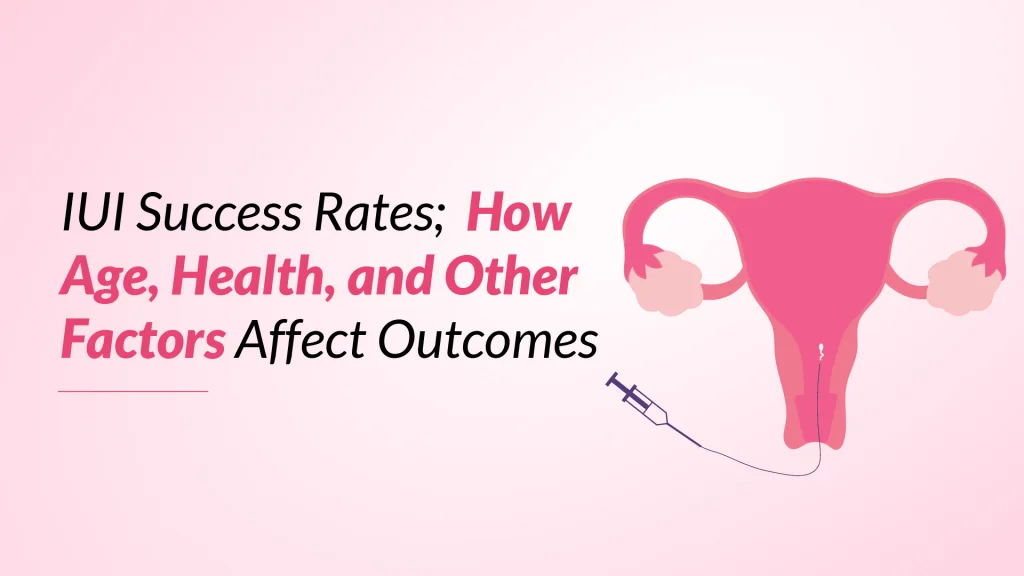
Navigating the world of fertility treatments can feel overwhelming. If you and your partner are having trouble conceiving naturally, Intrauterine Insemination (IUI) is often recommended as an excellent, minimally invasive first step. During IUI, highly concentrated, fast-moving sperm are placed directly into the woman’s uterus around the time her ovary releases an egg.
While the procedure is simple, painless, and affordable, managing expectations is key. Let’s explore the factors that determine your chances of success, how the process works in India, and what you can do to prepare your body for a positive outcome.
- Average IUI Success Rate – The IUI process success rate is usually between 10%–20% per cycle, while cumulative pregnancy success may reach 70%–80% after 3–6 properly timed treatment cycles.
- Best Candidates for IUI Treatment – IUI works best for couples facing unexplained infertility, mild male factor infertility, or cervical mucus problems because it improves sperm delivery to the egg.
- Age Plays a Major Role – Women under 35 generally experience higher IUI success rates, while fertility chances gradually decline after 35 and significantly decrease after 40.
- Lifestyle Habits Can Improve Outcomes – Following IUI success tips such as eating a fertility-friendly diet, reducing stress, maintaining a healthy weight, and tracking ovulation accurately may improve pregnancy chances.
- Affordable and Less Invasive Fertility Option – Compared to IVF, IUI is a simpler, minimally invasive, and cost-effective fertility treatment that is commonly recommended as a first-line option in India.
Who Are the Best Candidates for IUI?
Not every couple needs advanced fertility surgeries right away. IUI is the ideal, first-line treatment for couples dealing with unexplained infertility, mild male factor infertility (such as slightly low sperm motility), or cervical mucus problems. If a woman’s cervical fluid is too thick or acidic, it can prevent sperm from naturally swimming through the cervix; IUI safely bypasses this barrier by placing the washed sperm directly into the uterus.
What is the Success Rate of IUI?
When patients ask what is the success rate of IUI, it is important to understand that IUI is usually a cumulative process. Unlike In Vitro Fertilization (IVF), which happens outside the body, IUI simply gives natural conception a helpful “head start.”
The IUI process success rate for a single cycle typically falls between 10% and 20%. While this number might seem modest, it is actually very close to the natural conception rate for a young, healthy couple in a single month (which is about 20% to 25%). Because it is a numbers game, doctors usually recommend trying 3 to 4 cycles. After multiple cycles, the cumulative IUI success rate increases dramatically, giving many couples the joy of parenthood without needing advanced surgeries.
What is the IUI Success Rate in India?
In recent years, the IUI success rate in India has improved significantly due to better sperm-washing technologies and precise ovulation tracking. In Indian fertility clinics, the success rate for a single IUI cycle ranges from 12% to 18%.
The success rates here are highly encouraging when combined with mild fertility medications (like Clomiphene or Letrozole), which Indian doctors frequently prescribe to gently stimulate the ovaries to release one or two healthy eggs.
Which is Costlier in India: IUI or IVF?
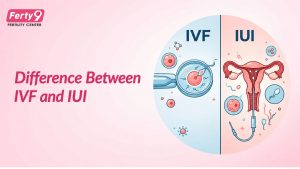
When planning fertility treatments, financial clarity is crucial. IVF is significantly more expensive than IUI. Because IVF involves a complex, multi-step process—including surgical egg extraction, laboratory fertilization, and embryo transfer—it requires advanced laboratory setups. IUI, on the other hand, is a much simpler, minimally invasive, and highly affordable choice that fertilizes the egg inside the body, making it a very cost-effective starting point.
How Does Age Affect Your IUI Chances?
A woman’s age is the single most critical factor in predicting the success of any fertility treatment. As women age, both the quantity and the genetic quality of their eggs naturally decline.
- Women Under 35: This group experiences the highest success rates, often seeing a 15% to 20% success rate per cycle.
- Women Aged 35 to 39: The success rate slightly drops to about 10% to 12% per cycle.
- Women Over 40: The success rate per cycle drops to about 2% to 5%. For this age group, doctors often recommend moving directly to IVF to save valuable time.
What Other Health Factors Influence the Outcome?
Aside from age, several reproductive and lifestyle factors dictate how well the IUI procedure will work:
- Sperm Quality (Male Factor): The sperm used must have a good “motility” (swimming ability) and count. Even after the lab washes and concentrates the sperm, a very low baseline count can reduce success.
- Fallopian Tube Health: For IUI to work, at least one fallopian tube must be completely open and healthy so the sperm can reach the egg.
- Underlying Conditions: Women with mild Endometriosis or Polycystic Ovary Syndrome (PCOS) often respond very well to IUI, especially when paired with ovulation-stimulating medicines.
- Lifestyle Factors: High stress, smoking, heavy alcohol consumption, and being significantly overweight or underweight can negatively impact hormone balance and lower your chances.
What Are the Best IUI Success Tips?
You can actively participate in improving your odds. Here are some of the most effective IUI success tips recommended by Indian fertility experts:
- Eat a Fertility-Boosting Diet: Incorporate a traditional Indian diet rich in antioxidants, folic acid, and healthy fats. Focus on leafy greens, lentils, walnuts, pumpkin seeds, and fresh fruits to improve egg and sperm quality.
- Manage Your Stress: High cortisol (stress hormone) levels interfere with reproductive hormones. Practice daily Pranayama (breathing exercises) or gentle yoga to keep your mind and body relaxed.
- Follow Medication Timings Strictly: If your doctor prescribes an ovulation “trigger shot,” take it at the exact time advised. Timing the insemination perfectly with ovulation is the secret to IUI success.
- Rest, but Do Not Overthink: After the procedure, rest for 15 to 20 minutes at the clinic. Once you are home, resume normal, light activities. Strict bed rest is a myth and is not required for implantation.
When Should You Consult a Doctor for Next Steps?
While IUI is a fantastic starting point, it is not the cure for every infertility issue. You should consult your fertility specialist to discuss advanced options like IVF if:
- You have completed 3 to 4 well-timed IUI cycles without a positive pregnancy test.
- You are over the age of 35 and have been trying for more than 6 months.
- You are diagnosed with severely blocked fallopian tubes or severe male factor infertility (very low sperm count).
Do not lose hope if IUI does not work immediately. Book a consultation with your fertility doctor to review your cycle data and plan a personalized, stronger next step.
References
What is the Success Rate of IUI / Standard Treatment Workflows –
https://www.icmr.gov.in/icmrobject/uploads/STWs/1726568410_female_infertility.pdf
Clinical Procedures and Practices for IUI
Underlying Health Factors Influencing Outcomes (PCOS, Fallopian Tube Health) –
https://www.nhp.gov.in/disease/reproductive-system
Best IUI Success Tips (Diet, Lifestyle, and Preconception Care) –



















 No need to worry, your data is 100% safe with us!