


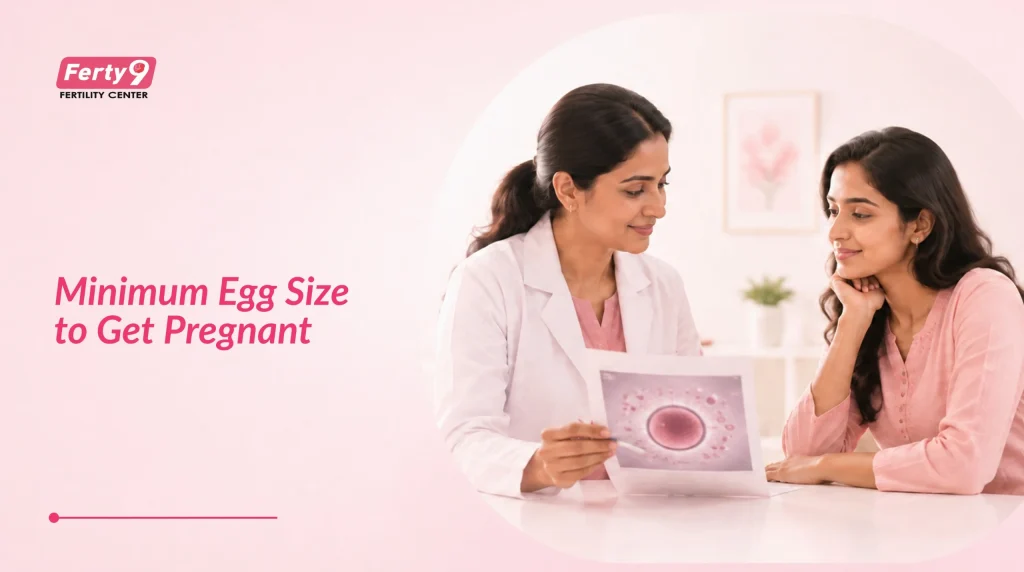
What is the minimum egg size to get pregnant?
For a successful conception, the ideal minimum egg size to get pregnant is generally around 18 to 22 millimetres (mm) right before ovulation. A healthy, fully matured egg within this range has the absolute highest chance of fertilising and growing into a beautiful baby. However, every woman’s body is unique, and sometimes pregnancies can be safe with slightly smaller sizes around 16 mm. Focusing on a warm, nutrient-rich Indian diet and gentle lifestyle changes can beautifully support your body in reaching the best egg size for pregnancy.
What exactly is the normal egg size for pregnancy?
Inside your ovaries, your eggs grow inside tiny, comforting fluid-filled sacs called follicles. Every month, a few of these sacs begin to grow, but usually, only one becomes the “lead” egg. By the time your body is ready to ovulate, the normal egg size for pregnancy is typically between 18 mm and 22 mm. At this size, the egg is perfectly mature, healthy, and ready to meet the sperm.
Here is a simple guide to help you understand what the measurements on your ultrasound mean:
| Egg (Follicle) Stage | Average Size | What it Means for Your Body |
| Early Stage | 10 mm to 14 mm | The egg is still quietly growing and needs a few more days. |
| Getting Closer | 15 mm to 17 mm | Almost there! The egg is approaching maturity. |
| Perfectly Mature | 18 mm to 22 mm | The ideal size. Your body is fully ready for pregnancy. |
How do doctors actually measure my egg size?
If you are trying to conceive or undergoing fertility treatments, you might wonder how anyone can see something so tiny! Doctors measure your follicles (the little sacs that hold your eggs) using a very simple, painless procedure called a follicular study or transvaginal ultrasound.
Usually starting around day 8 to 10 of your menstrual cycle, your doctor will perform this gentle scan to peek at your ovaries. It allows them to track how fast your follicles are growing day by day (usually about 1 to 2 mm per day) so they know exactly when your body is ready for ovulation.
What happens if the egg grows too big?
We often worry about our eggs being too small, but can they be too big? Yes, sometimes they can. If an egg follicle grows much larger than the normal egg size for pregnancy, usually over 24 mm, it can become what doctors call “overripe”.
An overripe egg might not release properly, or it may have lower chances of fertilising successfully into a healthy pregnancy. This is exactly why your doctor watches your ultrasound scans so closely to catch your beautiful egg at the perfect, healthiest moment before it gets too large!
Is egg size the absolute only thing that matters?
When we focus so much on numbers and measurements, it is easy to think that egg size is the only secret to getting pregnant. Fertility experts will warmly remind you that size is just one piece of a much bigger, beautiful puzzle!
For a healthy pregnancy, you also need:
- Good Egg Quality: A perfectly sized egg also needs to be genetically healthy and strong on the inside.
- Womb Lining: Your uterine lining (endometrium) needs to be thick and soft—ideally between 8 and 10 mm so the embryo has a warm, safe place to implant and grow.
- Healthy Sperm: The sperm needs to be strong, healthy, and swimming well to meet the egg.
So, if your egg size is perfect but you are still waiting for your miracle, do not lose hope. Your doctor will look at these other factors to gently guide your body in the right direction.
What is the absolute minimum egg size to get pregnant?
While doctors love to see an egg reach 18 mm, our bodies are wonderfully unique and do not always follow a strict textbook. Many fertility experts agree that the absolute minimum egg size to get pregnant can sometimes be around 16 mm to 17 mm. While 18 mm is the gold standard, a slightly smaller egg can still occasionally fertilise and lead to a perfectly healthy, happy pregnancy depending on your natural hormone levels.
I am worried: if the egg size is small, can I get pregnant?
This is such a common and completely understandable worry. If your ultrasound shows smaller eggs, you might immediately ask yourself, “If egg size is small, can I get pregnant?” Please take a deep, relaxing breath—the answer is yes!
Fertility specialists have very safe and mild medications that can help support your body in growing those eggs to the perfect size. A small egg does not mean you cannot become a mother; it just means your body needs extra care and support this month.
What is the best egg size for pregnancy during treatments?
If you are going through a fertility journey like IUI (Intrauterine Insemination) or IVF (In Vitro Fertilisation), your doctor will monitor your growth very closely through simple, painless ultrasounds. They are carefully watching for that perfect window. The absolute best egg size for pregnancy during these treatments is right around 18 mm to 20 mm. Once your eggs reach this beautifully mature size, the doctor will give you a safe, gentle trigger medication to release them at the exact right moment.
How can I gently improve my egg health with natural Indian habits?
In India, we have wonderful, age-old natural traditions that beautifully support a woman’s fertility. You can easily help your body grow healthy, mature eggs by adding these comforting habits to your daily routine:
- Nourishing Traditional Foods: Enjoy a small handful of overnight-soaked almonds and walnuts every morning. Add fresh pomegranate (anar) and warm bowls of green leafy vegetables like palak (spinach) to your meals to naturally boost blood flow.
- Gentle Movement (Yoga): Light yoga poses, especially the Butterfly Pose (Baddha Konasana), are incredibly wonderful for gently improving blood circulation to your pelvic area, keeping your womb warm and healthy.
- Stress-Free Breathing: High stress can sometimes slow down natural egg growth. Taking just 10 minutes a day for deep, calm breathing (Pranayama) or meditation works wonders for perfectly balancing your hormones.
- Stay Hydrated: Drink plenty of plain, room-temperature water or fresh coconut water (nariyal pani) throughout the day to keep your body’s cells perfectly hydrated and completely refreshed.
References
Healthline – How to Improve Egg Quality for Pregnancy https://www.healthline.com/health/pregnancy/how-to-improve-egg-quality
Medical News Today – Ovarian follicles: What to know https://www.medicalnewstoday.com/articles/ovarian-follicles
Verywell Family – Understanding Ovulation and Fertility https://www.verywellfamily.com/understanding-ovulation-and-fertility-1960283
Parents – A Guide to Your Ovarian Follicles and Fertility https://www.parents.com/getting-pregnant/ovulation/ovarian-follicles-and-fertility/















 No need to worry, your data is 100% safe with us!