


The days after an embryo transfer or IUI can feel longer than ever. Every twinge, cramp, or moment of fatigue may leave you wondering if implantation has happened and whether it’s finally time to take a pregnancy test. While it’s natural to want answers as soon as possible, testing too early often leads to unnecessary disappointment because your body may not have produced enough pregnancy hormone yet.
At FERTY9, we understand how emotionally challenging the two-week wait can be. Our fertility specialists guide patients through every stage of treatment, helping them understand what happens after implantation, how pregnancy hormones develop, and when testing is most likely to provide an accurate answer.
Also Read: How Soon Can a Pregnancy Test Be Taken After Implantation?
- A Beta hCG blood test remains the most accurate method to confirm pregnancy after fertility treatment because it detects much lower hormone levels than urine tests.
- Implantation marks the beginning of pregnancy, but it usually takes several days before human chorionic gonadotropin (hCG) reaches levels that home pregnancy tests can detect.
- Most home pregnancy tests become more reliable about 2 to 4 days after implantation, although individual hormone levels vary considerably.
- A negative home pregnancy test immediately after implantation does not necessarily mean treatment was unsuccessful. Testing too early is one of the most common reasons for false-negative results.
- Women undergoing IVF or IUI should follow their fertility specialist’s recommended testing schedule because medications such as hCG trigger injections can affect early test results.
- A Beta hCG blood test remains the most accurate method to confirm pregnancy after fertility treatment because it detects much lower hormone levels than urine tests.
Pregnancy Test After Implantation: The Short Answer
Most women should wait at least 2 to 4 days after implantation before taking a home pregnancy test. This allows enough time for hCG to enter the bloodstream and eventually reach detectable levels in urine.
For women undergoing IVF or IUI, fertility specialists generally recommend waiting until the scheduled Beta hCG blood test, usually around 12 to 14 days after embryo transfer or insemination, depending on the treatment protocol. Waiting may feel difficult, but it significantly reduces the chances of receiving an inaccurate result.
What Happens Immediately After Implantation?
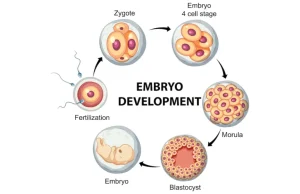
Implantation is the moment a developing embryo attaches itself to the lining of the uterus. Although fertilization occurs earlier in the fallopian tube (or in the laboratory during IVF), pregnancy is not considered clinically established until implantation successfully takes place.
Once attached, specialized cells of the embryo begin producing human chorionic gonadotropin (hCG). This hormone has one important job in early pregnancy: it signals the body to continue producing progesterone, which helps maintain the uterine lining and supports the developing embryo.
At first, the amount of hCG is extremely small. Even though production begins almost immediately after implantation, the concentration is usually far below what most home pregnancy tests can detect.
Current evidence shows that hCG typically increases rapidly during early pregnancy, often doubling approximately every 48 to 72 hours, although healthy pregnancies can show considerable variation. This is why two women who conceived on the same day may receive positive pregnancy tests on different days.
Why Does Timing Matter So Much?
Many people assume that implantation instantly leads to a positive pregnancy test. In reality, there are two separate biological processes happening.
First, the embryo successfully implants into the uterine lining. Only after implantation does the body begin producing measurable amounts of hCG. Next, that hormone needs time to circulate through the bloodstream before eventually appearing in urine.
This delay explains why testing immediately after implantation almost always produces a negative result, even when pregnancy has already begun.
Pregnancy Test Timeline After Implantation
The following timeline offers a general guide. Every pregnancy develops differently, so the exact timing of hCG production varies from one woman to another.
Day 0: Implantation Begins
The embryo attaches to the uterine lining and begins establishing a connection with the mother’s blood supply.
Although hCG production starts around this time, hormone levels remain extremely low. A home pregnancy test will almost certainly be negative because there is not yet enough hormone in the urine.
What you may notice
Some women experience no symptoms at all. Others may notice very mild implantation cramping or light spotting, although many pregnancies occur without either symptom.
Day 1 After Implantation
The embryo continues embedding deeper into the uterine lining while hCG production slowly increases.
At this stage, hormone levels remain below the detection threshold for most urine pregnancy tests. Even highly sensitive early-detection kits are unlikely to provide a reliable positive result.
Typical expectation
Testing today usually leads to a false-negative result simply because the hormone has not accumulated sufficiently.
Day 2 After Implantation
More hCG enters the bloodstream as implantation progresses. Although hormone levels are rising, they are still highly variable between pregnancies.
Some women may begin noticing subtle symptoms such as mild breast tenderness, bloating, fatigue, or light cramping. However, these symptoms are often caused by progesterone supplementation during fertility treatment and cannot reliably confirm pregnancy.
Can you test today?
You can, but a negative result should not be considered conclusive.
Day 3 After Implantation
By now, some pregnancies produce enough hCG for highly sensitive home pregnancy tests to detect.
If a faint second line appears, it often indicates that hCG is present but still relatively low. Because evaporation lines can occasionally resemble faint positives, repeating the test after 48 hours provides a much clearer picture.
Not everyone will receive a positive result today, even with a healthy pregnancy.
Day 4 After Implantation
Many women who are pregnant begin reaching urine hCG levels detectable by standard home pregnancy tests.
A faint positive becomes more likely, particularly when using the first urine sample of the morning, which is usually more concentrated.
If the result remains negative, there is still no reason to lose hope. Implantation may simply have occurred later than average, or hCG production may be increasing more gradually.
Day 5 and Beyond
By five or more days after implantation, hCG concentrations have usually increased enough for most home pregnancy tests to provide a more dependable result.
Positive lines often become darker over time because hormone levels continue rising. However, line darkness alone cannot determine whether a pregnancy is progressing normally. The most reliable assessment comes from serial Beta hCG blood tests, which measure the actual hormone concentration over time.
The waiting period can be emotionally exhausting, especially after IVF or IUI. Remember that every pregnancy follows its own timeline, and comparing your results with someone else’s rarely provides meaningful reassurance.
Why hCG Levels Vary From One Pregnancy to Another
One of the biggest misconceptions about pregnancy testing is that every woman should receive a positive result on the same day after implantation. In reality, early pregnancy follows a unique timeline for each individual. Two women may have embryo transfers on the same day, yet one may test positive several days before the other.
Several factors influence how quickly hCG becomes detectable. The exact day implantation occurs is one of the most important. Even with IVF, embryos can implant at slightly different times. A Day 5 blastocyst, for example, often implants sooner than a Day 3 embryo, but there is still natural variation.
Individual biology also plays a role. Once implantation occurs, the amount of hCG produced and how rapidly it increases can differ between healthy pregnancies. Research has shown considerable variation in early hCG levels, which is why doctors focus on the overall pattern of hormone rise rather than comparing a single number with someone else’s results (Source: American Society for Reproductive Medicine).
Another factor is the sensitivity of the pregnancy test itself. Some home tests detect lower concentrations of hCG than others, meaning one brand may show a faint positive while another remains negative on the same day.
The time of day you test also matters. First-morning urine is usually the most concentrated and is therefore more likely to detect lower hCG levels than urine collected later in the day after drinking fluids.
Home Pregnancy Test vs. Beta hCG Blood Test
Both urine and blood tests detect hCG, but they differ significantly in accuracy during very early pregnancy.
Home Pregnancy Test
Home pregnancy tests are convenient, inexpensive, and easy to use. They detect hCG in urine and can often identify pregnancy before a missed period if enough hormone is present.
However, urine tests have limitations. Their accuracy depends on several factors, including the sensitivity of the kit, the concentration of your urine, and how many days have passed since implantation.
Testing too early is the most common reason for receiving a false-negative result. Even a healthy pregnancy may not yet have produced enough hCG for detection.
Beta hCG Blood Test
A Beta hCG blood test is considered the gold standard for confirming pregnancy after fertility treatment.
Unlike home pregnancy tests, which simply provide a positive or negative result, a Beta hCG test measures the exact concentration of hCG circulating in your blood. It can detect pregnancy earlier because blood contains measurable amounts of hCG before they appear in urine.
For IVF and IUI patients, fertility specialists often repeat the Beta hCG test after 48 hours. Rather than relying on a single value, they evaluate whether hCG is increasing appropriately, which provides more meaningful information about early pregnancy development.
Home Pregnancy Test vs. Beta hCG Blood Test: A Quick Comparison
| Feature | Home Pregnancy Test | Beta hCG Blood Test |
| Sample required | Urine | Blood |
| Detects | Presence of hCG | Exact hCG level |
| Earliest detection | Usually 2–4 days after implantation | Earlier than urine testing |
| Accuracy | High when used correctly after sufficient time | Highest available accuracy |
| Best suited for | Initial home screening | Confirmation after IVF, IUI, or natural conception |
Understanding Faint and Dark Positive Pregnancy Tests
Seeing a faint second line can bring excitement as well as uncertainty. Fortunately, a faint line usually means that hCG has been detected and pregnancy has begun.
Early in pregnancy, hormone levels remain relatively low. As hCG increases over the following days, the test line often becomes darker.
A darker line generally reflects higher hormone concentrations, but it should not be used to judge how healthy a pregnancy is. Factors such as urine concentration, testing time, and differences between brands can all influence line intensity.
Doctors rely on serial Beta hCG blood tests and ultrasound examinations, rather than the darkness of a urine test line, to monitor early pregnancy.
Why You Might Get a False-Negative Result
Receiving a negative pregnancy test after fertility treatment can be heartbreaking. Fortunately, an early negative result does not always mean treatment has failed.
The most common reason is simply testing before enough hCG has accumulated in the urine.
Other possible reasons include:
- Implantation occurred later than expected.
- The urine sample was diluted after drinking large amounts of fluid.
- The pregnancy test was performed incorrectly.
- The test kit was expired or stored improperly.
- The pregnancy test was not sensitive enough to detect very low hCG levels.
Because hCG rises rapidly during early pregnancy, fertility specialists usually recommend repeating testing after 48 hours if menstruation has not started and pregnancy remains possible.
Can Fertility Medications Cause a False Positive?
Yes. This is especially important for women undergoing IVF or IUI.
Many fertility treatment cycles include an hCG trigger injection to help mature the egg before ovulation or egg retrieval. Since pregnancy tests cannot distinguish between naturally produced hCG and medication-derived hCG, testing too soon after the trigger injection may produce a false-positive result.
Depending on the medication and individual metabolism, the trigger shot may remain detectable for approximately 10 to 14 days.
For this reason, fertility specialists schedule Beta hCG testing only after enough time has passed for the medication to clear from the body.
Pregnancy Testing After IVF
For IVF patients, resisting the temptation to test early can be particularly difficult. Every day during the two-week wait may feel significant, but early home testing often creates unnecessary emotional stress.
The recommended testing schedule depends on whether a Day 3 or Day 5 embryo was transferred, our treatment protocol, and our fertility specialist’s advice.
Most fertility centres schedule the first Beta hCG blood test approximately 9 to 14 days after embryo transfer, depending on the embryo stage and clinical protocol. Following our clinic’s instructions provides the most dependable result while avoiding confusion caused by residual fertility medications.
Pregnancy Testing After IUI
After an IUI procedure, implantation usually occurs about 6 to 12 days after ovulation if conception has taken place.
Because implantation timing varies naturally, pregnancy testing immediately after IUI is unlikely to produce an accurate result.
If your treatment included an hCG trigger shot, testing too early may detect the medication rather than a pregnancy. Fertility specialists recommend waiting until your scheduled blood test or at least the expected date of your missed period before relying on a home pregnancy test.
What Should You Do If Your Test Is Negative?
A negative result can be disappointing, especially after investing emotionally and physically in fertility treatment. However, timing is everything.
If you tested earlier than recommended, wait another 48 hours before repeating the test. During this time, hCG may increase enough to become detectable.
If our fertility clinic has scheduled a Beta hCG blood test, continue taking all prescribed medications unless our doctor advises otherwise. Stopping progesterone or other fertility medications before receiving official instructions could affect treatment.
Patients often inquire [if implantation fails when will i get my period](https://www.ferty9.com/blog/how-long-after-failed-implantation-will-period-start). If your period begins, or if your blood test confirms that pregnancy has not occurred, remember that one unsuccessful cycle does not predict future outcomes. Many couples require more than one IVF or IUI cycle before achieving pregnancy, and our fertility specialist can review the results to help determine the most appropriate next steps.
When Should You Contact a Fertility Specialist?
The waiting period after implantation can be emotionally overwhelming, especially if you’ve undergone IVF or IUI. Mild cramping, bloating, breast tenderness, or light spotting are often considered normal during this phase. These symptoms may result from implantation, rising progesterone levels, or fertility medications, making them unreliable indicators of pregnancy on their own.
However, certain symptoms should never be ignored. Contact our fertility specialist promptly if you experience:
- Heavy vaginal bleeding similar to or heavier than a menstrual period.
- Severe or persistent abdominal or pelvic pain.
- Fever above 38°C (100.4°F).
- Dizziness, fainting, or difficulty breathing.
- Severe one-sided pelvic pain, particularly after fertility treatment, as this requires urgent medical assessment.
If your pregnancy test is negative but your period has not started, continue taking any prescribed medications until our fertility clinic advises otherwise. Stopping progesterone or other supportive medications too early may affect the treatment cycle.
Tips to Reduce Anxiety During the Two-Week Wait
Waiting for pregnancy test results can feel more challenging than the treatment itself. While there’s no way to eliminate the uncertainty completely, focusing on your overall well-being may help make the wait more manageable.
Consider these practical strategies:
- Follow your medication schedule exactly as prescribed.
- Avoid taking multiple pregnancy tests every day, as fluctuating line intensity can increase anxiety without providing useful medical information.
- Stay hydrated and eat balanced meals to support your overall health.
- Continue light daily activities unless fertility specialist recommends otherwise.
- Limit reading unverified online forums that compare pregnancy symptoms or test results, as every pregnancy develops differently.
- Reach out to your partner, trusted family members, or a fertility support group if you’re feeling overwhelmed.
Many patients worry that everyday activities such as walking, climbing stairs, laughing, or sleeping in a particular position could affect implantation. Once implantation has occurred, these normal daily activities do not dislodge a healthy embryo. Following your doctor’s advice is far more important than trying to avoid routine movement.
Common Myths About Pregnancy Testing After Implantation
Myth 1: A Positive Test Always Appears Immediately After Implantation
Fact: Implantation starts hCG production, but the hormone needs time to build up before becoming detectable. Most women need to wait several days before obtaining an accurate home pregnancy test.
Myth 2: A Darker Pregnancy Test Line Means a Healthier Pregnancy
Fact: The darkness of the line depends on many factors, including urine concentration, test sensitivity, and time of testing. Doctors assess pregnancy progression using serial Beta hCG blood tests and ultrasound, not urine test line intensity.
Myth 3: Implantation Bleeding Happens in Every Pregnancy
Fact: Implantation bleeding occurs in only some pregnancies. Many women never notice spotting and still go on to have completely healthy pregnancies.
Myth 4: Pregnancy Symptoms Confirm Implantation
Fact: Early symptoms such as bloating, fatigue, breast tenderness, and mild cramping can also result from progesterone supplements or normal hormonal changes after IVF and IUI. Symptoms alone cannot confirm pregnancy.
FERTY9’s Recommendation
At FERTY9, we encourage every patient to trust the testing schedule designed by their fertility specialist rather than relying solely on early home pregnancy tests. While seeing a positive line can be exciting, testing too soon often creates unnecessary confusion because hCG levels differ naturally from one pregnancy to another.
A Beta hCG blood test remains the most reliable way to confirm pregnancy after IVF, IUI, or natural conception. It not only detects pregnancy earlier than urine tests but also measures the exact hormone level, allowing fertility specialists to monitor whether the pregnancy is progressing as expected.
If your result is positive, your care team will guide you through the next steps, including repeat blood tests and your first pregnancy ultrasound. If the result is negative, your doctor will review your treatment cycle and discuss the most appropriate plan moving forward. Every fertility journey is unique, and one unsuccessful cycle does not define your chances of future success.
Final Thoughts
Waiting to take a pregnancy test after implantation is often one of the most emotional stages of trying to conceive. Although it’s understandable to want answers immediately, your body needs time to produce enough hCG for an accurate result.
Home pregnancy tests can provide an early indication of pregnancy, but they are most reliable when used at the right time. For women undergoing IVF or IUI, following your fertility specialist’s recommended testing schedule remains the best way to avoid unnecessary anxiety and obtain dependable results.
Whether your test is positive or negative, remember that fertility treatment is a journey that often involves patience, persistence, and expert guidance. Staying informed, following your treatment plan, and maintaining open communication with your fertility team can help you navigate each step with greater confidence.
References
- American College of Obstetricians and Gynecologists. Early Pregnancy Loss and Early Pregnancy Evaluation.
- National Health Service (NHS). Doing a Pregnancy Test.
- National Institute for Health and Care Excellence (NICE). Ectopic Pregnancy and Miscarriage: Diagnosis and Initial Management.
- American College of Obstetricians and Gynecologists: Early Pregnancy Loss
- American Pregnancy Association: HCG Levels



















 No need to worry, your data is 100% safe with us!