


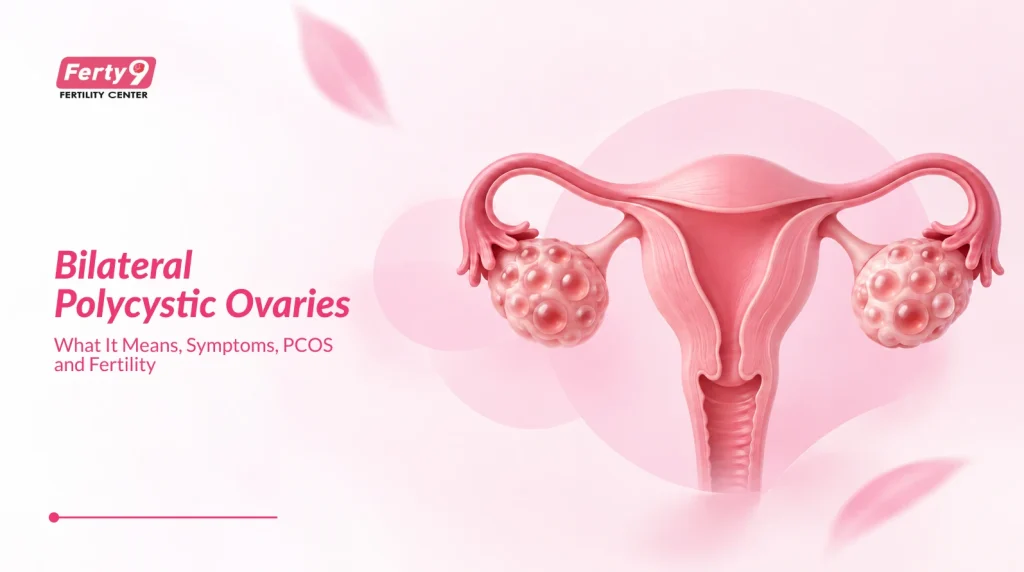
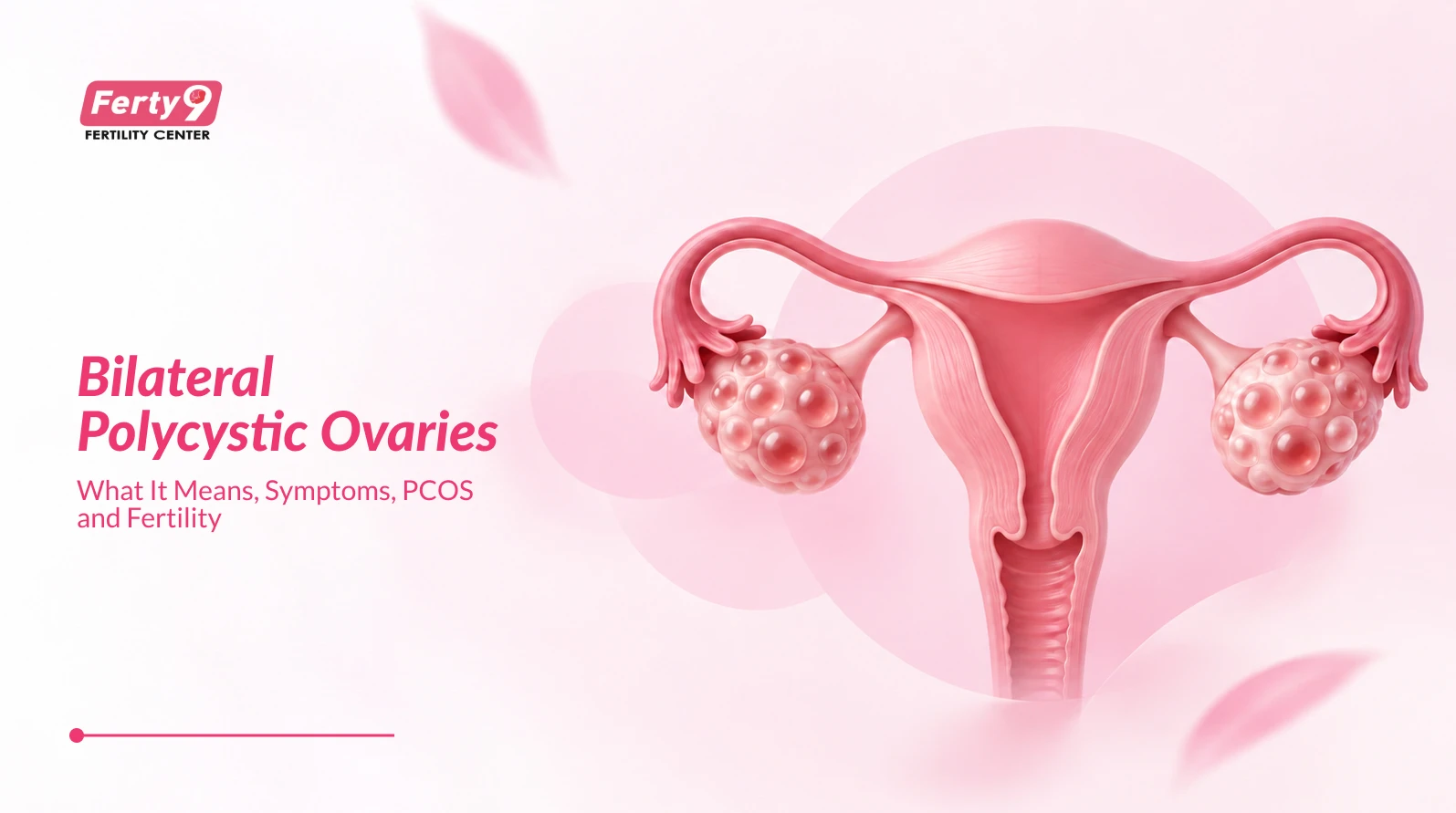
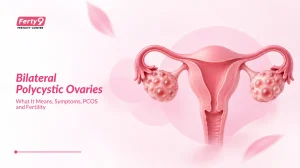
Seeing “bilateral polycystic ovaries” on an ultrasound report can be confusing, especially if you are worried about PCOS or fertility. The term generally means that both ovaries show multiple small follicles on an ultrasound scan.
However, having polycystic-appearing ovaries does not automatically mean you have Polycystic Ovary Syndrome (PCOS). PCOS is a hormonal and metabolic condition that is diagnosed using a combination of symptoms, medical history, blood tests, and, when appropriate, ultrasound findings.
Understanding the difference can help you know what your ultrasound result actually means and whether you need further evaluation.
What Are Bilateral Polycystic Ovaries?
“Bilateral” means both sides, so bilateral polycystic ovaries means that multiple small follicles are seen in both ovaries on ultrasound.
These are usually developing ovarian follicles, not harmful or dangerous cysts. Follicles are normal structures in the ovaries that contain immature eggs. During a menstrual cycle, one follicle typically becomes dominant and releases an egg during ovulation.
Some women naturally have a higher number of follicles visible on ultrasound without having PCOS or any other health problem.
The appearance of the ovaries can also vary with age, hormonal changes, and the type of ultrasound used. Therefore, an ultrasound finding alone should not be used to diagnose PCOS in every woman.
Bilateral Polycystic Ovaries vs PCOS
Polycystic Ovarian Morphology (PCOM)
Polycystic ovarian morphology (PCOM) refers to an ultrasound appearance in which an ovary has a higher number of small follicles than expected according to current ultrasound criteria.
A woman can have PCOM without having PCOS and may have regular periods, normal ovulation, and no symptoms.
Polycystic Ovary Syndrome (PCOS)
PCOS is a hormonal condition that can affect ovulation, androgen levels, metabolism, and fertility.
In adults, PCOS is generally diagnosed when at least two of the following three features are present after other possible causes have been excluded:
- Irregular or absent ovulation, often reflected by irregular menstrual cycles
- Clinical or biochemical signs of excess androgens, such as excess facial or body hair, acne, or elevated androgen levels on blood tests
- Polycystic ovarian morphology on ultrasound or, in some circumstances, an elevated anti-Müllerian hormone (AMH) level
This means that having polycystic-appearing ovaries does not by itself confirm PCOS.
A healthcare professional needs to consider your menstrual cycle, symptoms, examination, blood tests, and ultrasound findings together.
What Are the Symptoms of Bilateral Polycystic Ovaries?
Polycystic-appearing ovaries themselves may cause no symptoms at all.
Symptoms are more likely to occur when the ultrasound finding is associated with PCOS. These may include:
- Irregular, infrequent, or absent periods
- Difficulty becoming pregnant because of irregular ovulation
- Acne or oily skin
- Excess facial or body hair
- Thinning hair on the scalp
- Weight gain or difficulty losing weight
- Darkened or thickened skin in some areas, which may be associated with insulin resistance
Not every woman with PCOS will experience all of these symptoms.
What Causes Polycystic-Appearing Ovaries?
There is no single cause of having polycystic-appearing ovaries on an ultrasound. A higher number of visible follicles can occur naturally and does not necessarily indicate a disease. In women who have PCOS, several factors can contribute to the condition, including genetic, hormonal, and metabolic factors.
Insulin resistance can occur in many women with PCOS and may contribute to increased androgen production and problems with ovulation. Lifestyle factors can influence metabolic health and PCOS symptoms, but they are not considered the sole cause of PCOS.
In adolescents, ovaries may naturally have a multifollicular appearance. Because of this, PCOS should not be diagnosed in teenagers based on an ultrasound finding alone.
How Are Bilateral Polycystic Ovaries Diagnosed?
The appearance of the ovaries is usually assessed through a pelvic or transvaginal ultrasound, depending on the person’s age, circumstances, and clinical needs.
If PCOS is suspected, your doctor may also consider:
- Menstrual history and ovulation patterns
- Symptoms such as acne or excess hair growth
- Blood tests for androgen levels
- Blood glucose or other metabolic tests when appropriate
- Thyroid and prolactin testing when indicated
- Other investigations to rule out conditions that can cause similar symptoms
Tests should be selected based on your symptoms and medical history rather than performed routinely in every woman with a polycystic-appearing ultrasound.
Can Bilateral Polycystic Ovaries Affect Fertility?
Bilateral polycystic ovaries do not automatically mean infertility.
If your periods are regular and you are ovulating normally, having multiple follicles on both ovaries may not affect your ability to conceive.
Fertility problems are more commonly associated with PCOS-related ovulation problems. When ovulation occurs infrequently or does not occur, there may be fewer opportunities for an egg to be fertilised.
If you are trying to conceive and have irregular periods, a fertility specialist can evaluate whether you are ovulating and check for other factors that may affect fertility.
Can You Get Pregnant With Bilateral Polycystic Ovaries?
Yes. Many women with polycystic-appearing ovaries conceive naturally.
If PCOS is causing irregular or absent ovulation, treatment can help improve the chances of pregnancy. Depending on your individual situation, your doctor may recommend lifestyle measures, ovulation tracking, or fertility treatment.
For women with PCOS who are not ovulating regularly, letrozole is commonly recommended as a first-line medication for ovulation induction, when appropriate. Other treatments may be considered depending on the person’s medical history and fertility needs.
It is important to remember that fertility depends on more than ovarian appearance. Age, ovulation, sperm health, fallopian tube function, and other reproductive factors can also affect the chances of pregnancy.
Treatment for Bilateral Polycystic Ovaries
If you have polycystic-appearing ovaries but no symptoms or hormonal problems, treatment may not be necessary.
When PCOS or related symptoms are present, treatment is based on your individual concerns and whether you are trying to conceive.
Lifestyle and Metabolic Health
Regular physical activity, a balanced diet, adequate sleep, and maintaining a healthy weight when appropriate can support metabolic health and may improve some PCOS symptoms.
For women who are overweight, even modest weight loss may improve ovulation and metabolic health. However, PCOS can also occur in women who are not overweight, so treatment should not focus on weight alone.
Medicines for PCOS Symptoms
Depending on your symptoms and goals, your doctor may recommend:
- Combined oral contraceptive pills to help manage irregular bleeding and symptoms related to excess androgens
- Metformin in selected women, particularly when metabolic problems or insulin resistance are present
- Letrozole or other ovulation-inducing medicines when PCOS-related ovulation problems are affecting fertility
- Other medicines for acne or excess hair growth when appropriate
The right treatment depends on your symptoms, medical history, and whether or not you are trying to become pregnant.
When Should You See a Doctor?
An ultrasound finding of bilateral polycystic ovaries does not always require treatment, but you should discuss the result with a gynecologist if you have:
- Very irregular or absent periods
- Difficulty becoming pregnant
- Excess facial or body hair
- Persistent acne or other signs of androgen excess
- Significant unexplained weight changes
- Concerns about blood sugar or metabolic health
Your doctor can determine whether the ultrasound finding is simply part of your normal ovarian appearance or whether further evaluation for PCOS or another condition is needed.
Can Bilateral Polycystic Ovaries Go Away?
The appearance of the ovaries can change over time, and the number of visible follicles can vary depending on age, hormonal status, and other factors.
More importantly, polycystic-appearing ovaries do not need to be “cured” if they are simply an ultrasound finding and you have no associated health problems.
If the finding is part of PCOS, treatment focuses on managing symptoms, regulating ovulation when needed, supporting metabolic health, and addressing fertility goals rather than simply trying to change the appearance of the ovaries.
Bilateral Polycystic Ovaries in Adolescents
Teenagers can naturally have ovaries with many visible follicles, making ultrasound less useful for diagnosing PCOS in this age group.
For adolescents, doctors generally place greater importance on persistent menstrual irregularities and signs of androgen excess rather than diagnosing PCOS from an ultrasound appearance alone.
If a teenager has irregular periods, severe acne, excess hair growth, or other concerning symptoms, medical evaluation can help determine whether further assessment is needed.
Final Thoughts
If your ultrasound report mentions bilateral polycystic ovaries, there is no need to panic. The finding does not automatically mean you have PCOS or that you will have difficulty getting pregnant.
What matters is the bigger picture: your menstrual pattern, ovulation, symptoms, hormone levels, metabolic health, and fertility goals. A gynecologist can interpret your ultrasound in this context and advise whether any further evaluation or treatment is needed.
















 No need to worry, your data is 100% safe with us!