


Pregnancy is Possible with Irregular Periods: What You Need to Know
It is one of the most common worries among women planning a family: “If my periods are not on time, can I still get pregnant?” The short answer is yes. While irregular cycles can make the math of making a baby a little trickier, it absolutely does not mean that motherhood is out of reach. Women with unpredictable cycles get pregnant every day. Let’s break down this myth, explore what your body is telling you, and look at how modern and traditional Indian treatments can help you on your journey.
What is the Connection between Irregular Periods and Pregnancy?
A standard menstrual cycle lasts anywhere from 21 to 35 days. If your cycle frequently falls outside of this range, or if the number of days changes drastically from month to month, you have irregular periods.
To get pregnant, your ovary needs to release an egg (ovulation). When your periods are irregular, it just means you do not ovulate on the exact same day every month. You are still ovulating; you just have a less predictable window. Common causes in India include stress, dietary changes, thyroid imbalances, and polycystic ovary syndrome (PCOS).
Early Pregnancy Symptoms with Irregular Periods
Because you cannot rely on a missed period as your first clue, you have to tune into other changes in your body. The signs of pregnancy when you have irregular periods are generally the same as they are for anyone else, but paying attention to them becomes much more important.
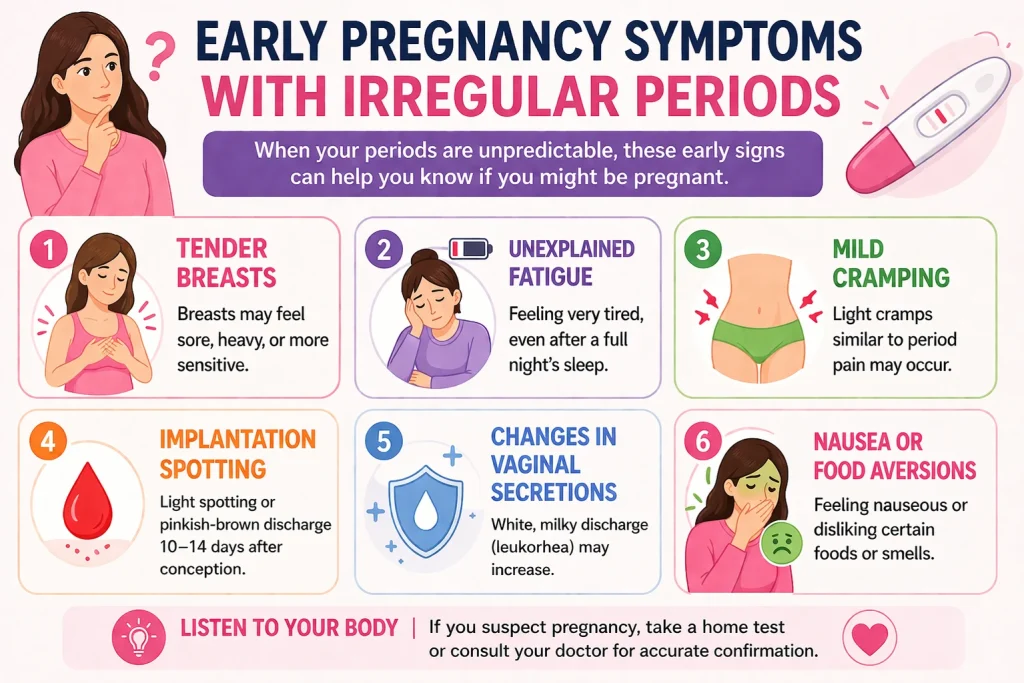
Common irregular periods pregnancy symptoms include:
- Tender Breasts: Your breasts may feel unusually heavy, sore, or sensitive to the touch.
- Unexplained Fatigue: Feeling completely exhausted, even after a full night’s sleep, is a major early sign.
- Mild Cramping: You might feel light cramps that mimic period pain, which happens when the embryo attaches to the uterus.
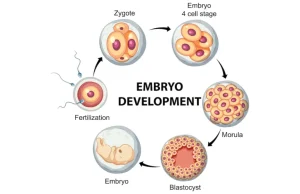
- Look Out for Implantation Spotting: One of the most confusing signs of pregnancy when you have irregular periods is early spotting. About 10 to 14 days after conception, you might notice very light bleeding or pinkish-brown spots. This is known as implantation bleeding, and it happens when the fertilized egg burrows safely into the lining of your uterus to make a home. Because your cycles are unpredictable, it is very easy to mistake this for the start of a light period. However, implantation bleeding is much lighter than a regular flow (usually only requiring a panty liner) and typically lasts for just one to two days.
- Changes in Vaginal Secretions: Many women notice white discharge with irregular periods. This milky, mild-smelling discharge (leukorrhea) naturally increases early in pregnancy as the body builds a barrier to protect the womb from infections.
- Nausea or Food Aversions: Feeling sick to your stomach or suddenly disliking the smell of your favorite foods (like certain spices or cooking oil).
When to Take a Pregnancy Test with Irregular Periods
For women with a strict 28-day cycle, taking a test on day 29 is easy. But when to test for pregnancy if irregular periods are normal?
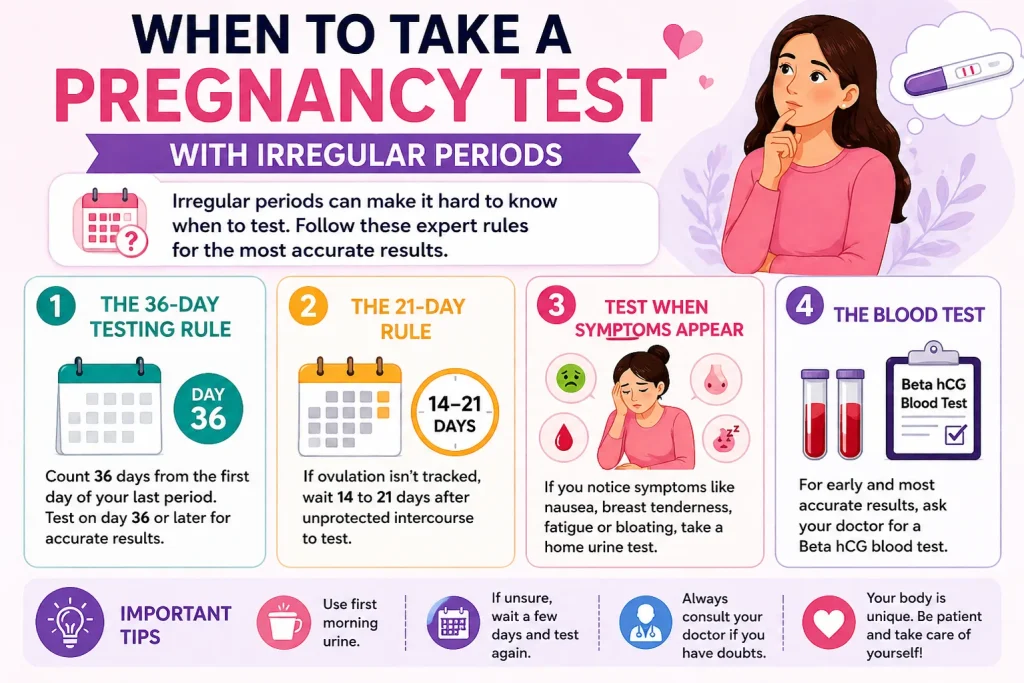
- The 36-Day Testing Rule: If you are not tracking your ovulation or cannot remember the exact dates of intercourse, figuring out when to test for pregnancy if irregular periods are your normal can feel like total guesswork. To solve this, experts recommend a simple math trick known as the “36-Day Rule”. Simply count 36 days forward from the very first day of your last menstrual period. If you take a home urine test on day 36 (or anytime after), your body should have built up enough of the pregnancy hormone (hCG) to show a highly accurate, clear positive result. If the test is negative but your symptoms persist, doctors recommend waiting a couple of days and testing again.
- The 21-Day Rule: If you are not tracking ovulation, wait 14 to 21 days after you last had unprotected intercourse. By the three-week mark, a home pregnancy test will be highly accurate.
- Test When Symptoms Appear: If you suddenly start experiencing the irregular periods pregnancy symptoms mentioned above, go ahead and take a home urine test.
- The Blood Test: If you are unsure and want absolute confirmation, visit your doctor for a Beta hCG blood test, which can detect pregnancy earlier and more accurately than urine kits.
Best Treatments to Regulate Periods and Improve Fertility
If you want to regulate your cycles to make getting pregnant easier, there are excellent, proven treatments available right here in India that blend traditional wellness with modern medicine.
1. Lifestyle and Ayurvedic Support: In India, the first line of treatment often involves lifestyle modifications. Managing stress through daily yoga and pranayama helps balance hormones like cortisol, which directly impacts ovulation. Under expert guidance, Ayurvedic herbs like Shatavari and Ashwagandha are frequently used to naturally nourish the female reproductive system and encourage regular cycles.
2. Nutritional Corrections: A traditional, balanced Indian diet rich in plant proteins (like dals and sprouts), leafy greens (palak, methi), and whole grains can help regulate insulin levels, which is especially important if your irregular periods are caused by PCOS.
3. Medical Support (Ovulation Tracking & Induction): If natural methods are not enough, your gynecologist can offer highly effective, simple medical help.
- Follicular Scans: Doctors use simple ultrasound scans to physically watch your egg grow and tell you the exact days you are most likely to conceive.
- Medications: Simple oral tablets (like Letrozole or Clomiphene) can be prescribed to gently stimulate your ovaries, ensuring that you release a healthy egg predictably.
Final Thoughts: Pregnancy with Irregular Periods is Possible
Do not let irregular periods discourage you. Your body is incredibly capable. By understanding your unique cycle, watching for the right symptoms, and seeking a little help from lifestyle changes or a fertility specialist, achieving a healthy pregnancy is entirely within your reach.
References
Federation of Obstetric and Gynaecological Societies of India (FOGSI) – Good Clinical Practice Recommendations on Infertility
National Health Portal (NHP) India – Information on Menstrual Disorders and Infertility
https://www.nhp.gov.in/disease/gynaecology-and-obstetrics/menstrual-disorders
Indian Council of Medical Research (ICMR) – Standard Treatment Workflow for Female Infertility
https://www.icmr.gov.in/icmrobject/uploads/STWs/1726568410_female_infertility.pdf
Ministry of Health and Family Welfare (MoHFW) – Guidelines for Maternal Care and Preconception Health


















 No need to worry, your data is 100% safe with us!