


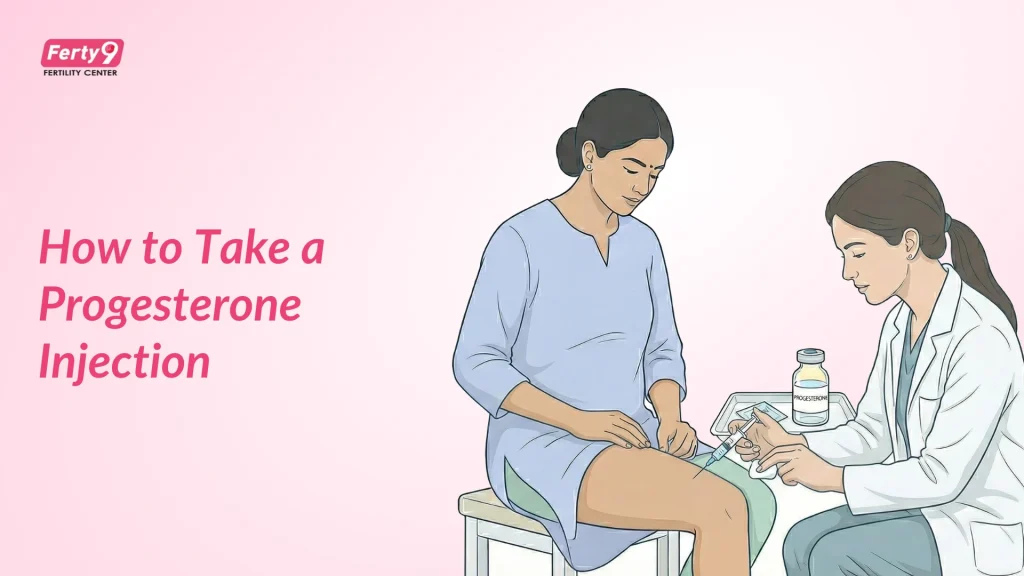
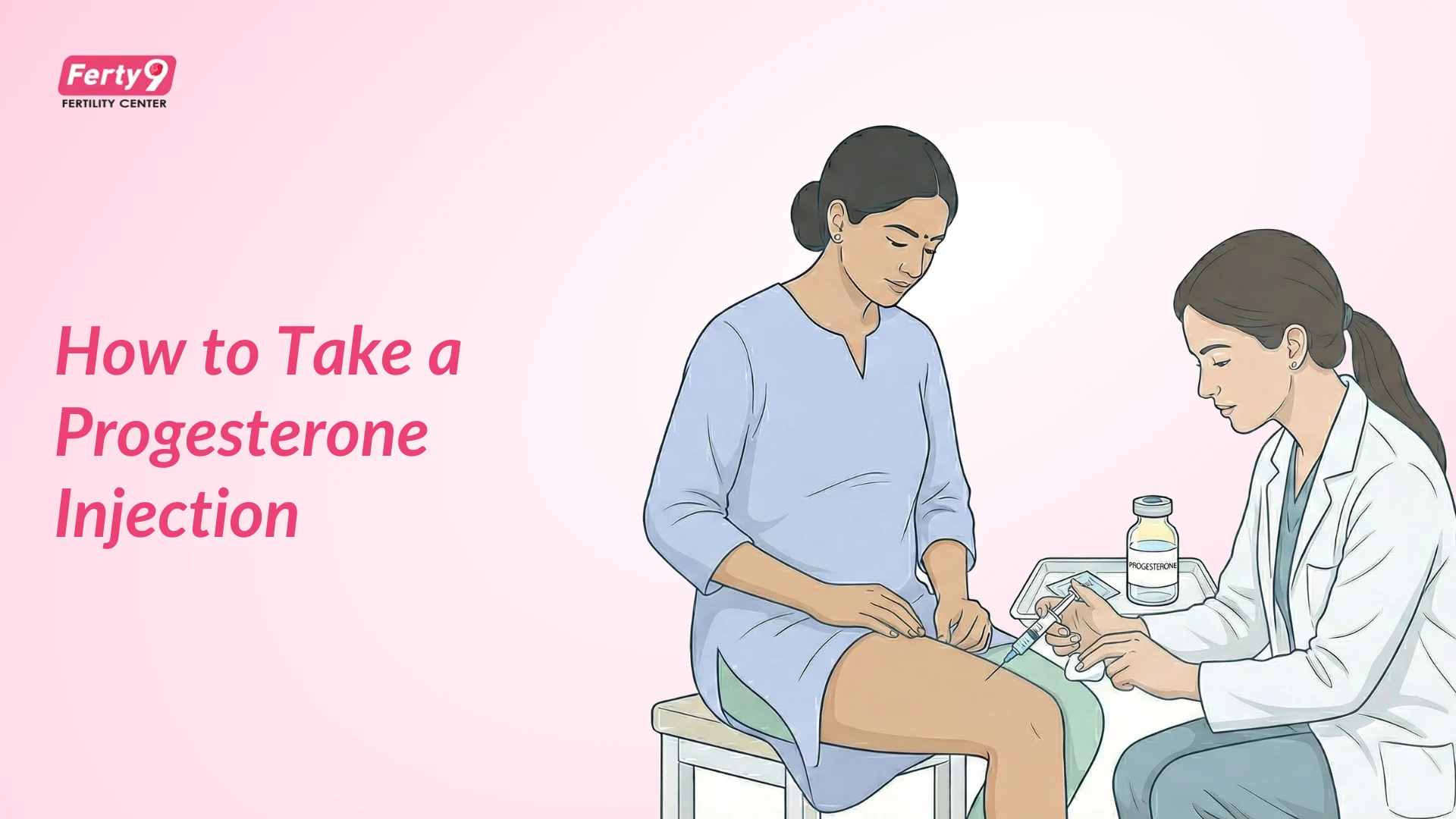
If you are undergoing IVF treatment or need hormonal support during early pregnancy, your doctor at Ferty9 may prescribe progesterone injections. For many patients, the thought of daily injections—especially the “big ones” in the muscle—can be intimidating.
We understand that you might feel anxious. However, these injections are a vital part of your journey to parenthood. With the right technique and a few simple tricks, you can make the process safe, effective, and much less painful. This guide will walk you through everything you need to know about taking progesterone injections confidently.
What Is Progesterone and Why It’s Important
Role of Progesterone in the Body
Progesterone is often called the “pregnancy hormone.” Its main job is to prepare the lining of your uterus (endometrium) to receive a fertilized egg. Once you are pregnant, it helps maintain the pregnancy by preventing the uterus from contracting and shedding the lining.
Why Doctors Prescribe Progesterone Injections
In a natural pregnancy, your body produces progesterone automatically. However, during fertility treatments like IVF, the medications used to retrieve eggs can sometimes lower your natural progesterone levels. To ensure the embryo implants successfully and to prevent early miscarriage, we prescribe extra progesterone to “support” the pregnancy until the placenta takes over (usually around week 10-12).
Types of Progesterone Injections
Intramuscular (IM) Injections
This is the most common type used in India for IVF support. The medication is injected deep into the muscle, usually in the buttocks.
- Pros: Highly effective and slowly released into the body.
- Cons: Can be painful because the needle is longer and thicker.
Subcutaneous Injections
These are injected into the fatty tissue just under the skin, typically in the belly or thigh.
- Pros: Shorter, thinner needles; less painful.
- Cons: Usually requires a specific water-based type of progesterone (like Prolutex), which can be more expensive than the oil-based shots.
Oil-Based vs. Water-Based Injections
- Oil-Based: The progesterone is dissolved in oil (like sesame or peanut oil). It is thick and requires a larger needle to draw up and inject. This is the standard IM shot.
- Water-Based: This is a newer aqueous solution that can be injected under the skin. It causes less muscle soreness but must be taken daily.
When Are Progesterone Injections Needed?
During Pregnancy or IVF
This is the most common use. It is called “Luteal Phase Support” and is critical for IVF success.
Hormonal Imbalance
It treats conditions where the body doesn’t make enough progesterone, leading to irregular cycles.
Menstrual Disorders or Infertility
It is sometimes used to induce a period in women who haven’t menstruated for several months (Amenorrhea) or to treat abnormal uterine bleeding.
Precautions Before Taking a Progesterone Injection
Medical Advice and Prescription
Never take hormonal injections without a prescription. The dosage is carefully calculated by your Ferty9 specialist based on your blood work.
Allergy Test and Safety Precautions
Because intramuscular progesterone is often suspended in oils (like sesame, peanut, or olive oil), you must tell your doctor if you have any nut or seed allergies. An allergic reaction to the oil can be serious.
Step-by-Step Guide on How to Take a Progesterone Injection
(Note: Most IVF patients take Intramuscular (IM) oil-based shots. This guide focuses on that method.)
Step 1 – Wash and Prepare Your Hands
Cleanliness is key to preventing infection. Wash your hands thoroughly with soap and warm water for at least 20 seconds. Dry them with a clean towel.
Step 2 – Gather the Supplies
Lay everything out on a clean table:
- The medication vial.
- A syringe.
- Two needles: One thick needle for drawing the medication (usually green/21G) and one thinner, longer needle for injecting (usually black/22G or 23G).
- Alcohol swabs.
- A cotton ball or gauze.
- A sharps disposal container (or a hard plastic bottle).
Step 3 – Prepare the Injection
- Warm the Vial: If using oil-based progesterone, roll the vial between your palms for a minute. Warming the oil makes it thinner and easier to inject.
- Clean the Vial: Wipe the rubber top of the vial with an alcohol swab.
- Draw the Medicine: Attach the thick needle to the syringe. Pull air into the syringe equal to your dose (e.g., 1ml), inject the air into the vial, and then pull back the plunger to fill the syringe with the liquid.
- Switch Needles: Remove the thick drawing needle and attach the longer injection needle. (The drawing needle gets dull from piercing the rubber cap; a fresh needle hurts less!)
- Remove Air Bubbles: Hold the syringe needle-up, tap it gently so bubbles rise to the top, and push the plunger slightly until a drop of liquid comes out.
Step 4 – Choose the Injection Site
For Intramuscular injections, the best site is the Upper Outer Quadrant of the buttock.
- Imagine dividing one buttock cheek into four equal squares (a cross).
- You want to inject into the upper, outer square (closest to the hip bone, not the crack). This avoids the sciatic nerve.
Step 5 – Administer the Injection
- Clean the Skin: Use an alcohol swab to clean the chosen spot in a circular motion. Let it dry naturally.
- The Dart Motion: Hold the skin taut with one hand. With the other hand, hold the syringe like a dart. Insert the needle quickly at a 90-degree angle (straight in). Going slow hurts more.
- Aspirate (Check for Blood): Once the needle is in, pull back slightly on the plunger.
- No blood? Great, proceed.
- See blood? You hit a blood vessel. Remove the needle, change it, and try a different spot.
- Inject Slowly: Push the plunger down slowly and steadily. Progesterone oil is thick; rushing causes pain.
- Withdraw: Pull the needle out quickly at the same angle it went in.
Step 6 – Dispose of the Needle Properly
Do not recap the needle. Drop the syringe and needle immediately into your sharp’s container.
Common Injection Sites and How to Choose
Buttocks (Intramuscular)
This is the preferred site for oil-based progesterone. The Gluteus Maximus muscle is large enough to absorb the medication. Remember: Upper. Outer. Side.
Abdomen or Thigh (Subcutaneous)
If you are prescribed water-based progesterone (like Prolutex), you can pinch an inch of fat on your belly (staying away from the navel) or the front of your thigh. Insert the needle at a 45 or 90-degree angle.
Tips to Reduce Pain or Discomfort
- Relax the Muscle: Lie down on your stomach with your toes pointed inward (pigeon-toed). This relaxes the glute muscles. Tensing up makes the needle hurt more.
- Ice Before: Apply an ice pack to the site for 5 minutes before the shot to numb the skin.
- Warm After: Never ice after an oil shot (it can make the oil harden into a lump). Use heat afterwards.
Aftercare Tips for Progesterone Injections
Massage the Area Gently
After removing the needle, use a cotton ball to apply pressure. Then, gently massage the area in a circular motion for 1-2 minutes. This helps the oil disperse into the muscle so it doesn’t form a painful knot.
Use a Warm Compress
Apply a heating pad or a warm towel to the injection site for 10-15 minutes after the shot. The heat thins the oil and increases blood flow, helping your body absorb the medicine faster.
Stay Hydrated and Relax
Drink plenty of water and try to walk around a bit after the shot. Movement helps the muscle absorb the medication.
How Often Should You Take Progesterone Injections?
Dosage Frequency
Most patients require a daily injection, usually at the same time every day (e.g., every evening). Consistency keeps the hormone levels in your blood stable.
Duration of Treatment
In an IVF cycle, if you get pregnant, you will typically continue these injections until the 10th or 12th week of pregnancy. By then, the placenta is developed enough to make its own progesterone.
Side Effects and How to Manage Them
Common Side Effects
- Injection Site Reactions: Pain, redness, itching, or hard lumps/knots under the skin are very common with oil injections.
- Systemic Symptoms: Drowsiness, dizziness, or mild bloating.
Serious Side Effects (When to Call a Doctor)
Call Doctor (Ferty9) immediately if you experience:
- Severe allergic reaction (hives, difficulty breathing).
- Signs of infection (fever, the injection spot feels hot and throbbing).
- Intense pain shooting down your leg (sciatica) – this means the needle hit a nerve.
Can You Take Progesterone Injections at Home?
Yes. Most patients (or their partners) learn to do this at home. Your nurse at Ferty9 will teach you the technique. However, if you are uncomfortable, you can visit a local clinic or hire a nurse to administer it for you. Many women prefer their partner to give the buttock injections as it is hard to reach back there yourself.
Tips to Make Progesterone Shots Less Painful
- Change the needle: Always use a fresh needle to inject; the rubber vial cap dulls the first one.
- Numb the skin: Ice helps numb the surface “pinch.”
- Speed matters: Insert the needle fast (“dart it”), but push the medicine in slowly.
- Rotate sites: Do not inject the exact same spot every day. Switch between the left and right buttocks daily.
Summary
Progesterone injections are a “necessary evil” in the IVF journey—they can be uncomfortable, but they are the guardians of your pregnancy. By warming the oil, relaxing your muscles, and using the correct location (Upper-Outer Quadrant), you can manage the discomfort effectively.
Remember, every shot brings you one step closer to your baby. If you are ever unsure about your technique, the nursing team at Ferty9 is always here to guide you.



















 No need to worry, your data is 100% safe with us!