

IVF Treatment
In Vitro Fertilization (IVF) is a medical procedure where mature eggs are retrieved from the ovaries and fertilized by sperm in a specialized laboratory. The resulting fertilized egg, now an embryo, is then carefully transferred into the uterus. A full cycle of IVF typically spans about two to three weeks. Learn more about What is IVF?

Who Needs IVF Treatment?
In Vitro Fertilization (IVF) is not always the first step in fertility treatment, but for many couples, it is the most effective path to parenthood. At Ferty9 Fertility Center, our specialists recommend IVF when simpler treatments like medication or IUI (Intrauterine Insemination) have not worked, or when specific medical conditions make natural conception difficult.
You may need IVF if you are facing any of the following challenges:
Blocked Fallopian Tubes
If both tubes are blocked or damaged, the egg cannot travel to the uterus to meet the sperm. IVF bypasses the tubes completely.
Male Infertility Factors
If the male partner has a low sperm count, poor motility (movement), or issues with sperm shape. In severe cases, we use ICSI (Intracytoplasmic Sperm Injection) along with IVF to ensure fertilization.
Severe Endometriosis
This condition causes tissue to grow outside the uterus, which can scar the ovaries and tubes, affecting fertility.
Ovulation Disorders (PCOS)
For women with Polycystic Ovary Syndrome (PCOS) who do not ovulate regularly and have not conceived with ovulation-inducing medicines.
Advanced Maternal Age
Women over the age of 35 or 38 may have a lower “ovarian reserve” (fewer eggs left). IVF helps maximize the chance of pregnancy with the remaining eggs.
Unexplained Infertility
Sometimes, all test results (sperm, tubes, ovulation) appear normal, yet pregnancy doesn’t happen. IVF can often overcome these hidden barriers.
Genetic Concerns
If there is a risk of passing on genetic diseases (like Thalassemia), IVF allows us to screen embryos (PGT) before pregnancy.
Benefits of IVF Treatment
IVF offers numerous advantages, making it a viable option for various infertility issues:
Higher Pregnancy Success
Compared to some other fertility treatments, IVF often has a higher chance of resulting in a pregnancy.
Genetic Screening of the embryo before transfer
Preimplantation Genetic Testing (PGT) can be performed on embryos to screen for specific genetic defects or chromosomal abnormalities before transfer, reducing the risk of passing on certain conditions.
Option to use Donor Eggs/Sperm
IVF allows for the use of donor eggs or sperm when necessary.
Flexible Family Planning
Individuals facing medical treatments like chemotherapy, which can affect fertility, can opt to freeze their eggs, sperm, or embryos for future use through IVF, known as cryopreservation.
Solutions for Various Fertility Problems
It can overcome issues like blocked or damaged fallopian tubes, male factor infertility (low sperm count or motility), ovulation disorders, endometriosis, uterine fibroids, and unexplained infertility.
What is the Process of In Vitro Fertilization (IVF)?
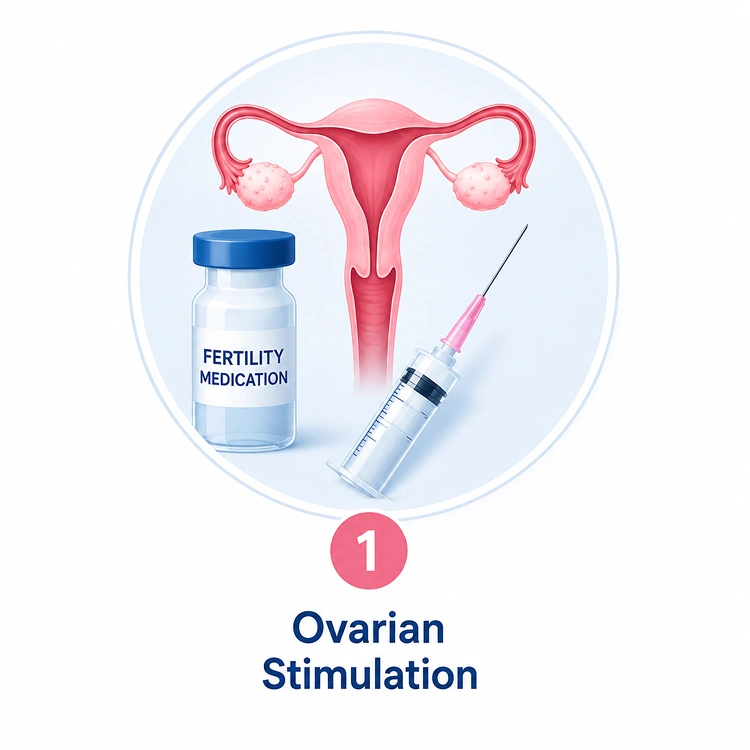
Ovarian Stimulation
Fertility medications (hormone injections) are administered for 8-14 days to stimulate the ovaries to produce multiple mature eggs, rather than the single egg that normally develops each month. Regular monitoring through blood tests and ultrasound scans is done to track follicle development.
IVF Timeline - How Long Does It Take for the IVF Treatment?
IVF Success Rate in India & Ferty9
IVF success rates depend most significantly on the woman’s age (as egg quality and quantity decline with age), the cause of infertility, embryo quality, uterine health, lifestyle factors, and the expertise of the clinic.
- Average IVF Success Rate: Globally, for women under 35, the average live birth rate per IVF cycle can be around 35-40%, decreasing with increasing age.
- Women under 35: ~40-50%
- Women aged 35-37: ~30-40%
- Women aged 38-40: ~20-25%
- Women over 40: ~10-15% or lower.
The average IVF success rate in India is generally reported to be between 30% to 40%.(Pubmed Central) Ferty9 reports a consistent overall success rate of 60% to 70%.
Ferty9 recognizes that factors such as declining ovarian reserve, embryo quality, uterine health, the number of IVF cycles, individual fertility issues, and lifestyle choices all influence success rates. At our clinics, the overall success rate is 60-65% for Indian women between 24 and 35 years, which represents a strong outcome and likely refers to pregnancy rates per cycle or combined rates over multiple cycles for this ideal age group. We recommend consulting directly with the clinic for individualized success rate discussions based on your specific circumstances
IVF Cost at Ferty9
The IVF Treatment cost can vary significantly based on the specific procedures required (e.g., ICSI, PGT, donor eggs/sperm, embryo freezing) and the number of cycles needed.
For those considering Ferty9 fertility center, the pricing structure is more specific. The cost for a standard IVF cycle (includes ICSI if needed) typically ranges from INR 1.5 lakhs to INR 2 lakhs. Additional costs for services like embryo freezing (around INR 25,000 per straw per year), sperm freezing (around INR 6,000 per sample for 6 months), and PGT can apply.
To get the most accurate and personalized financial information, it is always strongly recommended to obtain a comprehensive and detailed cost breakdown directly from the Ferty9 fertility center, tailored to your unique medical circumstances and treatment plan.
| Cost Component | General Average in India (Per Cycle) | Ferty9 Fertility Center (Per Cycle) |
| Initial Consultation & Scans | ₹2,000 – ₹5,000 | Included in Package |
| Ovarian Stimulation Medications | ₹60,000 – ₹1,50,000 | Optimized Based on Ovarian Reserve |
| Egg Retrieval & OT Charges | ₹30,000 – ₹50,000 | Included in Base Cost |
| IVF/ICSI Laboratory Charges | ₹50,000 – ₹80,000 | High-End Lab Included |
| Embryo Transfer Procedure | ₹20,000 – ₹40,000 | Included in Package |
| Total Estimated Range | ₹1,50,000 – ₹3,50,000+ | ₹1,50,000 – ₹2,00,000* |
IVF Risks
While IVF is generally safe, like any medical procedure, it carries some risks:
Ovarian Hyperstimulation Syndrome (OHSS)
A rare but potentially serious complication where the ovaries become swollen and painful due to fertility drugs. Symptoms can range from mild (bloating, nausea) to severe (rapid weight gain, shortness of breath, blood clots). Careful monitoring helps prevent severe OHSS.
Multiple Pregnancies
Transferring more than one embryo increases the chance of twins, triplets, or higher-order multiples. Multiple pregnancies carry higher risks for both mother and babies (e.g., premature delivery, low birth weight).
Egg Retrieval Complications
Risks include bleeding, infection, or damage to the bowel or bladder, though these are rare.
Ectopic Pregnancy
A small risk that the embryo implants outside the uterus, usually in a fallopian tube. This is a non-viable pregnancy and requires medical treatment.
Miscarriage
The rate of miscarriage after IVF is similar to that of natural conception, increasing with maternal age.
Emotional and Psychological Stress
The IVF process can be emotionally and physically demanding.
Birth Defects
The risk of birth defects in IVF babies is generally considered to be low and comparable to that in naturally conceived babies.
How Do You Prepare for IVF Treatment?
Preparation for IVF is crucial and typically begins 2 to 4 weeks before starting the actual cycle. This phase may involve:
- Initial Consultation and Testing: Thorough medical history, fertility testing, and evaluations for both partners (ovarian reserve testing, semen analysis, infectious disease screening).
- Lifestyle Adjustments:
- Healthy Diet: Focus on a balanced diet rich in fruits, vegetables, lean protein, and whole grains.
- Maintain a Healthy Weight: Being significantly overweight or underweight can affect IVF outcomes.
- Avoid Smoking, Alcohol, and Recreational Drugs: These can negatively impact egg and sperm quality and overall success.
- Limit Caffeine: Discuss caffeine intake with your doctor.
- Stress Management: Incorporate stress-reducing activities like yoga, meditation, or light exercise.
- Medications: Your doctor might prescribe medications to regulate your menstrual cycle or address other underlying conditions.
- Supplements: Folic acid is typically recommended. Discuss any other supplements with your doctor.
After the Procedure
Following the embryo transfer, there’s a “two-week wait” before a pregnancy test can reliably detect pregnancy.
Rest and Activity
Light to moderate activity is generally fine. Vigorous exercise should usually be avoided. Your doctor will provide specific instructions.
Medications
Continue any prescribed medications, such as progesterone.
Symptoms
Some women experience mild cramping, bloating, or light spotting. These can be due to the procedure or early signs of pregnancy, but they can also occur if the cycle is unsuccessful.
Pregnancy Test
A blood test (hCG test) is typically scheduled about 9-14 days after the embryo transfer to determine if pregnancy has occurred.
Positive Pregnancy Test
A positive pregnancy test after IVF is a joyous moment.
Negative Pregnancy Test
Receiving a negative pregnancy test after an IVF cycle can be incredibly disappointing and emotionally challenging.
Why Choose Ferty9 for IVF Treatment
Choosing a fertility centre is one of the most important decisions on your path to parenthood. It’s a journey of hope, and you deserve a partner who combines medical excellence with genuine care. At Ferty9 Fertility Center, we are dedicated to turning your dream of having a baby into a reality.
Here’s why thousands of families across India have trusted us with their journey:
IVF Second Opinion: When to Consult a New Fertility Specialist
Fertility treatment is a significant emotional and financial investment. If you feel stuck in your journey or unsure about your current treatment plan, getting a fresh perspective is not just okay, it is a smart decision. You should consider booking a consultation at Ferty9 for a second opinion if:
- You Have Experienced Repeated IVF Failures: If you have had 2 or more failed IVF cycles without a clear explanation, our advanced lab technology and senior doctors can help analyse “why” it happened.
- You Have Had Multiple Miscarriages: Recurrent pregnancy loss requires deep investigation into genetic or immunological factors.
- You Were Told “Donor Eggs” is Your Only Option: Many women with low AMH (low egg count) are told to give up on their own eggs too early. We specialize in protocols that try to use your own eggs first.
- You Feel Your Treatment Plan isn’t Personalized: If you feel like you are on a “conveyor belt” and your doctor isn’t adjusting the treatment to your specific body type, it is time for a change.
- You Have Questions About Advanced Options: If your current clinic does not offer advanced solutions like Laser Assisted Hatching, Blastocyst Culture, or ERA (Endometrial Receptivity Analysis), a second opinion can open new doors for success.
Patient Stories
Nothing inspires us more than the success stories of our patients


The patience level of Team and Dr susrutha mam is excellent we felt so great by visiting this ferty9
Friendly staff and nice receiving , consulted doctor suma varsha garu giving proper time to listen patient problems with patience
Hello… Very happy to share my pregnancy news.. within 3 months I had conceived .. I was referred to dr Shruthi by my friend and...
Ferty 9 hospital all the doctors and nurse and front desk were incredibly kind and attentively making me feel comfortable and well the hospital provided...
Ferty9 hospital I was impressed with clanliness and modern facilitates of the hospital.the staff at the front desk were very welcoming and efficient making the...
Excellent IVF hospital in vijayawada. Specially Mrs Suma Varsha Mam’s treatment and way of approch is really fabulous appreciate her way of treatment. Must recommend...
Im so happy and thrilled to share my journey we have 4 years of marital life ,we are struggling a lot,so that we came to...
I was thrilled im so happy to share my postive pregnancy journey,After 18 years of marital life I never got pregnant I came to ferty9...
We have 5 years of marital life. We came to meet Dr. Usha mam based on my wife condition she suggested IVF. In thsi IVF...
Thank you Ferty 9 Dr.Tejeswini madam and Ferty 9 Family for Finally giving me pregnancy after 20 years of Married Life….Went to Many hospitals and...
Thank you doctor tejeswini madam for treating us and finally i am pregnant now.Went to so many hospitals but everywhere it is commercial and no...
In our 21 years of marital life we consulted many doctors no one provided successful result,our well wishers suggested Ferty9 hospital to us, we consulted...
Thanks to Dr Sandhya Deepika madam, madam given her best treatment to us,in our 6 years of marital life we consulted number of doctors there...
I’m Lakshmi.K, 4 years married life, I started treatment in February, Dr. Sowmya mam treated very well, Now I’m pregnant, I’m very happy, And also...
Very usefull to visit the center , excellent treatment ,good explanation by Dr.Sowmya mam ,very well guiding by staff members, especially when ever I called...

An IVF pregnancy is generally considered safer after a fetal heartbeat is confirmed via ultrasound, typically around 6–7 weeks. After the first trimester (around 12 weeks), IVF pregnancies are managed similarly to natural pregnancies, though your doctor may recommend additional monitoring.
The overall risk of birth defects in IVF babies is low and comparable to naturally conceived babies. Some studies suggest a slight increase in specific conditions, possibly linked to the cause of infertility rather than IVF itself. Preimplantation Genetic Testing (PGT) can help screen embryos.
– Physically: You will likely get your period, which may be heavier than usual. Hormonal levels will gradually return to normal.
– Emotionally: A failed IVF cycle can be emotionally tough. Feelings of sadness, anger, or grief are common. Emotional support or counselling is recommended.
The number of IVF cycles needed varies per person. Some achieve pregnancy in the first cycle, while others may require multiple cycles. Your doctor will evaluate your response and outcomes from the first cycle to plan further treatment.
IVF success rates vary based on age, cause of infertility, embryo quality, and clinic expertise. Women under 35 generally have a 60–70% success rate per cycle. Success rates decline with age. Your fertility specialist can provide individual success estimates.
– Injections: May cause mild stinging or bruising at the site.
– Egg Retrieval: Done under sedation or light anesthesia, typically pain-free. Some cramping may occur afterward.
– Embryo Transfer: A quick and usually painless procedure, similar to a Pap smear. Some women may feel mild cramping.
The number of injections depends on your treatment plan. Typically, 1 to 2 injections per day are required for about 8–12 days during the ovarian stimulation phase. Progesterone support may continue for several weeks through injections or alternative methods like pessaries or gels.
Common medications used in IVF include:
– Ovarian Stimulation Drugs: Help the ovaries produce multiple eggs (e.g., FSH, hMG).
– Ovulation Prevention Drugs: Prevent premature ovulation (e.g., GnRH agonists or antagonists).
– Trigger Shot: Stimulates final egg maturation before retrieval (e.g., hCG).
– Progesterone: Prepares the uterine lining for embryo implantation and supports early pregnancy.
IUI (Intrauterine Insemination): Specially prepared sperm are placed directly into the uterus around the time of ovulation. Fertilization happens inside the body.
IVF (In Vitro Fertilization): Eggs are retrieved from the ovaries and fertilized by sperm outside the body, in a lab. The resulting embryo is then transferred into the uterus.

Content Last Reviewed on: July 31, 2026