


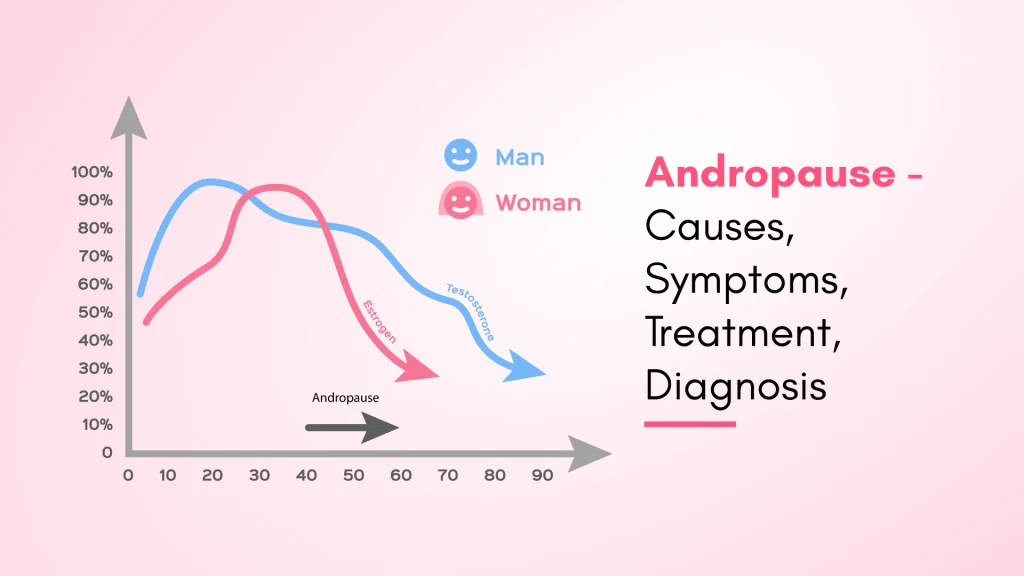
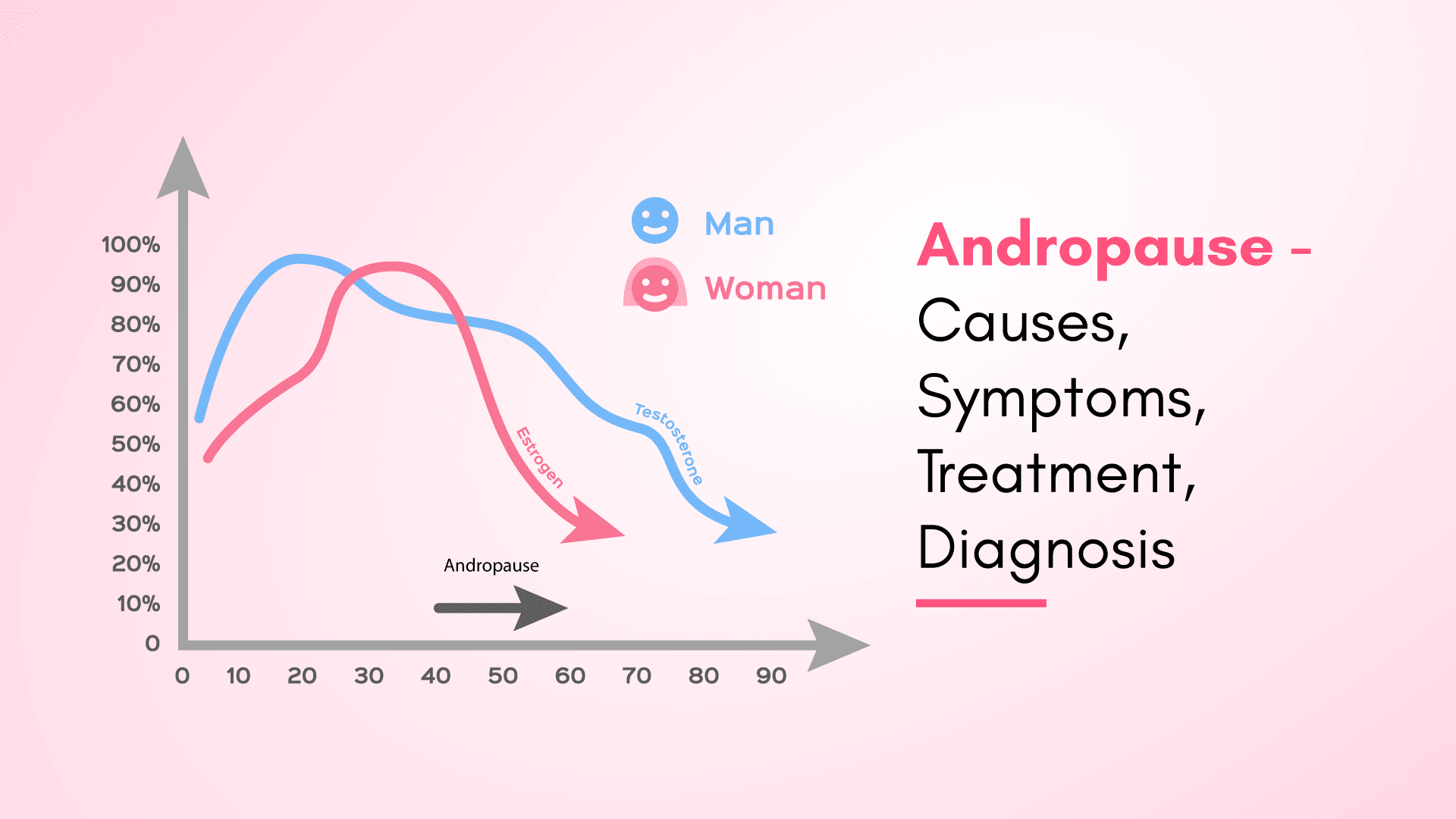
- Andropause Lowers Testosterone Gradually – Andropause refers to the gradual, age-related decline in testosterone that can begin after age 30 and become more noticeable later in life.
- Watch for Physical Changes – Extreme fatigue, reduced muscle mass, increased belly fat, thinning hair, and sweating can occur with declining testosterone levels.
- Sexual Symptoms Can Develop – Reduced libido, erectile dysfunction, and fewer morning erections are among the sexual changes associated with andropause.
- Blood Tests Help Diagnosis – Doctors assess symptoms and use morning blood tests to measure total and free testosterone while ruling out other conditions with similar symptoms.
- Treatment Combines Lifestyle and Medical Care – Treatment may include nutrition, exercise, stress management, Ayurvedic support, or medically supervised testosterone replacement therapy.
Andropause (Male Menopause)
Aging brings many changes, but for men entering their 40s and 50s, a sudden drop in energy, mood, and physical strength can feel confusing and frustrating. Often dismissed by society as just “getting older” or a “midlife crisis,” these physical and emotional shifts could be rooted in a very real medical condition known as andropause.
If you or a loved one is experiencing these changes, you are not alone. Here is a clear, simple guide to understanding what your body is going through and the exact steps you can take to reclaim your vitality.
How Can You Recognize Andropause Symptoms?
Because the hormone decline happens slowly over several years, the symptoms can easily sneak up on you. The andropause symptoms are generally grouped into physical, sexual, and emotional changes.
Signs include:
- Physical Changes: Unexplained and extreme fatigue, loss of muscle mass, increased belly fat, thinning hair, and sometimes even hot flashes or sweating.
- Sexual Changes: A noticeable drop in libido (desire for sex), erectile dysfunction, and fewer morning erections.
- Emotional Changes: Increased irritability, feelings of sadness or depression, lack of motivation, and difficulty concentrating (often described as “brain fog”).
What is Andropause and What Causes It?
To truly answer what andropause is, we have to look at testosterone—the primary male sex hormone.
Starting around the age of 30, a man’s testosterone levels naturally drop by about 1% every year. By the time a man reaches 50, this gradual decline can lead to significantly low testosterone in men (also clinically called late-onset hypogonadism). When this drop is severe enough to cause the physical and mental symptoms listed above, it is diagnosed as andropause.
Is “Male Menopause” the Same as Female Menopause?
While people often use the term “male menopause,” it is medically quite different from what women experience. For women, menopause marks a sudden and complete drop in estrogen and progesterone, permanently ending their reproductive years. In contrast, andropause is a very slow, gradual decline in testosterone (dropping only about 1% each year after the age of 30). Because the decline is so slow, many men can still produce sperm and maintain their fertility well into their older years.
Common causes are:
- Natural Aging: The biological slowing of hormone production in the testes.
- Lifestyle Factors: Chronic stress, lack of sleep, smoking, and heavy alcohol consumption rapidly deplete testosterone.
- Underlying Medical Conditions: Obesity, type 2 diabetes, and high blood pressure significantly increase the risk of early or severe andropause.
How is Andropause Diagnosed?
If you suspect you are going through male menopause, the diagnosis process is simple and straightforward. Your doctor will:
- Review your symptoms: They will ask about your energy, mood, and sexual health.
- Order a Blood Test: A simple morning blood test will measure your total and free testosterone levels. Because testosterone levels are highest in the morning, the blood is usually drawn before 10:00 AM.
- Conditions That Mimic Andropause: Sometimes, the symptoms of low energy and poor mood are not caused by aging testosterone levels. Before confirming a diagnosis of andropause, a doctor must rule out other underlying health issues that present the exact same symptoms. These often include:
- Hypothyroidism: An underactive thyroid gland.
- Psychological Factors: Severe clinical depression, chronic anxiety, or extreme workplace stress.
- Medication Side Effects: Long-term use of certain antidepressants, blood pressure medications, or corticosteroids.
Treatment Options: Steps to Restore Your Vitality
The goal of treatment is to relieve your symptoms and improve your overall quality of life. In India, a multi-step approach is usually the most effective:
1. Lifestyle and Nutritional Changes
Your body needs the right building blocks to produce hormones. Focus on a balanced Indian diet rich in zinc and healthy fats—such as pumpkin seeds, almonds, walnuts, and green leafy vegetables. Regular weightlifting and cardiovascular exercise are scientifically proven to naturally boost testosterone production.
2. Ayurvedic Support
Traditional Indian medicine offers natural support for hormonal health. Under the guidance of an Ayurvedic doctor, herbs like Ashwagandha and Shilajit are frequently used to lower stress (cortisol) levels, improve energy, and naturally support the male reproductive system.
3. Medical Interventions (TRT)
If lifestyle changes are not enough, an endocrinologist or urologist may recommend Testosterone Replacement Therapy (TRT). TRT comes in several forms, including skin gels, patches, and intramuscular injections. It artificially restores your testosterone to normal levels, quickly reversing fatigue, mood swings, and sexual dysfunction.
Long-Term Complications of Untreated Andropause
If left ignored, chronically low testosterone in men does more than just affect your mood and sex drive—it can have serious consequences for your physical health. Men with untreated andropause are at a significantly higher risk of developing:
- Osteoporosis: A condition where bones lose their density and become brittle, increasing the risk of fractures.
- Cardiovascular Issues: Imbalanced hormones can negatively impact heart health and metabolism.
When to See a Doctor
You should never have to just “live with” extreme fatigue or depression. If your symptoms are affecting your personal relationships, your work performance, or your overall happiness, it is time to seek help. Book a consultation with a certified urologist or endocrinologist to get a proper blood test and evaluation.
References
National Health Portal (NHP) India – Men’s Health, Ageing, and Lifestyle
https://www.nhp.gov.in/disease/mens-health
Indian Council of Medical Research (ICMR) – Guidelines on Management of Male Reproductive Health
Urological Society of India (USI) – Patient Information on Late-Onset Hypogonadism
Endocrine Society of India (ESI) – Clinical Practice Guidelines for Adult Male Hypogonadism
https://www.endocrinesocietyindia.org

















 No need to worry, your data is 100% safe with us!