



Waking up to find that you have ejaculated during sleep can feel confusing or even embarrassing, especially when it happens for the first time. But nightfall is a natural bodily process that many boys and men experience, particularly during puberty and early adulthood.
Nightfall, also called a wet dream, simply means semen is released involuntarily while you are asleep. It does not mean that something is wrong with your sexual health, and occasional nightfall does not reduce sperm count, lower testosterone, cause infertility, or affect sexual performance.
So, why does nightfall happen? How often is it normal? And can frequent nightfall affect male fertility? This article explains what causes nightfall, common concerns and myths around it, and when you may need to speak with a doctor.
What is nightfall in men?
Nightfall in men, also called nocturnal emission or wet dreams, refers to the involuntary release of semen during sleep without conscious sexual activity. It usually occurs during the REM (Rapid Eye Movement) stage of sleep, when the brain is more active and involuntary erections are common.
The male body continuously produces sperm throughout life. When semen is not released through sexual intercourse or masturbation, it may be naturally expelled during sleep. This process is the body’s way of regulating semen production and is considered a normal part of male reproductive health.
Many people associate nightfall only with teenagers, but healthy adults and even married men can also experience nocturnal emissions. The frequency varies from person to person and does not indicate poor health or reduced fertility.
Nightfall is not a disease, sexual disorder, or sign of infertility. In most cases, it is a normal biological process.
How does nightfall happen?
Nightfall occurs because the male reproductive system is continuously active. During REM sleep, hormonal activity and blood flow to the reproductive organs naturally increase. If semen has accumulated over time, the body may release it through an involuntary ejaculation.
The process of nightfall
- The testes continuously produce sperm.
- Sperm mature and are stored in the epididymis.
- Testosterone and other hormones remain active throughout adulthood.
- During REM sleep, involuntary erections and increased physiological activity occur.
- Semen may be released naturally through ejaculation during sleep.
This process is similar to other automatic body functions and usually does not require medical treatment.
Why does nightfall happen?
Why nightfall happens is one of the most common questions about male reproductive health. In most cases, it occurs because of natural hormonal activity and the body’s continuous production of sperm. Several factors can contribute to nightfall in men.
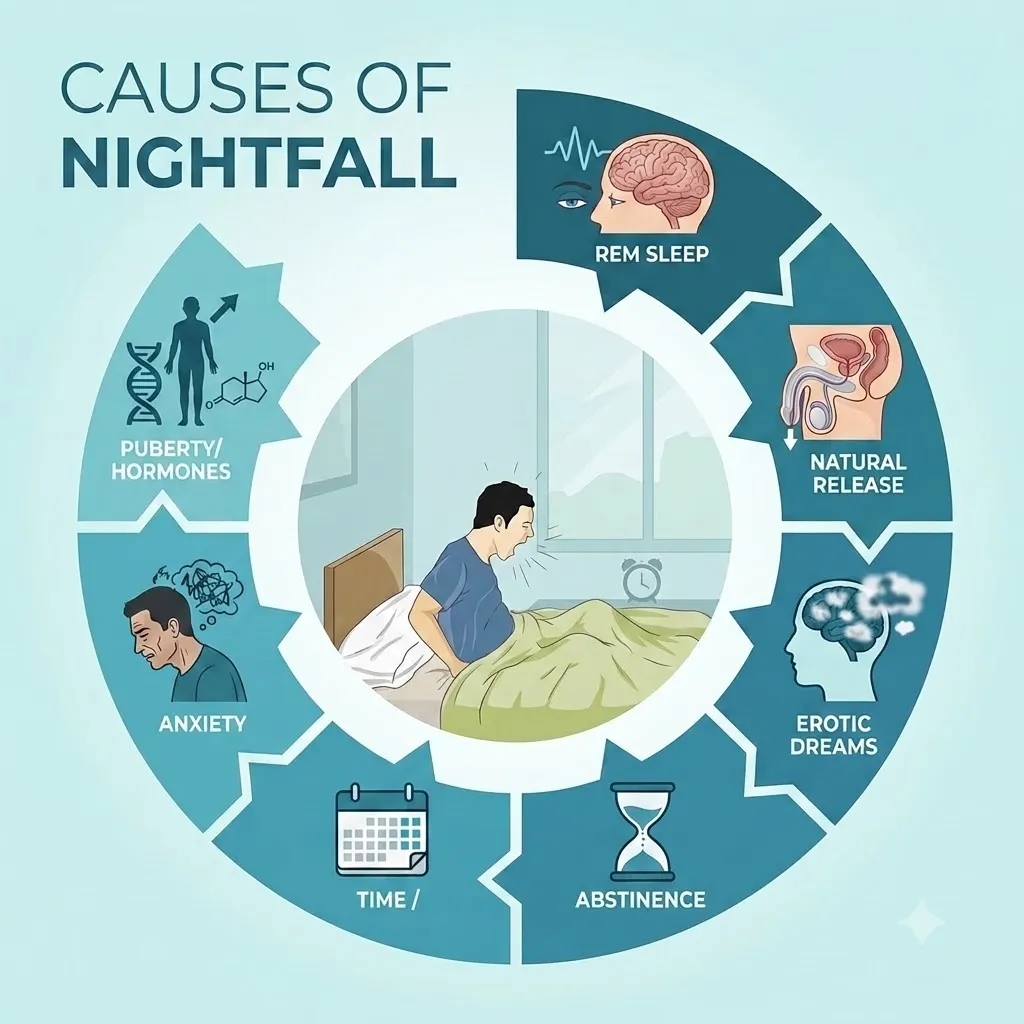
Common causes of nightfall
1. Hormonal changes
During puberty, testosterone levels rise significantly, stimulating sperm production and sexual development. This is why nightfall is most common in teenagers and young adults.
2. REM sleep
Most nocturnal emissions occur during REM sleep, a stage associated with vivid dreams and increased brain activity. Involuntary erections and ejaculation are normal physiological responses during this phase.
3. Continuous semen production
The testes produce millions of sperm every day. If semen is not released regularly, the body may naturally expel it during sleep.
4. Sexual dreams or subconscious arousal
Some episodes of nightfall are associated with erotic dreams or subconscious sexual thoughts. However, many men experience nocturnal emissions without remembering any dreams.
5. Prolonged abstinence
Long periods without ejaculation may increase the likelihood of nightfall, although this varies from person to person.
5. Stress or anxiety
Changes in sleep quality may influence the frequency of nocturnal emissions in some individuals.
Can medical conditions cause nightfall?
Occasional nightfall is not a medical problem. However, if nocturnal emissions are frequent and accompanied by symptoms such as pain, burning during urination, blood in semen, or fever, an underlying condition may be present.
These may include:
- Urinary tract infection (UTI)
- Prostatitis (inflammation of the prostate)
- Hormonal disorders
- Certain neurological conditions
- Side effects of some medications
If these symptoms occur, consult a qualified healthcare professional for an appropriate evaluation.
Is every nightfall episode a cause for concern?
No. For most healthy men, nightfall is simply a normal part of reproductive physiology. Some men experience it several times a month, while others may have only a few episodes in their lifetime. Both patterns can be completely normal.
Instead of focusing on eliminating nightfall, it is more important to understand when it is normal and when it may indicate an underlying health concern.
Symptoms of nightfall in men
Most men with nightfall do not experience any harmful symptoms. The most common sign is waking up with wet underwear or bedsheets due to involuntary ejaculation during sleep. In normal cases, nightfall is painless and does not require treatment.
Unlike many medical conditions, nightfall in men is a natural physiological process rather than a disease. Some men may remember having a sexual dream before the episode, while others may not recall any dream at all.
Common symptoms of nightfall
- Involuntary ejaculation during sleep
- Wet underwear or bedsheets after waking
- Temporary erection during sleep
- Mild or no memory of sexual dreams
- No pain or discomfort
These symptoms are considered normal and usually do not indicate any health problem.
Symptoms that need medical attention
Although occasional nightfall is harmless, consult a doctor if you experience:
- Blood in semen
- Pain or burning during ejaculation
- Pain while urinating
- Persistent pelvic or testicular pain
- Fever with urinary symptoms
- Foul-smelling penile discharge
- Nightfall several times a week causing anxiety or disturbed sleep
These symptoms may indicate an infection or another medical condition that requires evaluation.
Is nightfall normal?
Yes. Nightfall is normal and is a healthy part of male reproductive function. It commonly occurs during puberty because of increased testosterone levels but can also occur occasionally in adults.
Many men worry that frequent wet dreams indicate poor health or sexual weakness. However, medical experts consider nocturnal emissions a normal physiological response.
The body continuously produces sperm throughout life. When semen is not released through sexual activity or masturbation, it may be naturally expelled during sleep.
Nightfall by age
| Age | Is Nightfall Normal? |
| 12–18 years | Very common |
| 19–30 years | Common |
| 31–50 years | Occasional episodes are normal |
| Above 50 years | Less common but still possible |
The frequency differs from one person to another. Some men experience nightfall several times a month, while others may have only a few episodes throughout their lifetime.
Is nightfall good or bad?
Nightfall is neither good nor bad. It is a natural bodily process that helps release semen. Scientific research shows that occasional nightfall does not cause weakness, infertility, hair loss, memory loss, or erectile dysfunction.
Unfortunately, many myths about nightfall in men continue to circulate online and through traditional beliefs. Understanding the facts can help reduce unnecessary anxiety.
Myth vs fact
| Myth | Fact |
| Nightfall causes weakness. | There is no scientific evidence that occasional nightfall causes physical weakness. |
| Nightfall causes infertility. | It does not affect a man’s ability to father children. |
| Nightfall permanently reduces sperm count. | Healthy men continuously produce new sperm. |
| Only unmarried men experience nightfall. | Married men can also experience nocturnal emissions. |
| Nightfall always requires treatment. | Treatment is only needed if another medical condition is present. |
Why do these myths exist?
In many cultures, discussions about male sexual health are limited, leading to misinformation and unnecessary fear. Trusted medical organizations consider nightfall a normal part of reproductive health and not a disease.
Does nightfall affect fertility?
No. Nightfall does not affect fertility. Occasional nocturnal emissions do not reduce sperm quality, sperm production, or a man’s ability to conceive naturally.
One of the biggest concerns among men is whether nightfall in men can lead to infertility. The answer is reassuring.
Healthy sperm production continues throughout adult life. Millions of sperm cells are produced every day through a natural process called spermatogenesis. Releasing semen during sleep does not interrupt this process.
When should fertility be evaluated?
Nightfall itself does not require fertility testing. However, consult a fertility specialist if you experience:
- Difficulty conceiving after one year of regular unprotected intercourse
- Erectile dysfunction
- Painful ejaculation
- Low semen volume
- Testicular swelling
- History of undescended testes or reproductive surgery
These concerns are unrelated to normal nightfall but may indicate an underlying fertility issue.
Does nightfall reduce sperm count?
No. Nightfall does not reduce sperm count permanently. The testes continuously produce new sperm, replacing those released during ejaculation. Many men believe that every episode of nightfall leads to a loss of sperm and reduced fertility. This is a common misconception. The male reproductive system naturally produces millions of sperm each day. Older sperm are either ejaculated or reabsorbed by the body if they are not used.
A persistently low sperm count is usually caused by conditions such as:
- Varicocele
- Hormonal imbalance
- Genetic disorders
- Certain infections
- Smoking and excessive alcohol use
- Obesity
- Some medications
These conditions, not nightfall are the usual reasons for reduced sperm count.
How often is nightfall normal?
There is no “normal” number of times a person should experience nightfall. Some men may have nocturnal emissions several times a month, while others may experience them only occasionally.
Typical frequency
| Age Group | Frequency |
| Teenagers | Weekly to monthly |
| Young Adults | Monthly or occasional |
| Adults | Occasional |
| Older Adults | Less frequent |
Frequency alone does not indicate poor health.
When can frequent nightfall be a concern?
Consult a healthcare professional if:
- Nightfall occurs multiple times every week and causes emotional distress.
- It interferes with sleep or daily activities.
- Episodes are painful or associated with blood in semen.
- You also experience urinary symptoms or pelvic pain.
A doctor can determine whether further evaluation is necessary.
Diagnosis of nightfall in men
Most cases of nightfall in men do not require medical tests because nocturnal emissions are a normal part of male reproductive health. However, if episodes become unusually frequent or are accompanied by pain, blood in semen, or urinary symptoms, your doctor may recommend further evaluation.
A healthcare provider will first review your medical history, symptoms, sleep patterns, and overall health to determine whether nightfall is a normal occurrence or related to another condition.
Diagnostic tests (if needed)
| Test | Purpose |
| Physical Examination | Checks for signs of infection or abnormalities in the reproductive organs. |
| Urine Test | Detects urinary tract infections or inflammation. |
| Semen Analysis | Evaluates sperm count, motility, and semen quality if fertility is a concern. |
| Hormone Tests | Measures hormone levels when endocrine disorders are suspected. |
| Ultrasound | Assesses the testes or prostate if structural abnormalities are suspected. |
Treatment for nightfall in men
Most men do not need treatment for nightfall because it is a natural biological process. Treatment is only recommended if frequent nocturnal emissions are caused by an underlying medical or psychological condition.
Rather than trying to stop nightfall, doctors focus on identifying and treating the root cause when symptoms suggest a medical problem.
Treatment may be needed if nightfall is caused by:
- Urinary tract infections (UTIs)
- Prostatitis (prostate inflammation)
- Hormonal disorders
- Certain neurological conditions
- Psychological stress or anxiety
Depending on the diagnosis, treatment may include medication, counselling, or lifestyle modifications.
Important: Avoid over-the-counter medicines or herbal products that claim to “cure nightfall.” Most have limited scientific evidence and may not be safe.
How to reduce frequent nightfall
Although nightfall cannot and does not need to be completely prevented, healthy lifestyle habits may help reduce its frequency in some individuals.
Healthy habits that may help
- Maintain a consistent sleep schedule (7–9 hours per night)
- Exercise regularly to support hormonal and mental health
- Practice stress-management techniques such as yoga, meditation, or deep breathing
- Avoid sexually stimulating content before bedtime if it appears to trigger episodes
- Eat a balanced diet rich in fruits, vegetables, whole grains, and lean protein
- Avoid smoking and limit alcohol consumption to support overall reproductive health
These habits promote better sleep quality and overall well-being, even though they may not eliminate nocturnal emissions entirely.
Nightfall vs masturbation
Many people confuse nightfall with masturbation, but they are completely different.
| Nightfall | Masturbation |
| Involuntary ejaculation | Voluntary ejaculation |
| Happens during sleep | Happens while awake |
| No conscious control | Performed intentionally |
| Usually occurs during REM sleep | Does not depend on sleep |
| Natural physiological process | Normal sexual behaviour |
Both are considered normal and do not reduce fertility or permanently lower sperm count.
Nightfall vs premature ejaculation
Nightfall and premature ejaculation are separate conditions that require different approaches.
| Nightfall | Premature Ejaculation |
| Occurs during sleep | Occurs during sexual activity |
| Involuntary | Happens during intercourse or sexual stimulation |
| Usually harmless | May affect sexual satisfaction and relationships |
| Does not require treatment in most cases | May require medical or psychological treatment |
If you experience ejaculation too quickly during sexual activity, consult a healthcare professional for appropriate evaluation rather than assuming it is related to nightfall.
Can nightfall be prevented?
No. Because nightfall is a natural bodily function, it cannot and does not need to be completely prevented.
Instead of trying to eliminate nocturnal emissions, focus on maintaining good sleep, reducing stress, and following a healthy lifestyle. These habits support overall reproductive health and may help reduce the frequency of episodes.
When should you see a doctor?
Occasional nightfall in men is normal. However, consult a doctor if nocturnal emissions become frequent, painful, or are associated with other symptoms.
Seek medical advice if you experience:
- Nightfall several times a week with significant distress
- Blood in semen
- Pain during ejaculation
- Burning while urinating
- Persistent pelvic or testicular pain
- Fever or abnormal penile discharge
- Difficulty passing urine
- Fertility concerns after trying to conceive for 12 months
These symptoms may indicate an underlying condition that requires medical attention.
Book a Consultation at Ferty9 Fertility Center
If you have concerns about nightfall, fertility, or overall male reproductive health, schedule a consultation with our fertility specialists for a comprehensive evaluation and personalised treatment plan.
References
- NCBI: Nocturnal emissions or wet dreams: modern evidence from a systematic scoping review
- Sleep Foundation: REM Sleep: What It Is and Why It’s Important
- Wikipedia: Nocturnal emission
















 No need to worry, your data is 100% safe with us!