


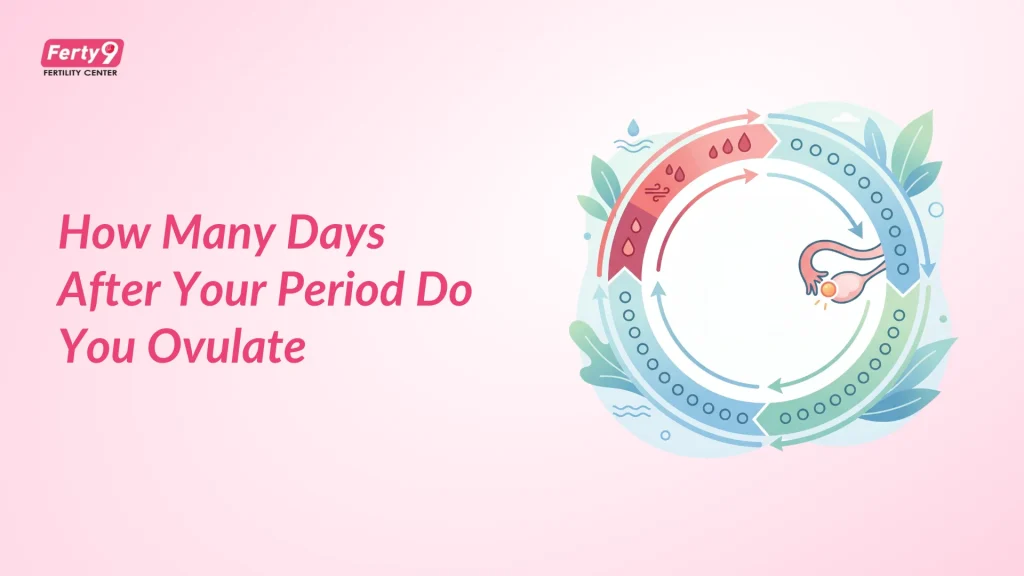
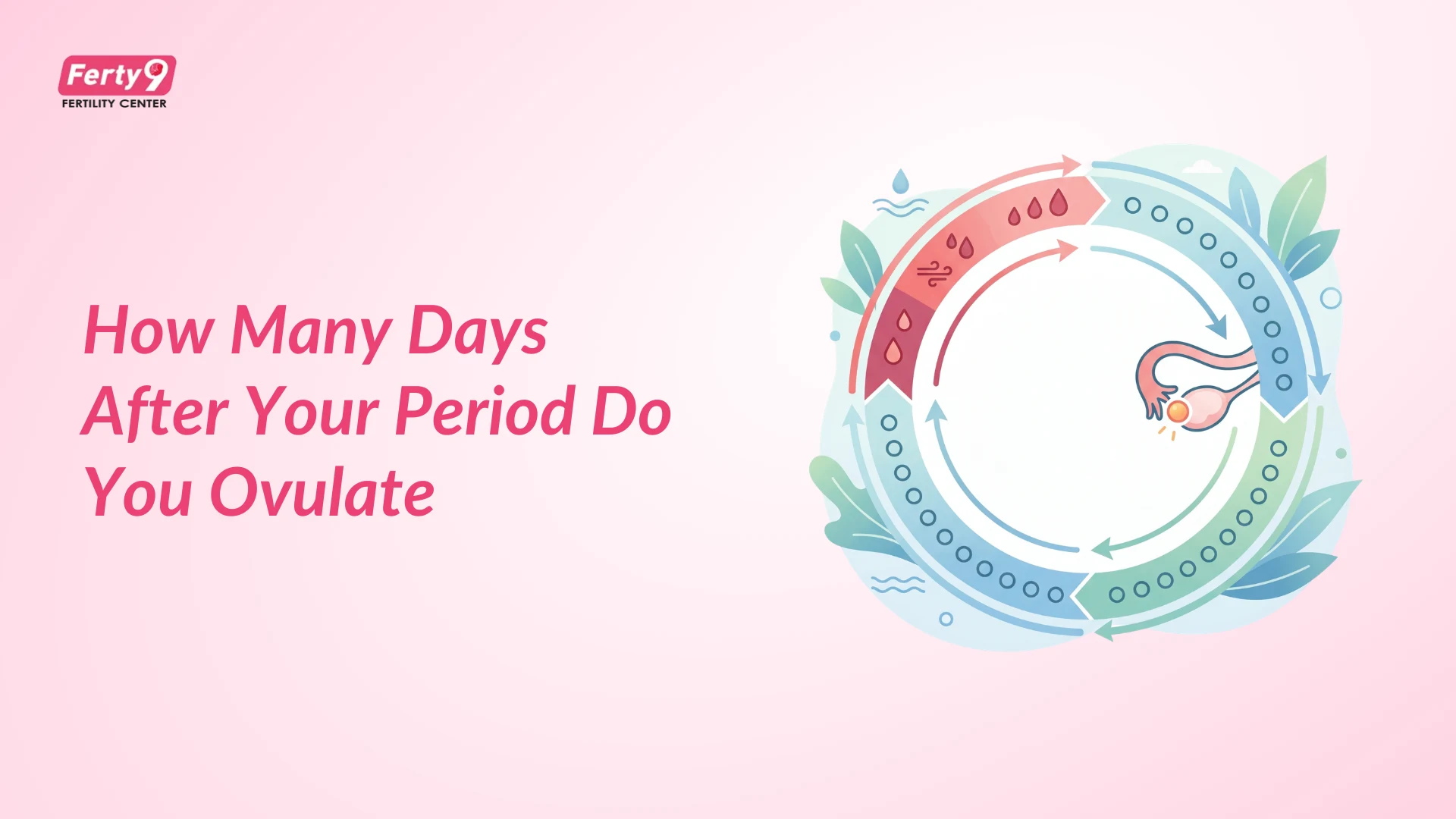
If you have a standard 28-day menstrual cycle, you will typically ovulate on day 14. This means the answer to how many days after your period do you ovulate is usually about 14 days after the first day of your period bleeding. However, because every woman’s body is different, a simpler rule is that ovulation almost always happens exactly 14 days before your next expected period begins. Understanding your ovulation period is the key to predicting your exact ovulation days after period and identifying your most fertile days.
- Ovulation Usually Happens Mid-Cycle – It commonly occurs around 14 days before the next period, though the exact timing varies depending on cycle length.
- Cycle Length Affects Ovulation Timing – Women with shorter cycles may ovulate earlier, sometimes right after their period ends, while those with longer cycles ovulate later.
- Fertile Window Lasts Several Days – Generally the five days before ovulation plus the day of ovulation itself.
- Ovulation Signs Can Help Tracking – Including cervical mucus changes, mild pelvic pain, and a slight rise in basal body temperature.
- You can get pregnant soon after your period ends if you have a short cycle, since sperm can survive in the body for up to 5 days.
What Is Ovulation?
Before calculating the days, it helps to understand what an ovulation period actually is. In simple terms, ovulation is your body’s green light indicating it is ready for pregnancy.
Every month, your ovary releases a mature egg into the fallopian tube. Once released, this egg survives for a very short window, only 12 to 24 hours. At the same time, the lining of your uterus begins to thicken to prepare a safe bed for a potential baby. If a sperm successfully fertilizes the waiting egg, pregnancy begins. If fertilization does not happen, the unfertilized egg dissolves, and the thick uterine lining sheds, which is what causes your menstrual bleeding.
So what is ovulation period, exactly? It’s this whole release-and-window process, not just a single moment, and understanding ovulation period in women is what makes cycle tracking useful rather than guesswork.
How Many Days After Your Period Do You Ovulate?
To find out exactly how many days after period is ovulation, or when ovulation starts for your specific cycle, you first need to understand how doctors count your cycle days.
- Day 1 is the very first day you start bleeding.
- The last day of your cycle is the day before your next period begins.
Your body generally releases an egg (ovulates) exactly 14 days before your next period starts, not 14 days after your period ends. This is the most common mistake women make when tracking their ovulation time. Here is a simple table to help you calculate your ovulation day based on your unique cycle length:
| If your total cycle length is | Your Ovulation Day will likely be | When is that? |
|---|---|---|
| 21 Days (Short cycle) | Day 7 | 7 days after your period started, often right after bleeding ends. |
| 25 Days (Short cycle) | Day 11 | 11 days after your period started. |
| 28 Days (Average) | Day 14 | 14 days after your period started. |
| 30 Days | Day 16 | 16 days after your period started. |
| 35 Days (Long cycle) | Day 21 | 21 days after your period started. |
Does the Length of Your Period Affect When You Ovulate?
This is a common source of confusion. What is considered the last day of your period does not change when you ovulate. Ovulation is always calculated from Day 1 of your cycle (the first day of bleeding), not from the day your bleeding stops. Two women can both bleed for 5 days and still ovulate on completely different days, because ovulation depends on total cycle length, not period length.
Can You Get Pregnant Right After Your Period?
Many women assume the days right after their period are “safe,” but this isn’t always true. How many days after your period can you get pregnant depends almost entirely on how long your cycle is.
- If your period lasts 3 days and your cycle is short (around 21 to 24 days), you could ovulate within a week of your period starting, meaning you could get pregnant just 2 days after your period ends.
- If your cycle is average length (26 to 32 days), ovulation typically falls far enough after your period that the days immediately following it carry lower, but not zero, pregnancy risk, since sperm can survive up to 5 days inside the body.
- After menses, how many days to get pregnant comes down to your fertile window (5 days before ovulation through the day after), not the number of days since your period ended.
The short answer: yes, pregnancy after period is possible, and for women with shorter cycles, it’s more common than most people realize.
When Does Your Fertile Window Begin?
Your fertile period is the window when having intercourse is most likely to result in pregnancy.
Even though an egg only lives for 12 to 24 hours after it is released, sperm can live inside a woman’s body for up to 5 days. Because of this, your fertile window after period actually begins 5 days before ovulation and ends 1 day after ovulation. If you ovulate on Day 14, your prime fertile window is between Day 9 and Day 15 of your cycle.
How Can You Track Your Ovulation Naturally at Home?
Instead of just relying on calendar math, you can listen to the physical signs your body gives you. Here are the most reliable at-home methods to track your ovulation days after period:
Cervical Mucus Method. As you get closer to ovulation, your vaginal discharge changes. It becomes clear, slippery, and stretchy, very much like raw egg whites, which helps sperm swim safely toward the egg. Soon after your period, mucus tends to be minimal or absent; as estrogen rises heading into your ovulation period, it becomes noticeably wetter and more elastic.
Calendar Method. Track the length of your cycle for at least 6 months, marking Day 1 as the first day of bleeding each time. Once you know your shortest and longest cycles, you can estimate your ovulation window. This method works reasonably well for regular cycles, but if your periods are irregular, calendar predictions become unreliable and shouldn’t be relied on alone.
Basal Body Temperature (BBT) Method. Your resting body temperature dips slightly just before ovulation and rises by about 0.5 to 1°F right after the egg is released. Using a dedicated BBT thermometer every morning before getting out of bed, at the same time each day, can help you spot this shift over a few cycles. Because BBT rises after ovulation has already happened, this method is better for confirming past ovulation than predicting it in advance.
Ovulation Predictor Kits (OPKs). Easily available in any Indian pharmacy, these simple urine strips work like pregnancy tests but detect the LH hormone surge that happens 24 to 36 hours before you ovulate. A positive result means ovulation is imminent, so this is the most precise at-home method for timing intercourse. One caveat: OPKs can give unreliable results in women with PCOS, since baseline LH levels are often already elevated.
What Physical Symptoms Indicate That You Are Ovulating?
Tracking your body temperature and using predictor kits both work well, but your body also gives off natural, physical clues when it is preparing to release an egg. Paying attention to these signs can help you pinpoint your exact ovulation days after period:
- Mild Pelvic Pain: You might feel a slight twinge or mild cramp on one side of your lower stomach. This is the physical sensation of the ovary releasing the egg.
- Increased Sex Drive: Natural hormonal shifts (a peak in estrogen) often cause a noticeable, natural increase in your libido.
- Breast Tenderness: Your breasts or nipples may feel unusually sensitive, heavy, or slightly swollen.
- Bloating and Mood Swings: Similar to PMS, the sudden change in hormones right before ovulation can cause mild water retention, changes in appetite, and mood shifts.
- Light Spotting: A very small amount of light bleeding or brownish discharge is sometimes completely normal when the egg ruptures from the ovary.
When Is the Best Time to Have Intercourse to Become Pregnant?
If you are actively trying to conceive and have figured out how many days after your period do you ovulate, timing is everything. The best time to conceive after periods, according to fertility specialists in India, is during these specific windows:
- The five days leading up to your calculated ovulation day.
- On the exact day of your ovulation.
- The day immediately following your ovulation.
Helpful Tip: To keep things stress-free and maximize your chances, having intercourse every alternate day throughout your entire fertile window is considered the best strategy. Do not fall for common myths regarding specific sexual positions or special fertility lubricants; simply rely on consistent timing and follow your gynaecologist’s guidance.
Do Irregular Periods Change When You Ovulate?
Yes. If your cycle lengths jump around (for example, 28 days one month and 40 days the next), calculating your ovulation becomes difficult.
In India, irregular ovulation is very common and is often linked to:
- High stress levels from work or home life.
- Sudden weight gain or extreme weight loss.
- Hormonal imbalances like Polycystic Ovary Syndrome (PCOS) or thyroid issues.
If you have irregular periods, relying solely on calendar math will not work. You will need to use physical signs or ovulation kits to track your cycle.
How Can Traditional Indian Lifestyle Habits Help Regulate Your Cycle?
If you are struggling to predict your ovulation days after period, balancing your lifestyle is the first step to regulating your cycle. Traditional Indian practices offer excellent ways to support your reproductive health naturally:
- Yoga and Pranayama: High stress stops your brain from sending the right signals to your ovaries. Daily practices like Surya Namaskar (Sun Salutations), the Butterfly Pose (Baddha Konasana), and deep breathing exercises lower stress hormones and increase blood flow to the pelvic region.
- Nutrient-Rich Diet: Ensure your daily diet includes foods rich in iron, zinc, and folic acid to support egg quality. Eat plenty of dark leafy greens like Palak (spinach), lentils (dal), and healthy fats from nuts and seeds.
- Ayurvedic Support: Under the guidance of an Ayurvedic doctor or a gynaecologist, herbs like Shatavari and Ashwagandha can be used to balance your hormones and encourage a highly regular, predictable menstrual cycle.
How Long Does Ovulation Actually Last?
Ovulation itself is short. Once your ovary releases an egg, it stays viable for only 12 to 24 hours, so in the strictest sense, ovulation lasts about a day. This is different from the fertile window (which spans several days) and different from how many days does ovulation last as a build-up process, since your body spends the days before ovulation preparing the egg and raising estrogen.
If fertilization doesn’t happen in that 12 to 24 hour window, the egg breaks down and is absorbed by the body, it does not stay in the uterus waiting. This is why timing intercourse before ovulation, when sperm is already present and able to survive up to 5 days, matters more than timing it after.
When Should You See a Doctor?
If you have been tracking your ovulation and trying to conceive for over a year (or six months if you are over 35) without success, it’s worth consulting a gynaecologist for a routine fertility check-up.
Frequently Asked Questions
Q: What is an ovulation period?
An ovulation period is the phase of your menstrual cycle when a mature egg is released from the ovary and becomes available for fertilization for roughly 12 to 24 hours. It typically falls about 14 days before your next period starts.
Q: Is ovulation before or after your period?
Ovulation happens after your period, roughly midway through your cycle. In a typical 28-day cycle, menstruation occurs from day 1 to about day 5, and ovulation follows around day 14, though the exact gap depends on your total cycle length.
Q: Can I get pregnant 2 days after my period?
Yes, if you have a short menstrual cycle (around 21 to 24 days). In that case, ovulation can occur soon after your period ends, and since sperm can survive up to 5 days in the body, intercourse just 2 days after your period ends can result in pregnancy.
Q: If my period lasts 3 days, when do I ovulate?
Period length itself does not determine ovulation timing, cycle length does. Whether your period lasts 3 days or 7 days, ovulation is still counted from Day 1 of your cycle and depends on your total cycle length, typically arriving 12 to 16 days later for an average cycle.
Q: How many days after ovulation can you get pregnant?
Once released, an egg survives only 12 to 24 hours, so pregnancy is only possible within about a day after ovulation. This is why timing intercourse in the days leading up to and including ovulation matters more than the day after.
Q: What is ovulation day?
Ovulation day is the single day your ovary releases a mature egg, roughly 14 days before your next period in an average cycle. It’s different from the fertile window, which includes several days before ovulation day as well.
Q: How many days after my period do I become pregnant?
You may become pregnant as soon as ovulation takes place and fertilization occurs, which requires sperm to already be present in the fallopian tube. This is only possible if you have had intercourse during your fertile window, the five days before ovulation through the day after.
References
- Understanding Ovulation and the Menstrual Cycle, WebMD
- What to Know About Ovulation, Medical News Today
- Ovulation: When Am I Most Fertile?, Healthline
- Fertility Awareness-Based Methods of Family Planning, American College of Obstetricians and Gynecologists (ACOG)







 No need to worry, your data is 100% safe with us!