



Getting a routine blood test report and seeing elevated liver enzymes can instantly cause a wave of panic. You might find yourself staring at high SGPT and SGOT numbers, wondering what went wrong. For many people, mildly elevated liver enzymes may be reversible. However, persistent or significantly high levels can indicate underlying liver disease and should not be ignored.
With the right lifestyle adjustments, a liver-friendly Indian diet, and proper medical guidance, you can support your liver health and work toward normalizing these levels over time.
What Are SGPT and SGOT?
SGPT (ALT) and SGOT (AST) are enzymes measured in a liver function test (LFT). They help assess liver health.
- SGPT (ALT – Alanine Aminotransferase): Found mainly in the liver. Elevated levels usually indicate liver cell injury.
- SGOT (AST – Aspartate Aminotransferase): Found in the liver, heart, muscles, and kidneys. It is less specific to the liver.
In simple terms, these enzymes normally stay inside cells. When cells are damaged or inflamed, they leak into the bloodstream, causing elevated levels.
Normal SGPT and SGOT Levels Chart
| Enzyme | Normal Range (Approx.) |
| SGPT (ALT) | 7–56 U/L |
| SGOT (AST) | 8–48 U/L |
Note: Normal ranges may vary slightly depending on the laboratory.
Understanding SGPT/SGOT Levels and Ratio
In addition to individual values, doctors often look at the AST/ALT ratio (SGOT/SGPT ratio) to better understand the cause:
- AST/ALT ratio < 1 → Common in fatty liver (NAFLD/MASLD)
- AST/ALT ratio > 2 → May suggest alcohol-related liver disease
- Near equal elevation → Can be seen in viral hepatitis or drug-related injury
| Level | Enzyme Elevation |
| Mild | Less than 2 times the upper normal limit |
| Moderate | 2–5 times the upper normal limit |
| Severe | More than 5 times the upper normal limit |
Interpretation should always be done by a doctor in clinical context.
Causes of High SGPT and SGOT Levels
Common causes include:
- Non-Alcoholic Fatty Liver Disease (NAFLD), now increasingly referred to as Metabolic Dysfunction-Associated Steatotic Liver Disease (MASLD): Linked to obesity, diabetes, and sedentary lifestyle
- Alcohol consumption
- Unhealthy diet: High in refined sugars, trans fats, and processed foods
- Medications: Excessive use of drugs like paracetamol or certain antibiotics
- Viral infections: Hepatitis A, B, or C (as per WHO Hepatitis Guidelines)
- Muscle injury or intense exercise (especially affecting SGOT)
Symptoms Based on Severity
| Severity Level | Clinical Presentation | Common Symptoms | What It Means | Recommended Action |
| Mild Elevation | Often asymptomatic | • No noticeable symptoms • Detected during routine blood tests | Early or minimal liver stress; may be reversible | Repeat LFT in 2–4 weeks, review diet, alcohol intake, and medications |
| Moderate Elevation | Symptomatic but stable | • Fatigue and weakness • Loss of appetite • Mild abdominal discomfort (right upper abdomen) | Ongoing liver inflammation or metabolic stress (e.g., fatty liver) | Consult a doctor, evaluate cause (LFT, ultrasound), begin lifestyle correction |
| Severe Elevation | Clearly symptomatic | • Jaundice (yellowing of eyes/skin) • Dark urine, pale stools • Persistent nausea/vomiting • Swelling in legs (edema) • Significant abdominal pain | Possible significant liver injury or disease (hepatitis, advanced fatty liver, drug-induced injury) | Urgent medical evaluation required; further tests and treatment needed |
| Red Flag Symptoms (Emergency) | Potential medical emergency | • Severe abdominal pain • Confusion or drowsiness (possible hepatic encephalopathy) • Persistent vomiting • Bleeding tendencies (easy bruising, nosebleeds) | Indicates possible acute liver failure or severe complications | Seek immediate emergency care (go to the nearest hospital emergency department without delay). Do not wait for repeat testing if you experience these symptoms. |
NOTE: Many liver diseases, including fatty liver and even early cirrhosis, can remain silent without symptoms. Normal daily functioning does not rule out underlying liver disease.
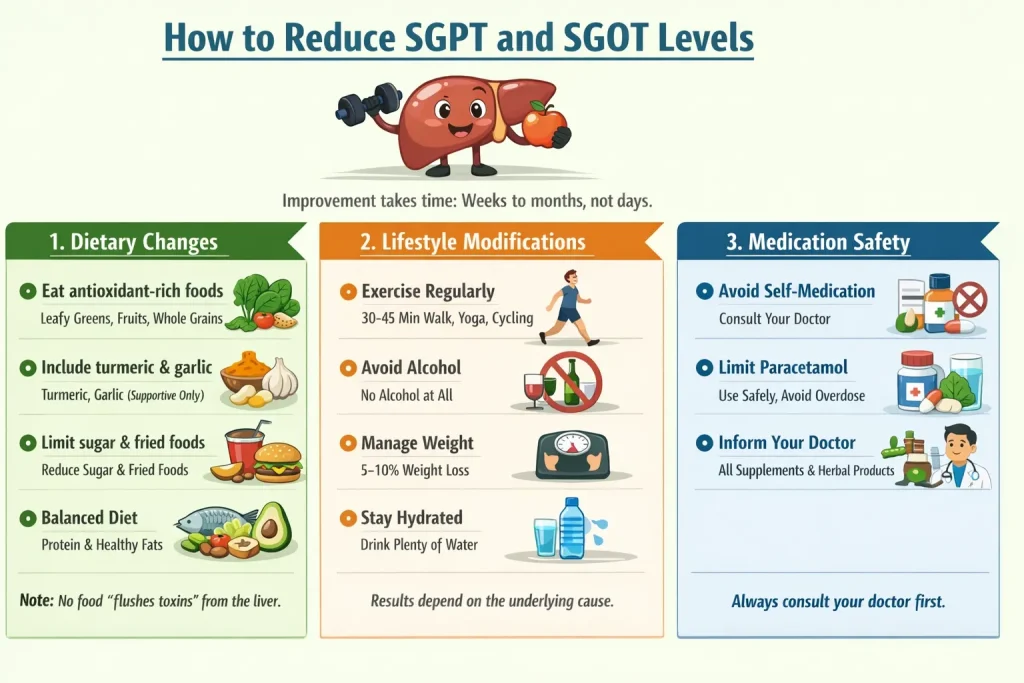
How to Reduce SGPT and SGOT Levels
1. Dietary Changes
Your diet plays a key role in liver health.
- Include antioxidant-rich foods like leafy greens (palak, methi), fruits, and whole grains
- Add foods like turmeric and garlic as part of a balanced diet (benefits are supportive, not curative)
- Reduce sugar, fried foods, and processed snacks
- Maintain a balanced intake of protein and healthy fats
Note: No specific food “flushes toxins” from the liver. The liver naturally detoxifies the body.
2. Lifestyle Modifications
- Exercise regularly: 30–45 minutes of walking, yoga, or cycling
- Avoid alcohol completely if levels are elevated
- Maintain healthy weight: Even 5–10% weight loss improves fatty liver
- Stay hydrated: Supports overall metabolism and organ function
Important: Improvement in SGPT/SGOT depends on the underlying cause and may take weeks to months, not days.
3. Medication Safety
- Avoid self-medication
- Do not exceed recommended doses of paracetamol. Maximum safe limits vary depending on individual factors. In people with liver disease, regular alcohol use, or other risk factors, even lower doses may be harmful. Always consult a doctor before use.
- Inform your doctor about all supplements and herbal products
How Doctors Diagnose High SGPT/SGOT
| Test / Investigation | What It Measures | Why It Is Done | What Results May Indicate | Next Steps Based on Results |
| Liver Function Test (LFT) – Repeat | Levels of SGPT (ALT), SGOT (AST), bilirubin, ALP, albumin | To confirm if elevation is persistent and assess overall liver function | • Persistently high ALT/AST → ongoing liver injury • High bilirubin → impaired liver function • Low albumin → chronic liver disease | Repeat monitoring, correlate with symptoms, proceed to imaging or further tests |
| Ultrasound Abdomen | Liver size, fat accumulation, structural changes | First-line imaging to detect fatty liver, swelling, or structural abnormalities | • Fatty liver (increased echogenicity) • Enlarged liver • Signs of cirrhosis (in advanced cases) | Lifestyle management for fatty liver, or further evaluation if abnormalities seen |
| FibroScan (Transient Elastography) | Liver stiffness and fat content | To assess fibrosis (scarring) and severity of fatty liver disease | • Mild stiffness → early disease • High stiffness → fibrosis or cirrhosis | Helps stage disease and guide long-term management plan |
| Viral Markers (Hepatitis B, C) | Presence of viral infections affecting the liver | To rule out infectious causes of liver enzyme elevation | • Positive Hepatitis B/C → viral hepatitis • Negative → look for metabolic or drug-related causes | Referral to specialist, antiviral therapy if required |
| Blood Sugar (Fasting/ HbA1c) | Glucose levels and diabetes status | To identify metabolic risk factors linked to fatty liver | • High sugar/HbA1c → insulin resistance or diabetes | Diabetes control, diet, and lifestyle interventions |
| Lipid Profile | Cholesterol and triglyceride levels | To assess metabolic syndrome and fat metabolism | • High triglycerides/LDL → increased risk of fatty liver | Diet modification, possible medications, weight management |
What to Do Based on Your SGPT Level
If SGPT is mildly elevated (up to 2x normal):
- Review recent diet, alcohol intake, and medications
- Start lifestyle changes (healthy diet, exercise, hydration)
- Repeat test in 2–4 weeks
If SGPT is moderately elevated (2–5x normal):
- Consult a doctor for evaluation
- Get additional tests (ultrasound, blood tests)
- Begin structured lifestyle correction and medical guidance
If SGPT is severely elevated (>5x normal):
- Seek prompt medical evaluation
- Avoid alcohol and self-medication completely
- Follow doctor-recommended investigations and treatment
If symptoms are present (jaundice, vomiting, confusion):
- Do not delay, seek immediate medical care
What You Should NOT Do If SGPT/SGOT Is High
- Do not take herbal or “liver detox” supplements without medical advice
- Do not ignore elevated levels even if you feel normal
- Do not continue alcohol consumption assuming recovery will happen automatically
- Do not repeatedly test without identifying the cause
- Do not self-medicate with over-the-counter drugs
When to Worry About High SGPT
You should consult a doctor if:
- Levels remain elevated for more than 2–3 weeks
- Values are more than 2–3 times the upper normal limit
- You develop symptoms like jaundice or severe fatigue
- You have risk factors like diabetes, obesity, or alcohol use
Liver enzyme levels do not always reflect the severity of liver disease. Some individuals with advanced liver disease (including cirrhosis) may have near-normal enzyme levels, while others with mild conditions may show higher values.
Difference Between Fatty Liver, Hepatitis, and Liver Injury
- Fatty Liver: Fat accumulation due to lifestyle/metabolic issues
- Hepatitis: Inflammation due to viral infection or autoimmune causes
- Drug-Induced Liver Injury: Damage due to medications or toxins
Each condition requires different management.
Medical Treatment
There is no single medicine that directly targets SGPT/SGOT levels. However, treating the underlying cause (such as hepatitis, metabolic disease, or drug-related injury) can normalize these levels.
- Fatty Liver: Weight loss, diet, exercise
- Hepatitis: Antiviral therapy (if needed, based on AASLD guidelines)
- Drug-related: Stopping or adjusting medication
Long-Term Prevention
- Maintain a healthy weight
- Follow a balanced diet
- Exercise regularly
- Limit alcohol
- Monitor liver function if at risk
Key Takeaways
Elevated SGPT and SGOT levels are signals of liver stress. With appropriate lifestyle changes, medical evaluation, and regular monitoring, many cases can be effectively managed and improved over time. Early action is key to preventing complications like fibrosis or cirrhosis.
References
Kwo PY, Cohen SM, Lim JK.
1. ACG Clinical Guideline: Evaluation of Abnormal Liver Chemistries.
American Journal of Gastroenterology. 2017.
2. Mayo Clinic (Liver function tests)
.https://www.mayoclinic.org/tests-procedures/liver-function-tests/about/pac-20394595
3. MedlinePlus
ALT Blood Test & AST Test.
https://medlineplus.gov/lab-tests/alt-blood-test/
4. American Association for the Study of Liver Diseases (AASLD). NAFLD Practice Guidance. Hepatology. 2023.
https://pubmed.ncbi.nlm.nih.gov/36727674























 No need to worry, your data is 100% safe with us!