


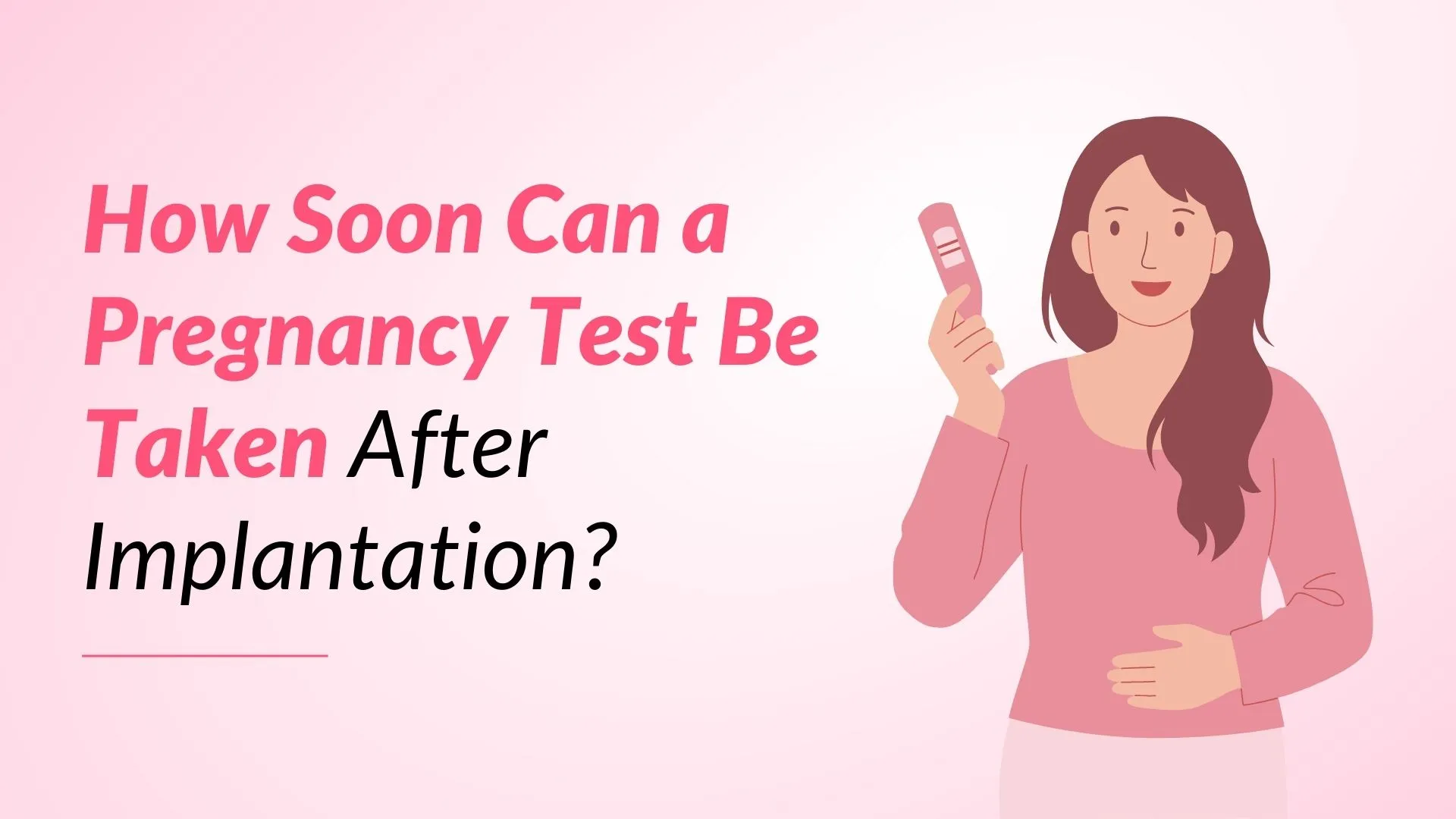
If you’ve recently noticed light spotting or are wondering whether implantation has occurred, it’s natural to feel eager to take a pregnancy test as soon as possible. However, testing at the right time is crucial to avoid confusion and get reliable results.
What Happens After Implantation?
Implantation occurs when the fertilized egg attaches to the lining of the uterus. Once this happens, your body begins producing human chorionic gonadotropin (hCG), the hormone detected in pregnancy tests.
However, hCG does not rise immediately. In early pregnancy, hCG levels typically double every 48 to 72 hours. It takes a few days for these levels to build up enough to be detected in blood or urine.
Also Read: How Long after Implantation Bleeding can I Test?
Pregnancy Test Timeline After Implantation
| Days After Implantation | What Happens in the Body | Pregnancy Test Accuracy |
| 1 – 3 days | hCG production begins | ❌ Too early to test |
| 5 – 7 days | hCG may be detectable | ⚠️ Low accuracy |
| 10 – 14 days | hCG levels are high | ✅ Most accurate results |
This is why most doctors recommend testing after a missed period.
Pregnancy Test Timing Based on Ovulation (DPO) and IVF Transfers (DPT)
Understanding pregnancy test timing is often easier when tracked using days past ovulation (DPO).
- 6–8 DPO → Implantation may occur, but testing is too early.
- 8–10 DPO → Some early tests may detect pregnancy, but accuracy is low.
- 10–12 DPO → hCG levels rise significantly, better chances of detection.
- 12–14 DPO → Most reliable time to test (around missed period).
This method is especially useful if you are tracking ovulation or undergoing treatments like IUI treatment or IVF treatment.
For IVF/IUI Patients: If you are undergoing fertility treatments, you may track your cycle using Days Past Transfer (DPT) instead of DPO.
Please note that if your treatment cycle included a “trigger shot” (which contains synthetic hCG to induce ovulation), testing too early can result in a false positive. It is crucial to wait until the synthetic hormones have cleared your system, typically 12–14 days post-insemination or transfer, as advised by your fertility expert.
When is the Best Time to Take a Pregnancy Test?
For the most accurate results:
- Test after your missed period.
- Use first-morning urine, when hCG concentration is highest.
- If the result is negative but you still suspect pregnancy, repeat the test after 2–3 days.
Can You Get a False Negative If You Test Too Early?
Yes, testing too early is one of the most common reasons for a false negative result. This can happen because:
- hCG levels are still too low: Standard home pregnancy tests typically require an hCG threshold of 25 mIU/mL to show a positive result, while advanced early-detection tests can pick up levels as low as 10 mIU/mL. If your hormone levels haven’t reached these exact thresholds, the test will be negative.
- Implantation occurred later than expected: Variations in your cycle length or a shifting luteal phase (the time between ovulation and your expected period) can delay implantation.
- Urine may be diluted: Drinking too much water before testing can lower the concentration of hCG in your urine.
Even if implantation has occurred, waiting improves accuracy significantly.
Signs That Implantation May Have Occurred
Some women may notice early signs after implantation, although not everyone experiences them. Common signs include:
- Light spotting
- Mild cramping
- Breast tenderness
- Fatigue
- Slight increase in basal body temperature
Implantation Bleeding vs Period
| Aspect | Implantation Bleeding | Period |
| Timing | 6–12 days after ovulation | ~14 days after ovulation |
| Color | Light pink or brown | Bright red |
| Flow | Light spotting | Moderate to heavy |
| Duration | Few hours to 2–3 days | 4–7 days |
| Symptoms | Mild cramps | Moderate to severe cramps |
Blood Test vs Home Pregnancy Test
Blood Test
- Detects hCG as early as 3–4 days after implantation.
- More sensitive and accurate because it measures the exact quantitative amount of hCG in your bloodstream.
Home Pregnancy Test (Urine Test)
- Detects hCG about 5–7 days after implantation.
- Most reliable after 10–14 days (missed period), when levels reliably surpass the 10 mIU/mL to 25 mIU/mL threshold.
Conclusion
While it is possible to take a pregnancy test a few days after implantation, waiting until at least 10–14 days after ovulation provides the most accurate result. Testing too early can lead to confusion and unnecessary stress due to false negatives. If you’re trying to conceive or unsure about your results, consulting a fertility expert can provide clarity and support.
References
- FDA: Home Pregnancy Tests: How They Work
- ACOG: Routine Tests During Pregnancy
- NIH (NICHD): How do I know if I’m pregnant?
- NIH StatPearls: Human Chorionic Gonadotropin (hCG)

















 No need to worry, your data is 100% safe with us!