


Pregnancy brings a whirlwind of changes to your body. While everyone talks about the glowing skin and the growing baby bump, there are some changes that are rarely discussed openly. One such common but rarely talked about symptom is vaginal swelling during pregnancy.
If you are experiencing this, you are not alone. It is completely normal to feel anxious or uncomfortable, but understanding why it happens and how to manage it can bring you a lot of relief. Here is a simple, comprehensive guide to help you navigate this phase comfortably and safely.
Is it Normal to Have a Swollen Private Area During Pregnancy?
Yes, absolutely. A swollen private area during pregnancy is a very common condition that many women experience, especially during the second and third trimesters. As your baby grows, your body goes through massive physical and hormonal shifts to support the pregnancy. These shifts often lead to swelling, heaviness, and a feeling of fullness in your pelvic region.
Common Causes of Vaginal Swelling Pregnancy
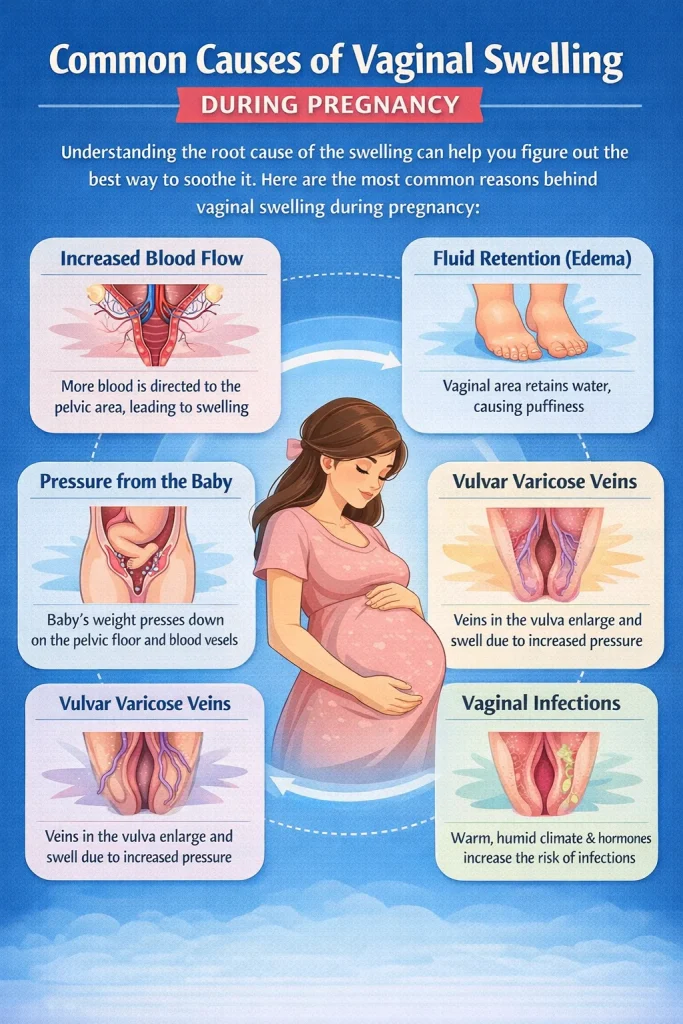
Understanding the root cause of the swelling can help you figure out the best way to soothe it. Here are the most common reasons behind vaginal swelling pregnancy:
- Increased Blood Flow: To nourish your growing baby, your body produces up to 50% more blood and bodily fluids. A lot of this extra blood flow is directed toward your pelvic area, which can naturally cause your vaginal tissues to swell and feel heavy.
- Fluid Retention (Edema): Just as your hands, feet, and ankles swell during pregnancy due to fluid retention, your vaginal area can also retain water, leading to puffiness.
- Pressure from the Baby: As your baby grows heavier, the weight presses down on your pelvic floor and blood vessels. This restricts the blood from flowing back up to your heart efficiently, causing it to pool in your lower body and leading to swelling.
- Vulvar Varicose Veins: Just like varicose veins in the legs, the pressure from your growing uterus can cause the veins in your vulva to enlarge and swell. These are common and usually disappear a few weeks after delivery.
- Vaginal Infections: The warm, humid climate in India, combined with pregnancy hormones, can make you more prone to yeast infections or bacterial vaginosis. If the swelling is accompanied by intense itching, a burning sensation, or abnormal discharge, an infection is likely the cause.
Vaginal Boils and Cysts: Another Reason for Swelling
Sometimes, the swelling is not uniform. If you feel a specific, painful lump or notice that only one side of your labia is swollen, it could be a Bartholin’s cyst or a vaginal boil.
- Bartholin’s Cysts: These occur when the small glands on either side of the vaginal opening get blocked and fill with fluid. They are usually painless unless they get infected.
- Vaginal Boils: These are often caused by an infected hair follicle (sometimes from shaving or friction) and look like red, swollen, painful bumps filled with pus.
If you suspect a boil or an infected cyst, do not try to pop or squeeze it. Your doctor can recommend safe treatments or prescribe pregnancy-safe antibiotics if an infection is present.
Labia Changes During Pregnancy: What to Expect
You might notice several labia changes during pregnancy. The labia (the inner and outer lips of the vagina) may not only look puffy and enlarged but might also change in colour. Due to the increased blood circulation, it is completely normal for the labia to appear darker—sometimes taking on a bluish or purplish tint. These changes are temporary and generally resolve on their own after childbirth.
Safe and Effective Indian Home Remedies for Relief
If the swelling is causing you discomfort, there are several simple, safe, and natural ways to find relief at home:
1. Cold Compresses for Instant Relief
Wrap a few ice cubes in a clean cotton cloth and gently apply it to the swollen area for 10 to 15 minutes. The cold temperature helps constrict the blood vessels, reducing both swelling and the feeling of heaviness. Never apply ice directly to your skin.
2. Wear Breathable Cotton Clothes
In the Indian climate, tight synthetic underwear can trap sweat and moisture, worsening swelling and increasing the risk of infections. Always opt for loose, breathable, 100% cotton underwear and comfortable clothing like loose salwar suits or maternity maxi dresses.
3. Keep Your Feet Elevated
Gravity plays a huge role in swelling. Whenever you sit or lie down, try to elevate your legs using a few pillows. This helps the pooled blood in your pelvic area flow back toward your heart.
4. Sleep on Your Left Side
Doctors highly recommend sleeping on your left side during pregnancy. This takes the heavy weight of your uterus off the large vein (the inferior vena cava) that carries blood from your lower body back to your heart, significantly improving blood circulation and reducing swelling.
5. Hydration and Diet
It sounds surprising, but drinking more water helps your body flush out excess retained fluids.
- Drink plenty of fresh water, tender coconut water (nariyal pani), and buttermilk (chaas) to stay hydrated.
- Reduce your intake of salty, processed, and packaged foods, as high sodium levels worsen fluid retention.
6. Practice Good Intimate Hygiene
Wash your private parts gently with plain water. Avoid using harsh chemical soaps, scented intimate washes, or douches, as they can disrupt your natural pH balance and trigger infections. Gently pat the area dry with a soft towel after washing.
Will the Swelling Continue After Delivery (Postpartum)?
It is very common to wonder if your body will ever go back to normal! Yes, it will. However, it is entirely normal to experience a swollen private area immediately after a vaginal delivery due to the physical pressure of childbirth.
For the first 12 to 24 hours postpartum, hospitals usually provide ice packs to numb the area and bring down the swelling. Once you are home, taking warm sitz baths (sitting in a shallow tub of warm water) is a highly effective, traditional way to soothe the perineal area and promote healing. Swelling caused by pregnancy fluids or varicose veins usually disappears within a few weeks after your baby is born. If the swelling has not significantly improved by your two-week postpartum checkup, be sure to mention it to your gynaecologist.
When to Consult Your Gynaecologist
While mild swelling is usually nothing to worry about, you should definitely book an appointment with your doctor if you notice any of the following warning signs:
- Severe itching, burning, or pain in the vaginal area.
- Foul-smelling, greenish, or cottage-cheese-like vaginal discharge (signs of an infection).
- Blisters, sores, or painful lumps in your genital area.
- Sudden, severe swelling in your face, hands, and feet along with a headache (which could be a sign of high blood pressure or preeclampsia).
- Any bleeding or spotting.
Summary
Experiencing vaginal swelling during your pregnancy journey can be uncomfortable, but it is usually a harmless side effect of your body doing the incredible work of growing a baby. By making a few simple lifestyle adjustments, resting properly, and staying hydrated, you can manage the discomfort effectively.
References:
- Guidelines for Antenatal Care and Skilled Attendance at Birth – National Health Mission (NHM)
- Reproductive Tract Infections and STIs Case Management – National Health Mission (NHM)
- Medical Disorders in Pregnancy – Federation of Obstetric and Gynaecological Societies of India (FOGSI)
- Safe Pregnancy & Delivery – (FOGSI)












 No need to worry, your data is 100% safe with us!