


” You look pale, dear. Are you eating enough?” If you are pregnant in India, you have likely heard this concern from your elders. And often, they are right.
Anaemia (Low Hemoglobin) is the most common medical issue seen in Indian pregnancies. In fact, nearly 50% of pregnant women in our country have low Hemoglobin levels. While it is common, it is not something to ignore. Your baby relies entirely on your red blood cells to get oxygen. If your hemoglobin levels in pregnancy levels drop too low, it can lead to premature birth or low birth weight.
At Ferty9 Fertility Center, we want to assure you: Increasing your Hemoglobin during pregnancy is possible, often with simple changes to your kitchen routine and the right medical support. Here is your complete guide to boosting your blood count naturally and safely.
Why Does Hemoglobin Drop During Pregnancy?
The “Watery Blood” Effect
Many women panic when they see their hb in pregnancy drop from 12 to 10.5 in the reports. Don’t panic. This is often physiological (normal). When you get pregnant, your body produces 50% more fluid (plasma) to support the baby. However, the production of red blood cells doesn’t increase as fast as the fluid. This dilutes your blood, naturally lowering the Hemoglobin count.
However, if it drops below the standard hb range in pregnancy (typically < 11 g/dL in the 1st/3rd trimester), it is considered Anaemia and needs treatment.
Hemoglobin Normal Range in Pregnancy (Indian Standards)
Understanding the hemoglobin normal range in pregnancy helps you know when to take action.
Symptoms of Low Hemoglobin: Listen to Your Body
How do you know if your levels are low before the blood test? Look for these signs:
- Extreme Fatigue: Feeling exhausted even after a full night’s sleep.
- Breathlessness: Getting winded just walking to the bathroom or climbing stairs.
- Pale Skin: Check your inner eyelids, lips, and nails—if they look white instead of pink.
- Palpitations: Your heart beating faster than usual.
- Pica: A strange craving to eat non-food items like ice, chalk, or clay (very common in severe iron deficiency).
The “Red and Green” Rule: Best Indian Foods to Increase Hb
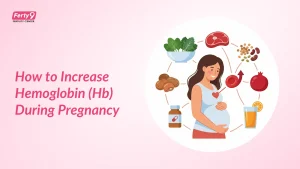
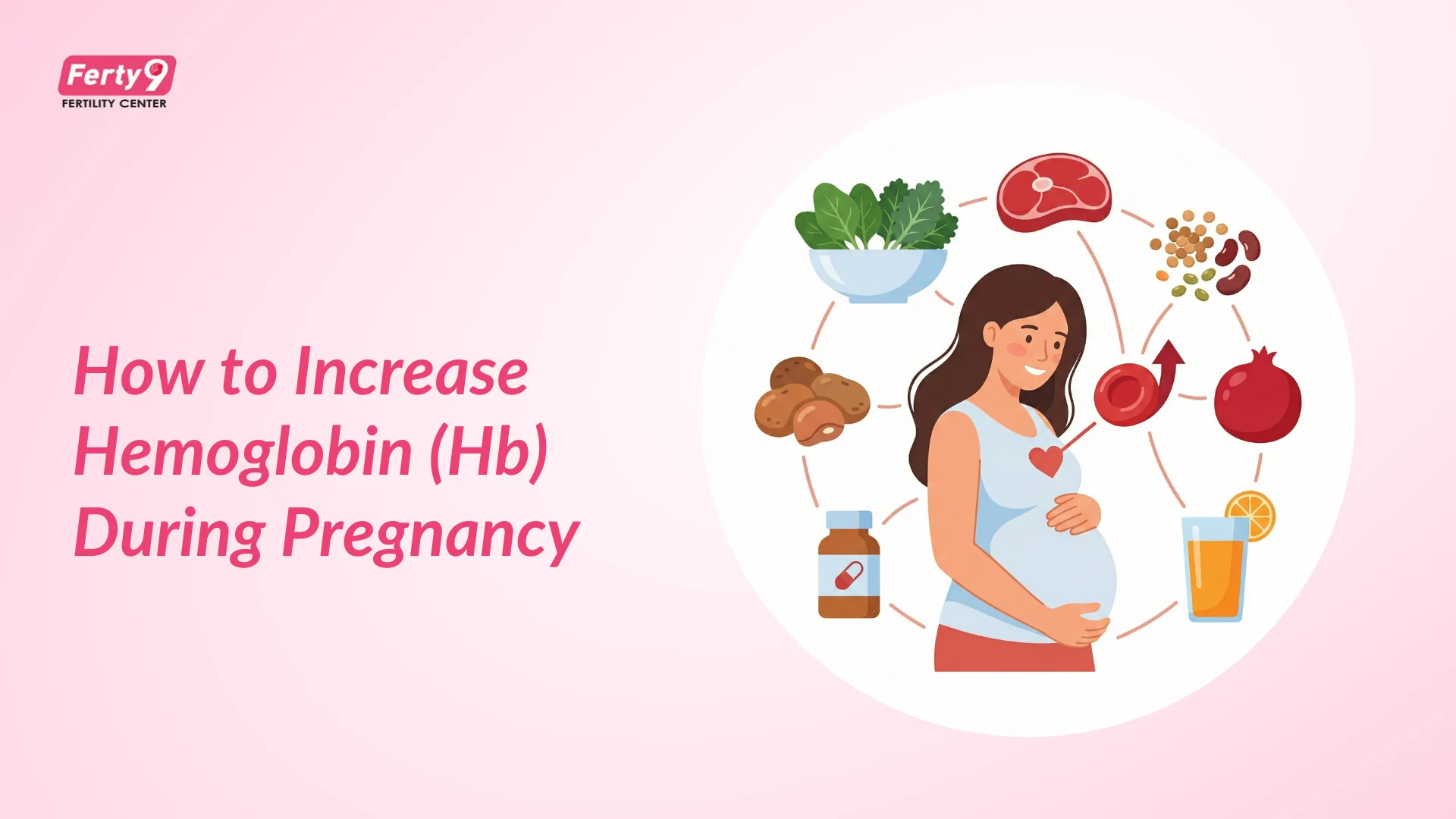
To boost Hemoglobin, you need Iron. In an Indian diet, the best sources come from “Greens” (leafy vegetables) and “Reds” (fruits/roots).
1. Green Leafy Vegetables (The Powerhouses)
- Moringa (Drumstick Leaves): The superstar of iron. Add a handful of leaves to your dal or make a soup. It has 3x more iron than spinach!
- Spinach (Palak) & Methi: Classic sources.
- Mint (Pudina) & Coriander: Make chutneys daily; they are surprisingly high in iron.
2. The “Red” Foods
- Beetroot: Helps regenerate iron and activates red blood cells. Eat it raw in salads or as juice.
- Pomegranate (Anar): Rich in iron, vitamins, and antioxidants that boost blood flow.
- Dates and Figs (Anjeer): Start your morning with 2 dates and 2 soaked figs. They act as a natural iron tonic.
- Jaggery (Gur): Swap your white sugar for Jaggery (especially organic dark jaggery). It is rich in iron salts. Tip: Eat a small piece of Gur with roasted Chana for a perfect snack.
3. Non-Vegetarian Sources (Heme Iron)
- If you eat meat, Liver (Mutton/Chicken) is the richest source of iron. However, limit it to once a week due to high Vitamin A content.
- Eggs: Eat the yolk! That is where the iron is.
The Secret Ingredient: Vitamin C
You can eat all the spinach in the world, but if you don’t have Vitamin C, your body will flush the iron out. Vitamin C acts like a “key” that unlocks the iron from plant foods.
- The Habit: Squeeze a Lemon (Nimbu) over your Dal, Poha, or Salad.
- The Snack: Eat an Amla (Indian Gooseberry) or Guava daily. A single Guava has enough Vitamin C for the whole day.
- The Drink: Drink fresh orange juice or Mousambi juice with your lunch.
What STOPS Iron Absorption? (The “Chai” Mistake)
In India, we love our tea. But Tannins in tea and coffee act as “Iron Blockers.”
- The Mistake: Having tea/coffee immediately with breakfast or lunch. This reduces iron absorption by up to 60%!
- The Fix: Keep a 1-hour gap between your meals and your tea/coffee.
Calcium is also a blocker. Do not take your Iron tablet and Calcium tablet together. Calcium prevents iron from entering the blood. Take Iron after lunch and Calcium after dinner.
Medical Treatments: When Diet Isn’t Enough
Sometimes, diet alone cannot fix the deficit quickly enough for the baby’s safety.
1. Iron Supplements (IFA Tablets)
Your doctor will prescribe Iron and Folic Acid tablets starting from the 4th month.
- Common Side Effect: Black stools. Do not worry. This is just unabsorbed iron leaving the body; it is harmless.
- Constipation: Drink 3 liters of water to manage this.
2. Intravenous (IV) Iron Sucrose
If your Hb is very low (< 8 g/dL) or you cannot tolerate tablets (due to vomiting), we may suggest IV Iron Injections.
- These are safe, painless drips given at the hospital.
- They raise Hb levels rapidly within 2 weeks, ensuring you are ready for delivery.
The “Iron Kadhai” Trick
An ancient Indian tradition that works! Cook your vegetables (especially acidic ones like tomatoes or curries) in a cast-iron skillet (Lohe ki Kadhai). Small amounts of iron leach from the pot into the food, naturally fortifying your meal.
Summary
Low hemoglobin is a hurdle, but one you can easily cross.
- Eat: Moringa, Beetroot, Dates, and Jaggery.
- Pair: Always add Lemon/Amla (Vit C) to your meals.
- Avoid: No tea/coffee for 1 hour after eating.
- Take: Your iron tablets faithfully.
Feeling breathless or tired? Don’t wait for your next scheduled checkup. Visit Ferty9 Fertility Center for a quick blood test. We will help you build your strength back so you can carry your baby with energy and joy.