




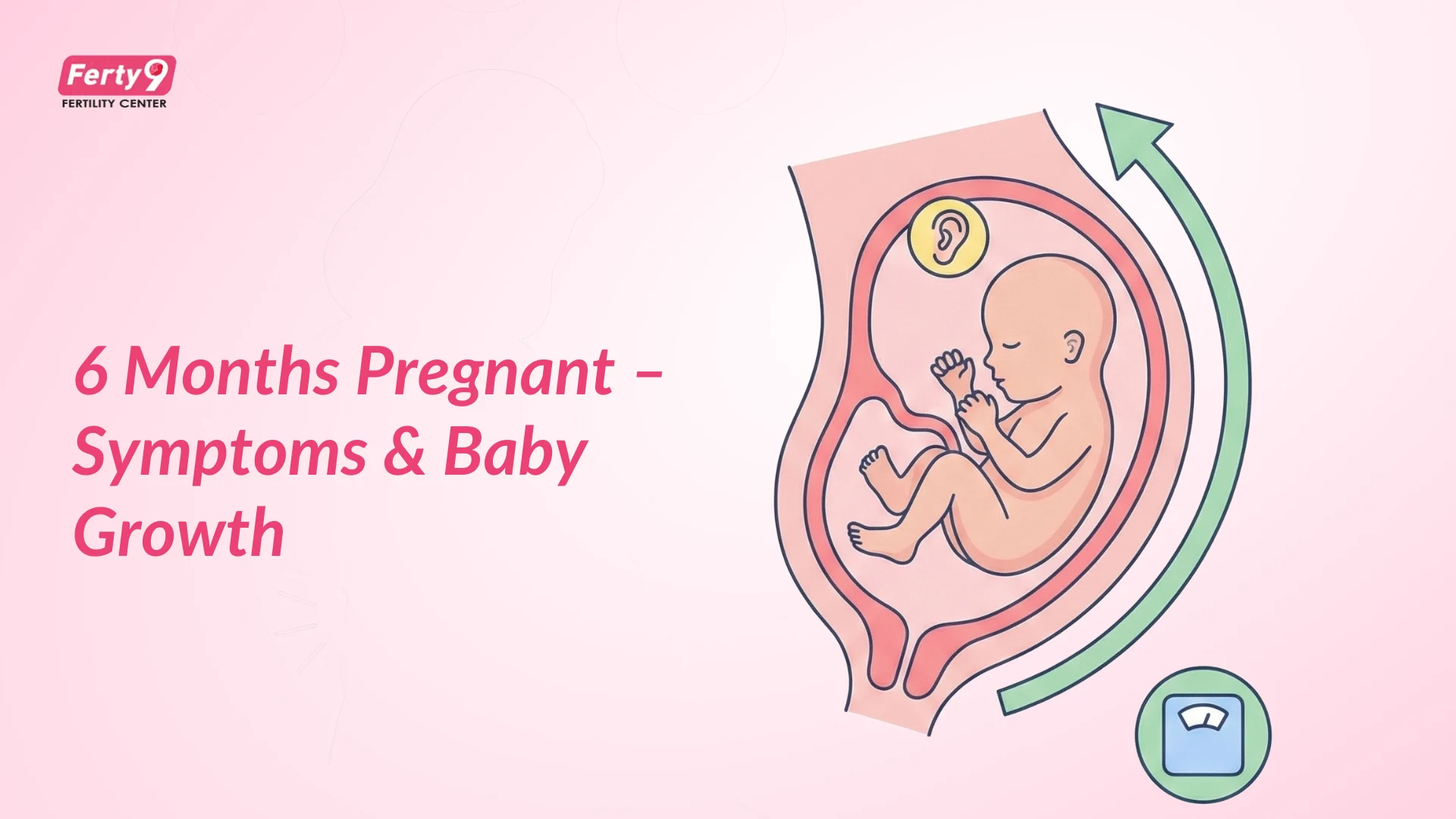
Congratulations! Reaching the 6th month of pregnancy is a huge milestone. You have crossed the halfway mark, the “morning sickness” phase is (hopefully) behind you, and you are now visibly pregnant with that lovely “glow.”
This is often called the “Golden Month” because you still have energy, but the baby is big enough to make their presence felt with strong kicks and rolls. It is a time of bonding, planning, and preparing for the final stretch.
At Ferty9 Fertility Center, we want to guide you through exactly what is happening inside your womb and how to take care of yourself during these crucial weeks.
What Does 6 Months Pregnant Mean?
Which Week Is the 6th Month of Pregnancy?
Pregnancy math can be confusing! The 6th month roughly covers Weeks 23 to 27.
- Start: Week 23
- End: Week 27 By the end of this month, you will be finishing your second trimester.
Which Trimester Are You In?
You are in the Second Trimester (the middle three months). This is usually the most comfortable phase of pregnancy before the baby gets very heavy in the third trimester.
Baby Growth at 6 Months Pregnant
6-month pregnancy baby weight and size
Your baby is growing fast!
- 6 month pregnancy baby Length: Around 12 to 14 inches (about the size of an ear of corn or a large papaya).
- 6 month pregnancy baby weight in kg: Approximately 700 to 900 grams (close to 1 kg by month-end).
Baby’s Organ Development
This month is all about “practice.”
- Lungs: The baby is practicing breathing movements (inhaling amniotic fluid), though the lungs aren’t fully mature yet.
- Eyes: The eyelids, which were fused shut, begin to open! Your baby can now blink.
- Skin: The skin is still wrinkled and red but is slowly filling out with fat.
Baby’s Movements and Kicks
The flutters are gone; now you feel real kicks!
- You might notice a pattern: your baby sleeps when you walk (rocked by your movement) and wakes up to party when you lie down at night.
How much should my baby move at 6 months pregnant?
At 6 months (24–27 weeks), you should feel your baby moving every day, but there is no strict number of kicks to count yet (doctors usually ask for “kick counts” after 28 weeks). You will likely notice a pattern: the baby might be quiet during the day when you are walking (rocked to sleep) and become very active at night when you lie down.
- What to watch for: If you feel a sudden decrease in movement or no movement for a few hours during their usual “active time,” try drinking cold water or something sweet and lie on your left side. If the baby doesn’t move within 2 hours, consult your doctor immediately.
What Your Baby Can Hear and Feel
Your baby’s hearing is well-developed. They can hear your voice, your heartbeat, and even loud noises outside (like a pressure cooker whistle or a dog barking). They may jump (startle reflex) if there is a sudden loud bang.
Common Symptoms at 6 Months Pregnant
Physical Symptoms You May Notice
- Indigestion & Heartburn: As the uterus pushes up against the stomach, acidity becomes common.
- Swelling (Edema): Mild swelling in the feet and ankles, especially after standing for long periods.
- Braxton Hicks Contractions: You might feel your stomach tighten and harden for a few seconds. These are “practice contractions” and are usually painless.
Emotional and Mental Changes
- “Pregnancy Brain”: Forgetfulness is real! Hormonal changes can make you feel foggy.
- Nesting Instinct: You might feel a sudden urge to clean the house or organize the baby’s cupboard.
Why Symptoms Vary From Woman to Woman
Every pregnancy is unique. Some women have zero swelling, while others have back pain. It depends on your body type, fitness level, and whether this is your first or second baby.
Belly Size and Body Changes
How Big Is the Baby Bump at 6 Months?
Your belly is now clearly visible. The top of your uterus is now about 2 inches above your belly button.
- Itchy Skin: As the skin stretches, it gets dry and itchy. Keep it moisturized with coconut oil or cocoa butter.
Skin, Hair, and Breast Changes
- Linea Nigra: A dark vertical line may appear running down your belly.
- Thicker Hair: Thanks to hormones, your hair falls out less, making it look thick and shiny.
- Colostrum: Your breasts may start leaking a yellowish fluid (pre-milk). This is normal preparation for breastfeeding.
Weight Gain at 6 Months Pregnant
What’s Normal and What’s Not
In the second trimester, a steady weight gain of 0.5 kg to 1 kg per week is healthy.
- Total Gain: By now, most women have gained 5–7 kgs.
Healthy Weight Gain Tips
Don’t “diet.” Focus on quality. If you are gaining weight too fast, cut down on sugar and fried snacks, not healthy meals.
Diet and Nutrition in the Sixth Month
Essential Nutrients for Baby Growth
- Iron: Crucial to prevent anaemia as your blood volume peaks.
- Calcium: The baby’s bones are hardening rapidly.
- Vitamin C: Helps absorb iron and builds immunity.
Foods to Eat at 6 Months Pregnant
- Vegetables: Spinach (Palak), Bottle Gourd (Lauki), and Pumpkin.
- Protein: Dal, Paneer, Eggs, and Chicken.
- Hydration: Coconut water and Buttermilk (Chaas) to reduce swelling.
Foods to Limit or Avoid
- Salty Foods: Pickles (Achar) and papads can increase water retention and swelling.
- Raw Sprouts: Can carry bacteria; always cook them.
Exercise and Physical Activity
Safe Exercises During the Sixth Month
- Walking: The best and safest exercise. Aim for 30 minutes daily.
- Prenatal Yoga: Helps open the hips and reduce back pain. (Butterfly pose is excellent).
- Pelvic Floor Exercises (Kegels): Important for delivery.
Activities to Avoid
- Any exercise where you lie flat on your back (it reduces blood flow to the baby).
- Heavy lifting or high-impact jumping.
Sleep and Comfort Tips
Best Sleeping Positions
Start training yourself to sleep on your Left Side (SOS – Sleep on Side).
- Sleeping on the back compresses the main vein (Vena Cava), reducing oxygen to the baby.
- Use pillows between your legs and under your belly for support.
Managing Back Pain and Leg Cramps
- Leg Cramps: Sudden painful calves at night? It might be low magnesium or calcium. Stretch your toes upward towards your knee to release the cramp.
- Back Pain: Wear flat, supportive footwear and avoid standing for hours.
Medical Checkups and Tests
Routine Tests in the Sixth Month
- Glucose Tolerance Test (GTT): To check for Gestational Diabetes (high blood sugar during pregnancy). This is mandatory for almost all Indian women between 24-28 weeks.
- Blood Pressure & Urine Test: To rule out Pre-eclampsia.
- Growth Scan: Your doctor may order an ultrasound to check the baby’s weight and fluid levels.
When to Call Your Doctor
- If you notice vaginal bleeding.
- If you feel severe abdominal cramping (more than 4 in an hour).
- If baby movements suddenly decrease.
Emotional Health and Bonding With Your Baby
Talking, Singing, and Responding to Baby Kicks
Your baby knows your voice now!
- Talk to your bump (“Garbha Sanskar”).
- Play soothing music.
- Rub your belly when the baby kicks; they often kick back!
Things to Prepare at 6 Months Pregnant
Planning for Maternity Leave
If you are working, start discussing your leave dates with HR. In India, you are entitled to 26 weeks of maternity leave.
Preparing Your Home and Mind
- Start looking at baby names!
- Plan where the baby will sleep (co-sleeping or crib).
- Sign up for an antenatal class to learn about labour and breathing.
Common Myths About the Sixth Month of Pregnancy
- Myth: “The shape of the belly tells the gender.”
- Fact: High or low, round or wide—it depends on your muscle tone and baby’s position, not gender.
- Myth: “Ghee makes the baby slip out easily.”
- Fact: Ghee is digested in the stomach; it doesn’t grease the birth canal! Eat it for nutrition, not for “lubrication.”
Summary
The 6th month is a sweet spot in pregnancy. The baby is viable, active, and responsive. Use this time to finish your pending tasks, enjoy good food, and bond with your partner before the third trimester brings heaviness and fatigue.