


When pregnancy doesn’t happen naturally, most couples don’t just need a treatment, they need clarity on what is going wrong and what can actually work for them. Assisted Reproductive Technology (ART) is a group of advanced fertility treatments that help achieve pregnancy by working with eggs, sperm, or embryos outside the body. But ART is not a single procedure. It’s a carefully chosen path, based on your body, your reports, and your timeline.
What is Assisted Reproductive Technology (ART)?
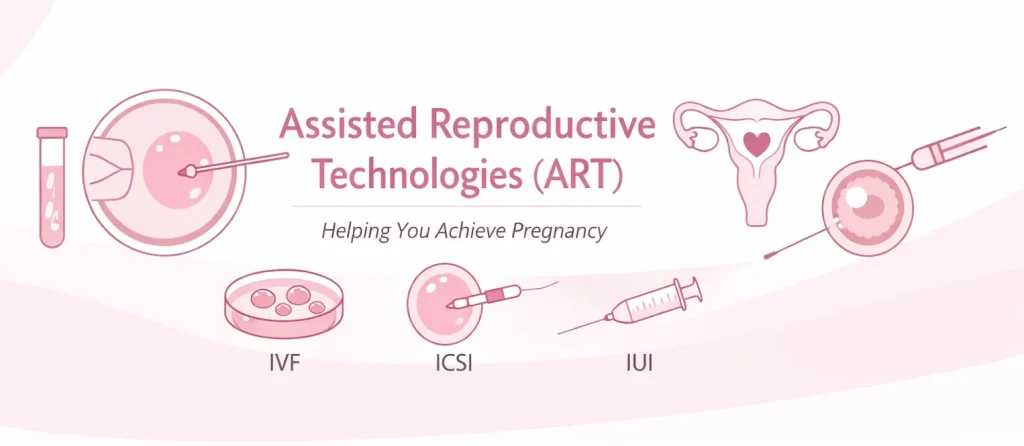
Assisted Reproductive Technology (ART) refers to fertility treatments where eggs, sperm, or embryos are handled outside the body to help achieve pregnancy. Common ART methods include IVF (In Vitro Fertilization), ICSI, and IUI. These treatments are recommended when natural conception is difficult or unsuccessful.
Understanding ART Beyond the Definition
Many people assume ART simply means IVF. That’s not entirely true. ART includes different treatments, and each one serves a specific purpose. For example:
- If the issue is mild, a simpler method like IUI may be enough
- If there is a sperm-related concern, ICSI may be more effective
- If multiple factors are involved, IVF becomes the preferred approach
The key is not choosing the most advanced treatment. It is choosing the most appropriate treatment for your condition. At Ferty9, this decision is never rushed. It is based on a complete evaluation of both partners.
How ART Actually Works in Real Life
Most ART treatments follow a structured medical process, but from a patient’s perspective, it feels more like a journey than a procedure.
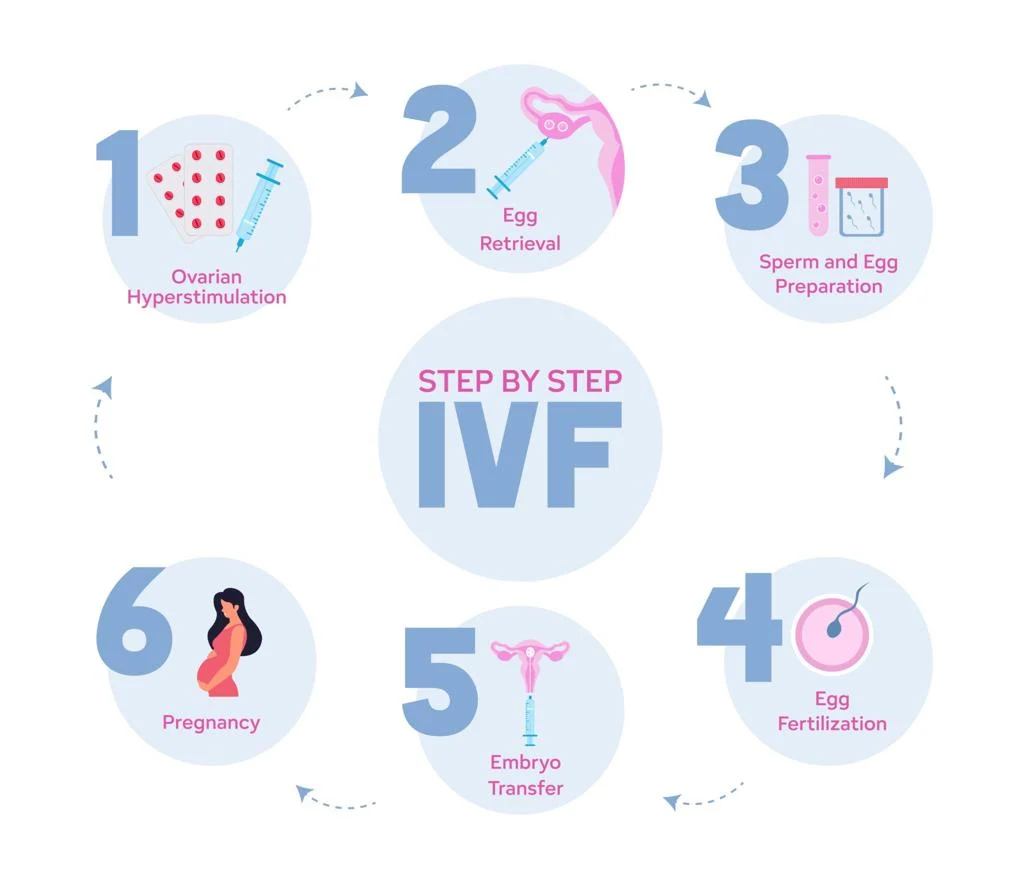
Step 1 – It begins with preparing the body, especially the ovaries, to produce healthy eggs. This is done using controlled medication under close monitoring.
Step 2 – Once the eggs are ready, they are collected through a short, minimally invasive procedure.
Step 3 – On the same day, the sperm sample is prepared in the lab.
Step 4 – Fertilization then happens outside the body, in a controlled lab environment. Over the next few days, the embryos develop while specialists monitor their quality closely.
Step 5 – Finally, a healthy embryo is placed into the uterus. This step is simple, but it carries the weight of everything that came before it.
Step 6 – From here, the body takes over.
When Should You Consider ART?
One of the most common questions couples ask our fertility experts is:
“Are we too early for ART, or already late?”
You should consider ART if:
- You’ve been trying for a year without success
- You’re above 35 and trying for 6 months
- There is a known issue, such as low sperm count or blocked tubes
- You’ve had repeated unsuccessful treatments
Note: Waiting too long without a proper diagnosis often reduces success more than people realize. A timely decision can make a significant difference.
ART Success Rates: What Truly Matters
Success rates are often the first thing people search for. But they are also the most misunderstood. ART success is not a fixed number. It changes based on:
- Age (especially female age)
- Egg and sperm quality
- Underlying medical condition
- Previous treatment history
For example, IVF success can be as high as 60–70% in younger women, but it gradually declines with age. ICSI improves outcomes in male infertility cases. IUI works well, but only in carefully selected situations. The real goal is not just to attempt treatment – it is to choose the path that gives you the highest chance of success from the start.
Risks, Realities, and What Patients Often Don’t Hear
A good fertility plan should be honest, not just hopeful. ART is safe, but like any medical treatment, it comes with considerations. Some couples may need more than one cycle.
Some may experience emotional stress during the process. In rare cases, side effects like ovarian hyperstimulation can occur, but they are manageable with proper care.
At Ferty9, we focus on minimizing unnecessary interventions and guiding you realistically so you know what to expect at every stage.
Choosing the Right Treatment Matters More Than Starting Quickly
One of the biggest mistakes couples make is jumping into IVF without understanding whether it is truly needed. Sometimes, a simpler treatment could work. Sometimes, delaying IVF reduces success chances. This is where expert guidance makes all the difference.
Instead of asking:
“Which treatment is best?”
Ask the better question is:
“Which treatment is right for me, right now?”
How Ferty9 Approaches ART Differently
At Ferty9, we don’t begin with treatment. We begin with understanding. Every couple undergoes a detailed evaluation before a plan is created. Male and female factors are assessed together, not separately. Based on this, we guide you toward the most suitable option from our treatments here:
Most Popular & Effective ART for infertility
- In Vitro Fertilization (IVF)
- Intracytoplasmic Sperm Injection (ICSI)
- Intrauterine Insemination (IUI)
- Frozen Embryo Transfer (FET)
Third-Party ART (Donor/Surrogacy)
- Egg Donation
- Sperm Donation
- Embryo Donation
- Gestational Surrogacy/Carrier
Other Less Popular ART Processes
- In Vitro Maturation (IVM)
- Gamete Intrafallopian Transfer (GIFT)
- Zygote Intrafallopian Transfer (ZIFT)
Our focus is simple:
- Avoid unnecessary delays
- Avoid unnecessary procedures
- Improve your chances in every cycle
Infertility Treatment With ART at Ferty9
If you’re unsure whether you need Assisted Reproductive Technology (ART), that’s completely normal. You don’t need to decide everything today. You just need the right starting point. A consultation with Ferty9 Fertility Expert can help you understand:
- What’s causing the delay
- Whether ART is needed
- And what your realistic chances look like
Plan your visit to the nearest Ferty9 Fertility Center to meet our fertility expert for an in-person consultation.
ART Fertility Clinics Near You
Disclaimer: This information is for general awareness and does not replace medical advice. Every individual’s condition is different. Please consult a fertility specialist for personalized care.


 No need to worry, your data is 100% safe with us!