


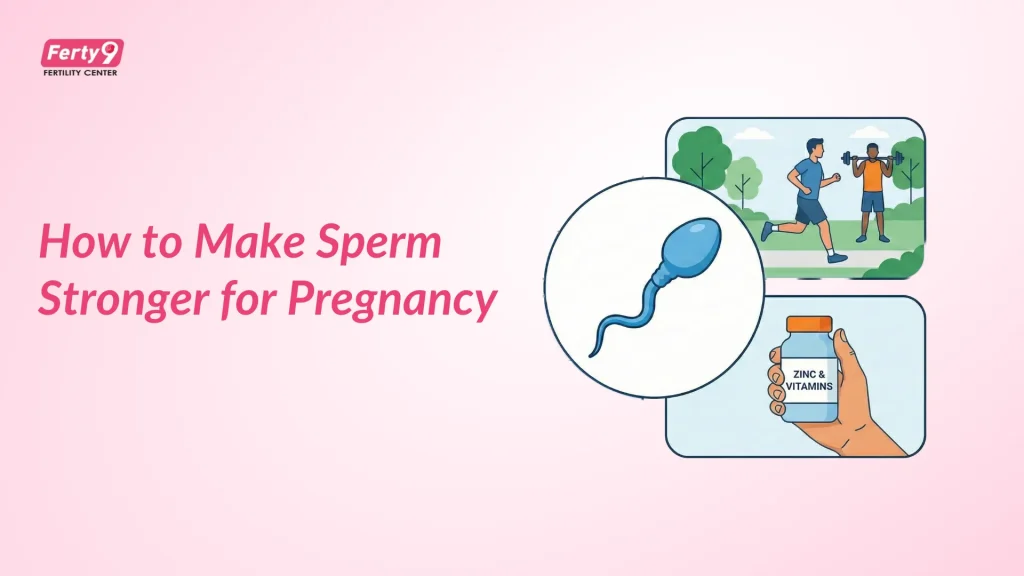
When a couple is trying to conceive, the focus is often on the woman’s health. But here is a fact every man needs to know: 50% of the baby’s genetics comes from the father.
For a successful pregnancy, it is not enough to just have a “good count.” Your sperm needs to be strong. It needs the energy to swim a long distance, the right shape to penetrate the egg, and healthy DNA to create a healthy baby.
At Ferty9 Fertility Center, we see many men who are surprised to learn that their lifestyle habits are weakening their sperm. The good news? Men produce new sperm every 72 to 90 days. This means you have a fresh chance to improve your fertility every three months!
Here are proven, simple ways to make your sperm stronger and improve your chances of pregnancy.
What Does “Strong Sperm” Actually Mean?
Before we fix it, let’s understand what makes a sperm “strong.” In a Semen Analysis test, we look for three main qualities:
- Quantity (Count): Do you have enough soldiers? (Ideally >15 million/ml).
- Movement (Motility): Can they swim straight and fast?
- Shape (Morphology): Do they have the right head and tail shape to enter the egg?
If your sperm has poor shape, fertilization becomes difficult. Here is how to boost these factors naturally.
1. The “Indian Superfoods” Diet
You don’t need expensive imported supplements. Your kitchen is full of fertility boosters.
- Ashwagandha: Known as “Indian Ginseng,” this ancient herb is clinically proven to reduce stress and boost testosterone and sperm concentration.
- Amla (Indian Gooseberry): Rich in Vitamin C, Amla is a powerful antioxidant. It prevents sperm from “clumping” together and protects their DNA from damage.
- Pumpkin Seeds & Walnuts: These are packed with Zinc and Omega-3 fatty acids. Zinc is the most critical mineral for sperm production.
- Eggs & Lentils (Dal): Sperm is made of protein. Ensure you are eating enough Dal, paneer, or eggs daily.
- Fenugreek (Methi) Seeds: This isn’t just for flavor. Studies show that daily consumption of Fenugreek extract can significantly boost testosterone levels and libido. You can soak methi seeds overnight and drink the water, or add them to your daily cooking.
- Stay Hydrated: Semen is water-based. If you are dehydrated, your semen volume decreases and becomes thick (viscous), making it harder for sperm to swim. Drink at least 3-4 liters of water daily.
Tip: Avoid soy products (like soya chunks) in excess, as some studies suggest they may mimic estrogen in the body.
2. Keep It Cool (Temperature Control)
Sperm are heat-sensitive. This is why the testicles hang outside the body—to stay 2 to 3 degrees cooler than your core temperature.
- Ditch the Tight Briefs: Switch to loose cotton boxers.
- The Laptop Rule: Never place your laptop directly on your lap. The heat from the battery can cook” sperm. Use a table or a cooling pad.
- Avoid Hot Baths: Long hot showers or saunas can temporarily lower sperm count.
3. Watch Out for Hidden Chemicals (Xenoestrogens)
We live in a world surrounded by plastic. Many plastics contain a chemical called BPA (Bisphenol A), which mimics estrogen in the body and lowers sperm count.
- Ditch the Plastic Bottles: Stop drinking from disposable plastic water bottles that have been sitting in the sun. Switch to steel, glass, or copper bottles.
- Don’t Microwave Plastic: Never heat your lunch in plastic tiffin boxes. Use glass or ceramic containers instead.
- Wash Your Produce: Pesticides on fruits and vegetables can also harm fertility. Wash them thoroughly with salt water or vinegar water before eating.
4. Quit Smoking (The #1 Enemy)
If you want to be a father, putting down the cigarette is the best thing you can do.
- The Damage: Smoking damages the DNA inside the sperm. Even if the sperm manages to fertilize the egg, damaged DNA increases the risk of miscarriage or birth defects.
- Vaping & Hookah: These are not safe alternatives. They also contain toxins that harm fertility.
5. Exercise, But Don’t Overdo It
Obesity is a major cause of weak sperm because fat cells convert testosterone into estrogen (the female hormone).
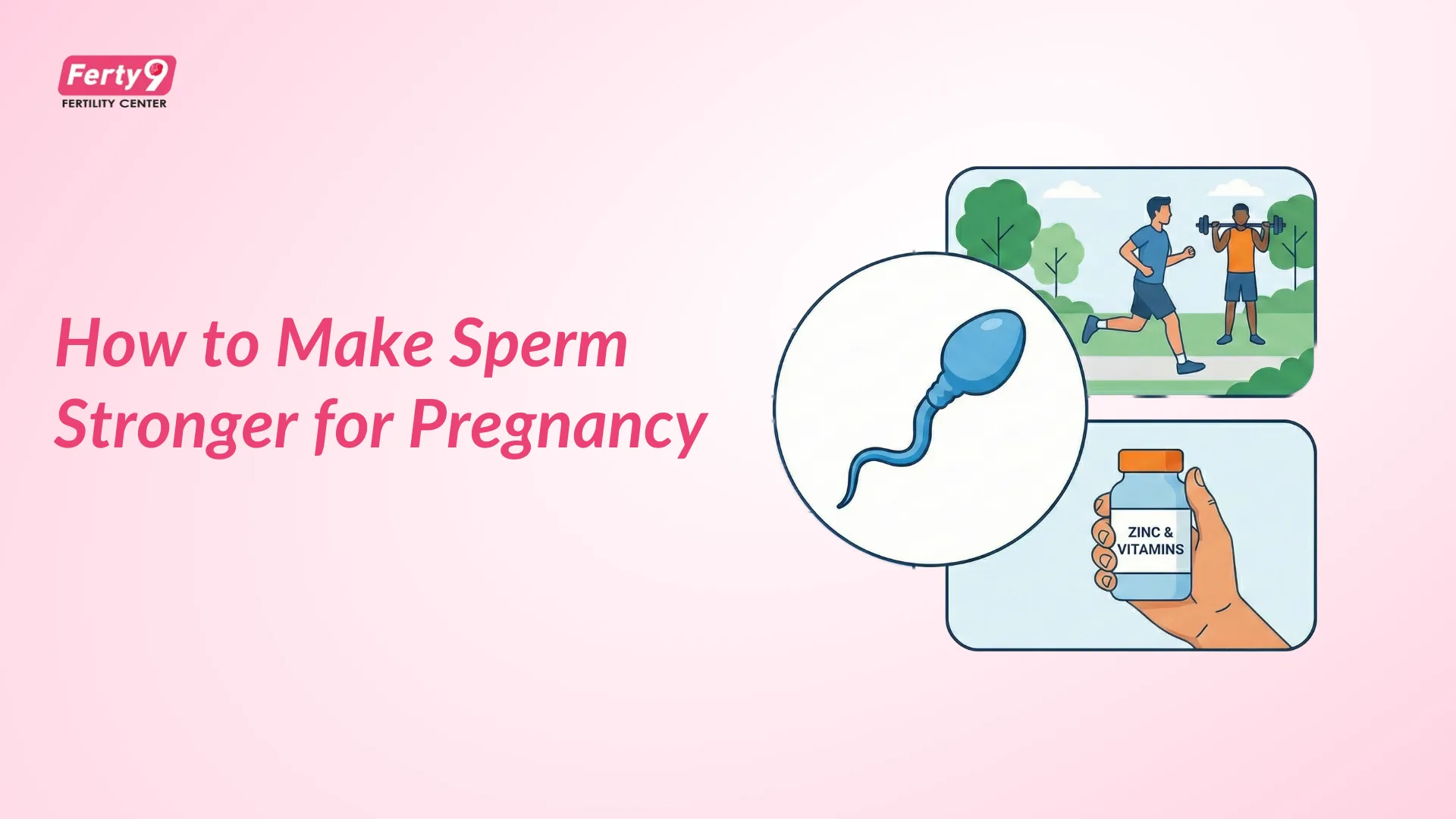
- Do: Moderate weight lifting, jogging, or yoga. This boosts testosterone naturally.
- Don’t: Excessive, intense cycling (bicycling) for hours can put pressure on the groin and overheat the testicles.
6. Limit Alcohol
Occasional social drinking might be okay, but daily drinking lowers testosterone levels and causes erectile dysfunction. If you are actively trying for a baby, try to stop or strictly limit alcohol for at least 3 months.
7. Managing Stress & Sleep
In our busy lives in cities like Hyderabad or Vijayawada, stress is common.
- Cortisol vs. Testosterone: When you are stressed, your body produces Cortisol, which kills Testosterone.
- Sleep: Sperm production happens largely while you sleep. Aim for 7–8 hours of quality rest.
8. Supplements (Ask Your Doctor)
Sometimes, diet isn’t enough. Your fertility specialist at Ferty9 might recommend:
- Coenzyme Q10 (CoQ10): An enzyme that acts like a “battery” for sperm, giving them the energy to swim.
- Vitamin D: Many Indian men are deficient in Vitamin D, which is linked to low sperm motility.
9. The Frequency Rule: Don’t “Save Up” for Too Long
A common myth is that abstaining from sex for weeks “builds up” sperm.
- The Fact: While saving up increases the number of sperm, the quality drops. Old sperm that sit in the body for too long begin to die and have DNA damage.
- The Advice: For pregnancy, aim to ejaculate every 2 to 3 days. This ensures a fresh supply of healthy, moving sperm is always ready for the egg.
Summary: The 90-Day Challenge
Remember, the changes you make today will show results in your sperm report 3 months from now.
- Eat more walnuts, pumpkin seeds, and Amla.
- Stop smoking.
- Keep your phone and laptop away from your lap.
- Sleep well.
Still worried about your report? Sometimes, “weak sperm” is caused by medical issues like a Varicocele (enlarged veins) or hormonal imbalance. These need medical treatment, not just diet changes. Book a consultation and a Semen Analysis at Ferty9 Fertility Center today to get a clear picture of your fertility health.

















 No need to worry, your data is 100% safe with us!