


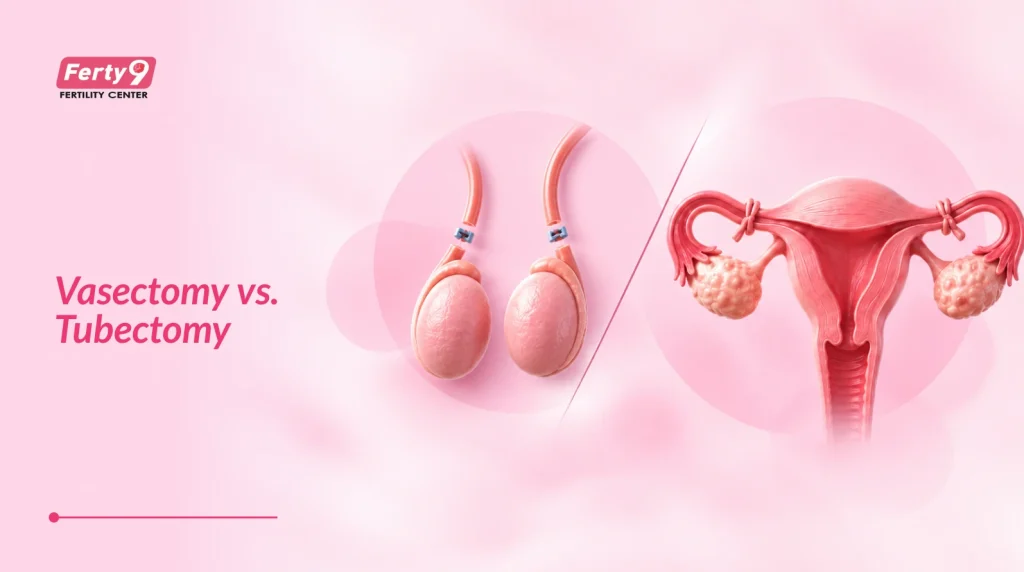
Choosing permanent contraception is a major decision for couples who have completed their family or are certain they do not want children in the future. Two common options are vasectomy for men and tubectomy for women.
Both procedures are highly effective at preventing pregnancy, but they differ in how they are performed, recovery time, risks, cost, and when they become effective. Understanding these differences can help couples discuss which option may be more suitable for them.
Vasectomy vs. Tubectomy at a Glance
| Factor | Vasectomy | Tubectomy |
| Who undergoes the procedure? | Men | Women |
| What is treated? | Vas deferens | Fallopian tubes |
| Purpose | Prevents sperm from entering semen | Prevents sperm and egg from meeting |
| Anesthesia | Usually local anesthesia | Local or general anesthesia, depending on the technique |
| Procedure | Usually a minor surgical procedure | Usually performed using laparoscopic or abdominal surgery |
| Recovery | Generally shorter | Generally longer |
| Hospital stay | Usually not required | May require a short hospital stay depending on the procedure |
| Effect on hormones | Does not reduce testosterone production | Does not normally affect ovarian hormone production |
| Immediate contraception? | No | Generally yes after laparoscopic or abdominal sterilization |
| Reversibility | Reversal may be possible but is not guaranteed | Reversal may be possible but is complex and not guaranteed |
What Is Vasectomy?
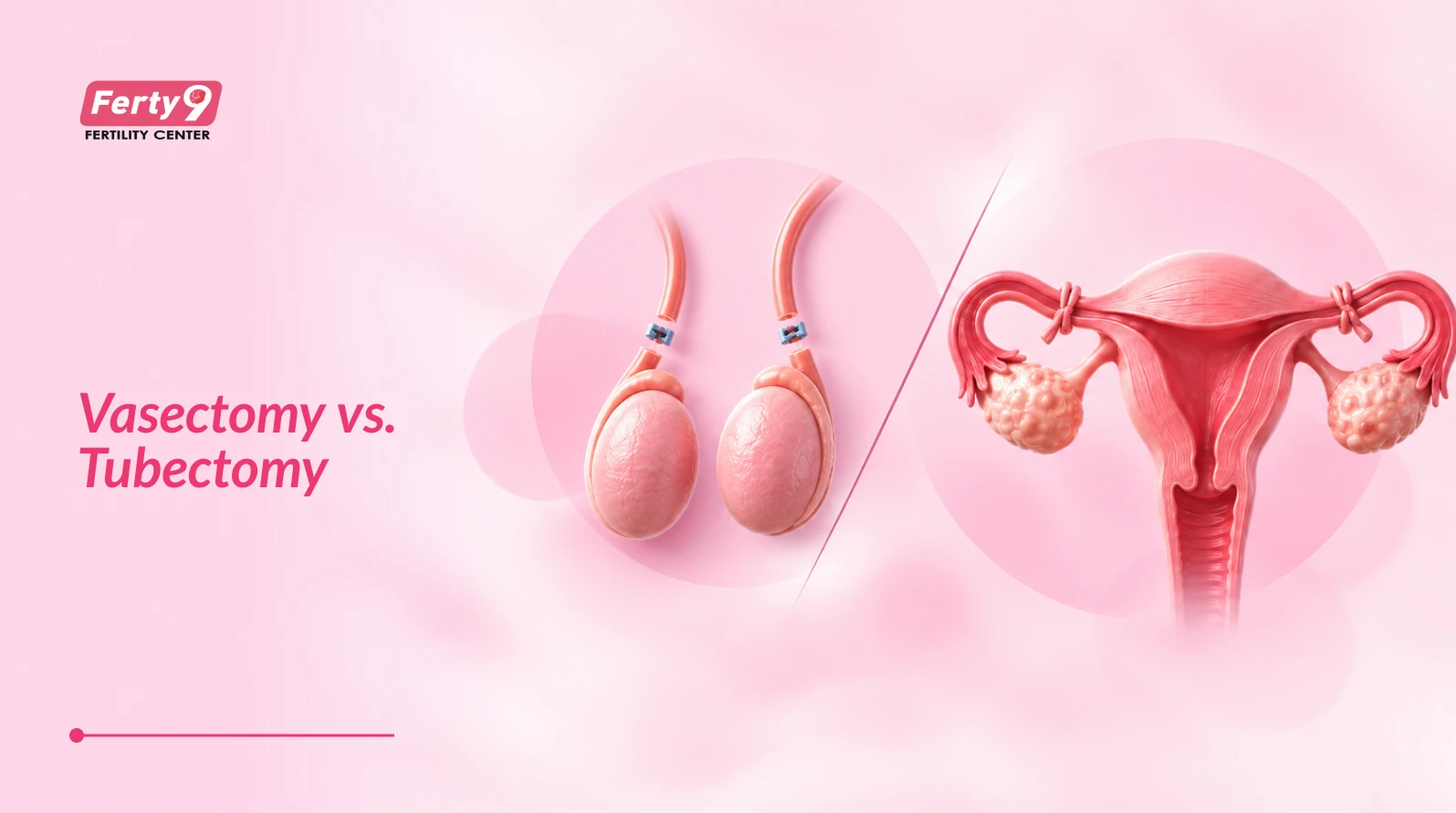
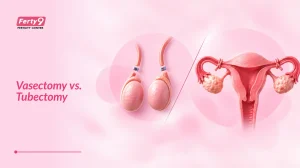
A vasectomy is a permanent contraception procedure for men. During the procedure, the vas deferens, which carry sperm from the testicles, are cut, sealed, or blocked.
After a successful vasectomy, sperm can no longer enter the semen. The testicles continue to produce sperm, but the body naturally absorbs the sperm that are not released.
Key Points About Vasectomy
- It is usually performed under local anesthesia.
- The procedure generally takes a short time and is often performed on an outpatient basis.
- Recovery is usually quicker than after tubectomy.
- It does not stop testosterone production.
- It does not normally affect sexual desire, erections, orgasm, or ejaculation.
- It is intended to be permanent.
Is Vasectomy Immediately Effective?
No. A vasectomy does not provide immediate contraception.
Sperm may remain in the reproductive tract for several weeks after the procedure. Men need to use another form of contraception until a post-vasectomy semen analysis confirms that the procedure has been successful. Current CDC guidance recommends semen analysis about 8–16 weeks after vasectomy. (CDC)
What Is Tubectomy?
A tubectomy, also called tubal ligation or tubal sterilization, is a permanent contraception procedure for women. The fallopian tubes are cut, sealed, clipped, or otherwise blocked so that sperm cannot reach the egg.
Tubectomy may be performed using laparoscopic or abdominal surgical techniques, depending on the individual’s circumstances and the method chosen by the doctor.
Key Points About Tubectomy
- It may be performed under local or general anesthesia, depending on the surgical technique.
- Laparoscopic tubectomy involves small abdominal incisions.
- Recovery is generally longer than after vasectomy.
- It does not normally affect ovarian hormone production.
- It does not cause menopause because the ovaries remain in place.
- It is intended to be permanent.
Is Tubectomy Immediately Effective?
For commonly used laparoscopic or abdominal sterilization procedures, contraception can generally be relied on immediately after the procedure. This differs from vasectomy, which requires confirmation through semen analysis before it can be relied upon for contraception.
What Is the Difference Between Vasectomy and Tubectomy?
Although both procedures are designed to permanently prevent pregnancy, the main difference is where and how the reproductive system is treated.
With vasectomy, the vas deferens are blocked so sperm cannot enter the semen. With tubectomy, the fallopian tubes are blocked so sperm cannot reach the egg.
Vasectomy is generally considered less invasive because it does not require surgery inside the abdominal cavity. Tubectomy involves surgery on the fallopian tubes and may therefore involve more extensive surgical access.
| Aspect | Vasectomy | Tubectomy |
| Procedure site | Vas deferens | Fallopian tubes |
| Surgical approach | Usually through the scrotal area | Usually through the abdomen |
| Anesthesia | Usually local | Local or general, depending on technique |
| Recovery | Usually shorter | Usually longer |
| Abdominal surgery | No | Often required |
| Common short-term effects | Mild pain, swelling, or bruising | Abdominal discomfort, pain, or effects related to surgery |
| Effect on hormones | Does not reduce testosterone | Does not normally affect ovarian hormone production |
| Contraceptive effectiveness | Highly effective after semen analysis confirms success | Highly effective after the procedure |
| Reversal | Difficult and not guaranteed | Complex and not guaranteed |
| STI protection | No | No |
Why Is Vasectomy Generally Less Invasive?
Vasectomy is often considered the simpler sterilization procedure because it does not involve entering the abdominal cavity.
Some practical differences include:
- Smaller surgical area: The vas deferens can be accessed through the scrotal area.
- Usually local anesthesia: General anesthesia is not typically required.
- Shorter recovery: Most men can return to normal activities relatively quickly, although strenuous activity should be avoided for the period recommended by their doctor.
- Lower surgical burden: It generally involves less extensive surgery than tubal sterilization.
- Usually lower cost: Because the procedure is simpler and usually does not require abdominal surgery or hospitalization, it is generally less expensive.
However, “simpler” does not mean risk-free. Like any surgical procedure, vasectomy can cause temporary pain, swelling, bruising, or other complications.
Do Vasectomy or Tubectomy Affect Sexual Function?
This is one of the most common concerns about permanent contraception.
Vasectomy
A vasectomy does not stop testosterone production because the testicles continue to function normally. It also does not normally affect sexual desire, erections, orgasm, or the ability to ejaculate.
The main change is that sperm are no longer present in the semen after the procedure has been confirmed successful.
Tubectomy
Tubectomy does not remove the ovaries, so it does not normally stop ovarian hormone production or cause menopause.
It also does not normally reduce sexual desire or sexual function. Menstrual periods generally continue after tubal sterilization.
Recovery After Vasectomy vs. Tubectomy
Recovery can vary depending on the procedure, surgical technique, and the individual’s health.
After Vasectomy
Men may experience:
- Mild pain or discomfort
- Swelling or bruising around the scrotum
- Temporary tenderness
The recovery period is generally shorter, but strenuous physical activity and sexual activity should be resumed according to the surgeon’s advice.
After Tubectomy
Women may experience:
- Abdominal discomfort or pain
- Tiredness
- Mild bleeding or soreness, depending on the procedure
- Temporary discomfort around the incision sites
Recovery is generally longer than after vasectomy, particularly when abdominal surgery is involved.
Are Vasectomy and Tubectomy Reversible?
Both procedures should be considered permanent contraception.
Reversal surgery may be possible in some cases, but it can be complex, expensive, and does not guarantee a future pregnancy. Therefore, couples should not choose sterilization assuming that it can simply be reversed later.
If there is uncertainty about having children in the future, it is worth discussing long-acting reversible contraception and other options with a healthcare professional before choosing permanent contraception.
Which Is Better: Vasectomy or Tubectomy?
There is no single procedure that is right for every couple.
From a surgical perspective, vasectomy is generally less invasive and usually involves a shorter recovery than tubectomy. However, the decision should consider both partners’ health, preferences, reproductive plans, and comfort with the procedure.
A couple may want to discuss:
- Whether they are certain they do not want future pregnancies
- Any existing medical conditions
- Previous abdominal or reproductive surgery
- Expected recovery time
- Surgical risks
- Cost and availability
- Personal preferences
A doctor can help determine which option is medically appropriate for the individual.
Summary
Vasectomy and tubectomy are both highly effective options for couples seeking permanent contraception. The main difference is that vasectomy is generally less invasive and has a shorter recovery, while tubectomy involves surgery on the fallopian tubes and may require a longer recovery.
Vasectomy also requires a period of backup contraception until semen analysis confirms that the procedure has worked, whereas laparoscopic or abdominal tubal sterilization can generally be relied upon immediately.
The decision should ultimately be based on the couple’s long-term family plans, medical circumstances, preferences, and discussion with a qualified healthcare professional. Permanent contraception should be chosen only when the couple is confident that they do not want a future pregnancy.















 No need to worry, your data is 100% safe with us!