About IVF Failure & Second Opinion
Content Last Reviewed on: Apr 30, 2026
Overview
When to Consider
Why IVF Fails
Second Opinion Includes
Outcomes
Conditions
Options
Specialist
Why Ferty9
FAQ
Overview
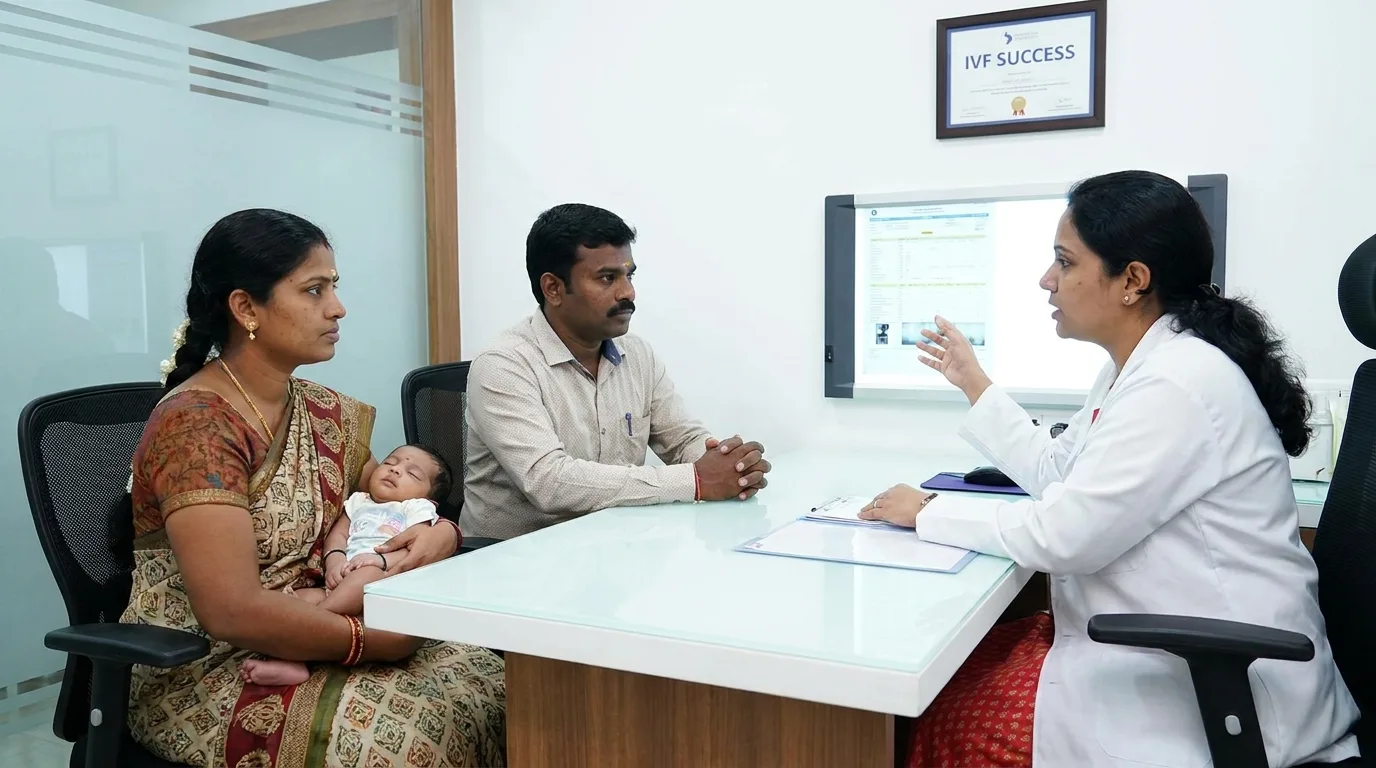
An IVF second opinion is a detailed review of your previous fertility diagnosis and treatment plan to identify what may have been missed and how your chances can be improved. If your IVF cycles have failed or your treatment feels unclear, an IVF second opinion helps you understand what went wrong and what needs to change before your next attempt. At Ferty9, our fertility specialists analyse your complete case history and provide a clear, personalised plan, so your next step is based on real insights, not guesswork.
When should you consider an IVF Second Opinion?
You should consider a second opinion if:
- You’ve had 2 or more failed IVF cycles
- You’ve experienced recurrent miscarriages
- You were advised to use donor eggs without exploring alternatives
- Your treatment feels standardised, not personalised
- You still have unanswered questions about your diagnosis or plan
Dr. Shravya Tallapureddy explains about Repeated IVF Failures
Why Do IVF Cycles Fail?
IVF failure is rarely due to a single reason. In many cases, key factors may not have been fully evaluated or optimised.
Common reasons for IVF Cycle failure include:
- Egg or sperm quality issues
- Embryo development problems
- Implantation failure
- Uterine conditions (fibroids, thin endometrium)
- Hormonal imbalance
- Genetic or immunological factors
This is where an IVF second opinion becomes critical, to identify what was missed and what needs to change.

What Does an IVF Second Opinion Include?
At Ferty9, your second opinion is detailed and outcome-focused.
1. Review of Previous IVF Cycles
- Stimulation protocols used
- Egg retrieval and fertilisation outcomes
- Embryo development and transfer details
2. Fertility Assessment
- AMH and ovarian reserve
- Sperm analysis (including advanced tests if needed)
- Hormonal evaluation
3. Uterine & Implantation Evaluation
- Endometrial thickness and receptivity
- Uterine abnormalities
- Need for additional testing
4. Personalised Treatment Plan
- Changes in protocol based on your response
- Recommendations to improve embryo quality or implantation
- Clear next-step strategy
How a Second Opinion Improves IVF Outcomes
A second opinion helps you move forward with a better approach by:
- Avoiding repetition of ineffective protocols
- Identifying gaps in previous treatment
- Adjusting medication, timing, or technique
- Exploring suitable advanced options only when needed
Instead of repeating cycles, you proceed with a more informed and targeted plan.
Conditions We Commonly Review
Ferty9 provides IVF second opinions for:
- Repeated IVF failures
- Low AMH / poor ovarian reserve
- PCOS-related infertility
- Male factor infertility
- Recurrent implantation failure
- Recurrent pregnancy loss
- Unexplained infertility
Each case is evaluated individually to ensure no critical factor is overlooked.
Advanced Options (When Needed)
As part of your IVF second opinion, we assess whether advanced techniques can improve your chances, such as:
- Blastocyst culture
- Embryo freezing
- Implantation support techniques
- Advanced sperm or embryo assessment
These are recommended only if they are relevant to your specific condition.

Choosing the Right Specialist for a Second Opinion
A meaningful IVF second opinion should give you:
- Clear explanations—not just medical terms
- Personalised recommendations
- Transparency in treatment options
- Confidence in your next step
The goal is simple: clarity, not confusion.
Why Choose Ferty9 for IVF Second Opinion?
- In-depth review of your complete IVF history
- Personalised, patient-specific treatment strategy
- Experienced fertility specialists
- Advanced diagnostics and lab support
- Honest guidance without unnecessary procedures
We focus on finding the right approach, so you don’t repeat the same cycle without answers.
Take the Next Step with Confidence
If you are unsure about your current IVF plan or previous outcomes, do not proceed without clarity. A timely IVF second opinion can help you make better decisions and improve your chances in the next cycle. Book your IVF Second Opinion by the Top IVF Specialists at Ferty9 today.
Learn More About:
• What is IVF
• IVF Process
• IVF Success Rate
• Why Choose Ferty9
• IVF Cost
• IVF Frequently Asked Questions
*Disclaimer
The information on this website, including IVF success rates, costs, and treatment details, is for general informational purposes only. Success rates and costs are indicative and may vary based on individual factors such as age, medical condition, diagnosis, treatment type, and centre location, and do not guarantee outcomes or final charges. All treatments and recommendations are based on individual medical evaluation, and this content should not be considered medical advice. For accurate and personalised information, please consult a fertility specialist at Ferty9.
This page was last updated on :  
2 May 2026Get a trusted second opinion on your IVF journey from our best fertility specialists for clinical clarity today.

Contact UsIt depends on the cause. If the issue was a uterine polyp that gets fixed, success rates bounce back to normal (40-50%). If the issue is severe egg quality, success may remain lower unless donor eggs are used.
Stress doesn’t directly cause failure (women conceive in war zones), but chronic stress raises cortisol, which can lower progesterone and affect implantation. Managing stress helps, but it’s rarely the only cause.
If your current clinic cannot offer advanced diagnostic tests (like PGT-A, ERA, or IMSI) or provide a clear reason for failure, a second opinion is highly recommended.
Yes, provided you change the strategy. Simply repeating the same protocol is less likely to work, but investigating why it failed (ERA, PGT-A) can lead to success in the 4th cycle.
If you have more frozen embryos, you can try again quickly. The success rate is cumulative, meaning your chances go up with each attempt.
No, not at all. Many women with successful IVF pregnancies report having no early symptoms.
– Physically: You will likely get your period, which may be heavier than usual. Hormonal levels will gradually return to normal.
– Emotionally: A failed IVF cycle can be emotionally tough. Feelings of sadness, anger, or grief are common. Emotional support or counselling is recommended.
It is common not to succeed on the first try. We typically create multiple embryos in one IVF cycle. If the first transfer fails, we can perform a Frozen Embryo Transfer (FET) in the next cycle without restarting the whole IVF process. A surrogate can undergo up to 3 embryo transfer attempts.
It frequently takes more than one treatment cycle to conceive. Some people, meanwhile, will not become pregnant even after several attempts. Your doctor may suggest in vitro fertilization (IVF) if you have experienced many cycles of ineffective ovulation induction.
Seeking a second opinion from a different fertility specialist or clinic can be beneficial if you have experienced multiple failed IVF cycles. A fresh perspective and a different approach may help identify potential issues or factors that were previously overlooked. Additionally, different clinics may have varying success rates or specialised expertise that could improve your chances of success. Learn more about when to consult a new fertility specialist for second opinion after failed ivf.
Yes, achieving a successful IVF cycle is possible after multiple failures. Each cycle is unique, and various factors can contribute to the outcome. By identifying and addressing the causes of failure, making adjustments to the treatment plan, and exploring alternative options, many couples have gone on to achieve a successful pregnancy after multiple unsuccessful IVF cycles.
At Ferty9, we understand the emotional devastation that can accompany a failed IVF cycle. Our counseling approach after a failed IVF cycle involves the following steps:
- Providing a safe space
- Exploring reasons for treatment failure
- Emotional support and discussing coping strategies
- Evaluating the readiness of the couple
- Discussing next steps
- Strengthening relationships among the couples
Yes, omega-3s can support fertility after a miscarriage or failed IVF cycle. They help by maintaining cell wall integrity, providing energy, and reducing the chances of complications such as preterm births, miscarriages, and stillbirths. Including omega-3s in your recovery plan may enhance reproductive health and improve future fertility outcomes.
Comforting your wife after a failed IVF cycle involves emotional support and compassion. Acknowledge her feelings, offer validation, and create a safe space for her to express herself. Allow her time to grieve and process the experience. Encourage her to seek professional help if needed, and assure her that you’re in this journey together.
- Fertility Clinic in Hyderabad
- Fertility Clinic in Kukatpally
- Fertility Clinic in Lb Nagar
- Fertility Clinic in Secunderabad
- Fertility Clinic in Banjara Hills
- Fertility Clinic in Visakhapatnam
- Fertility Clinic in Vijaywada
- Fertility Clinic in Karimnagar
- Fertility Clinic in Warangal
- Fertility Clinic in Rajahmundry
- Fertility Clinic in Tirupati
- Fertility Clinic in Kurnool
- Fertility Specialist in Hyderabad
- Fertility Specialist in Kukatpally
- Fertility Specialist in Lb Nagar
- Fertility Specialist in Secunderabad
- Fertility Specialist in Banjara Hills
- Fertility Specialist in Visakhapatnam
- Fertility Specialist in Vijaywada
- Fertility Specialist in Karimnagar
- Fertility Specialist in Warangal
- Fertility Specialist in Rajahmundry
- Fertility Specialist in Tirupati
- Fertility Specialist in Kurnool
No need to worry, your data is 100% safe with us!
Book an Appointment
✔ No need to worry, your data is 100% safe with us!