Embryologists are an integral part of assisted reproductive technology (ART) and IVF. supporting fertility treatments such as In Vitro Fertilization , Intra Cytoplasmic Sperm Injection , embryo cryopreservation and embryo transfer . As fertility services expand across India, demand for qualified embryologists is rising at dedicated fertility centres, hospitals, and ART laboratories .Becoming an embryologist in India requires a strong foundation in life sciences or medicine, specialised training in clinical embryology, and practical experience in an IVF Lab.
Key Takeaways
- Clinical Embryology Career – An embryologist is a scientist or medical laboratory professional who specializes in the study , development and handling of gametes (eggs and sperm ) and embryos. They are a core team known for their expertise in fertility treatments by handling reproductive cells, monitoring embryo development, and performing assisted reproductive technology procedures.
- Required Qualifications – Becoming an embryologist typically involves a post graduation degree in life sciences or medicine, training in clinical embryology or a related field, and practical IVF laboratory experience for a minimum of 1 year.
- Essential Laboratory Skills – Successful embryologists combine technical expertise in working with mind and hand coordination during In Vitro Fertilization , Intra Cytoplasmic Sperm Injection , embryo culture, cryopreservation, quality control and quality assurance with precision, communication, coordination , teamwork, ethical practice , trouble-shooting and problem-solving skills.
- Career Progression Path – Most embryologists advance from trainee and junior roles to clinical and senior embryologist positions before progressing into IVF laboratory management or laboratory leadership.
- Career Opportunities – Embryologists can work in IVF centres, ART laboratories, fertility hospitals, research organisations, and universities, with growing opportunities across major Indian cities and fertility hubs in Andhra Pradesh and Telangana.
In India, Hyderabad has emerged as one of the country’s leading fertility hubs, along with other cities in Andhra Pradesh and Telangana, including Vijayawada, Visakhapatnam, Guntur, Warangal, Karimnagar, Kurnool, and Tirupati, creating opportunities for skillful embryologists.
Educational pathway and required qualification in building a career pathway for aspiring embryologists, along with current openings at Ferty9 Fertility Centre locations.
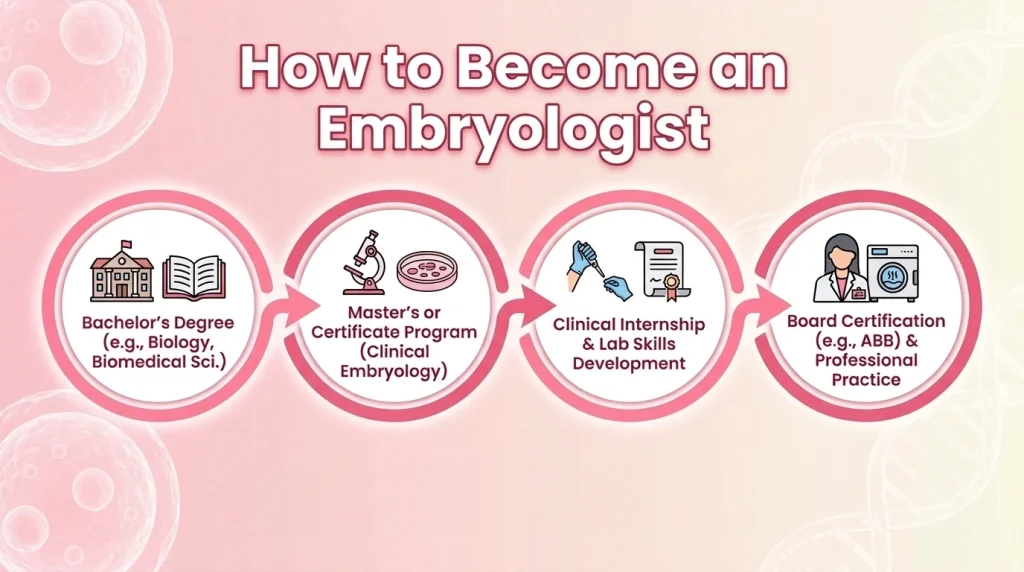 How to Become an Embryologist
Who is an Embryologist?
An embryologist is a healthcare professional trained to perform meidcal laboratory procedures used in assisted reproductive technology. Working alongside gynaecologists / fertility specialists. Embryologists handle reproductive cells or gametes ( egg/sperm) , monitor embryo development, maintain laboratory quality standards, and support patients undergoing fertility treatment.
Key Responsibilities
- Semen analysis and sperm preparation
- Handling eggs collected during IVF procedures
- Performing IVF and ICSI laboratory procedures
- Monitoring embryo development
- Embryo grading , embryo selection , embryo transfer
- Cryopreservation of eggs, sperm,embryos / Blastocysts
- Performing Embryo Biopsy for testing genetic health of an embryo during an IVF cycle
- Maintaining laboratory quality control and documentation electronic medical record EMR
- Data management
- Academic , Publishing articles in journals
- Working closely with fertility specialists, nurses, and counsellors
Why Choose Embryology as a Career?
Embryology combines laboratory science with reproductive medicine. A career in this field offers the opportunity to work with advanced reproductive technologies, contribute directly to patients’ family-building journeys, and build long-term expertise in a specialised area of clinical science.
Educational Qualifications Required
Undergraduate Qualifications
- B.Sc Biotechnology
- B.Sc Microbiology
- B.Sc Zoology
- B.Sc Life Sciences
- MBBS
- BDS
- B.Pharm
- BVSc
Postgraduate Qualifications
- M.Sc Clinical Embryology
- M.Sc Biotechnology
- M.Sc Reproductive Biology
- M.Sc Genetics
- M.Sc Microbiology
Clinical Training
- Clinical Embryology Fellowships
- ART Laboratory Training
- IVF Laboratory Internships
- Continuing Professional Education programmes
Skills Required to Become an Embryologist
| Technical Skills | Professional Skills |
| Microscopy | Attention to detail |
| IVF laboratory techniques | Manual precision |
| ICSI procedures | Analytical thinking |
| Embryo culture | Communication |
| Embryo grading Embryo Transfer | Team collaboration |
| Cryopreservation techniques | Time management |
| Laboratory quality assurance | Ethical practice |
| Scientific documentation | Trouble-shooting Problem-solving |
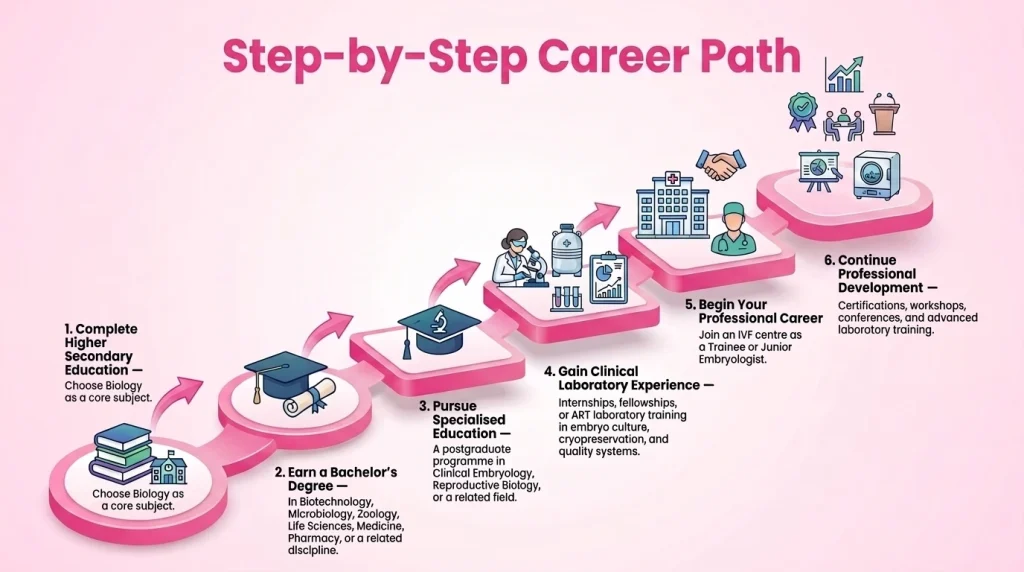
Step-by-Step Career Path
- Complete Higher Secondary Education — Choose Biology as a core subject.
- Earn a Bachelor’s Degree — In Biotechnology, Microbiology, Zoology, Life Sciences, Medicine, Pharmacy, or a related discipline.
- Pursue Specialised Education — A postgraduate programme in Clinical Embryology, Reproductive Biology, or a related field.
- Gain Clinical Laboratory Experience — Internships, fellowships, or ART laboratory training in embryo culture, cryopreservation, and quality systems.
- Begin Your Professional Career — Join an IVF centre as a Trainee or Junior Embryologist.
- Continue Professional Development — Certifications, workshops, conferences, and advanced laboratory training.
Career Progression
| Stage | What It Involves |
| Trainee Embryologist | Hands-on experience under senior embryologists; learning laboratory procedures and quality protocols |
| Junior Embryologist | Routine laboratory procedures; assisting with IVF and ICSI; embryo culture under supervision |
| Clinical Embryologist | Independent laboratory management; advanced ART techniques; quality standards |
| Senior Embryologist | Leading laboratory operations; mentoring junior staff; quality assurance oversight |
| IVF Laboratory Manager | Operational and staffing oversight across the laboratory |
| IVF Laboratory Director | Strategic and clinical leadership across laboratory functions |
Embryologist Salary in India
Embryologist salaries in India vary by qualification, experience, and location. As a general guide:
| Career Stage | Typical Annual Salary Range* |
| Trainee / Junior Embryologist | ₹2.5 – 4.5 LPA |
| Clinical Embryologist (2–5 yrs experience) | ₹4.5 – 8 LPA |
| Senior Embryologist (5+ yrs experience) | ₹8 – 15 LPA |
| IVF Laboratory Manager / Director | ₹15 LPA and above |
*Figures are indicative, drawn from industry-reported ranges, and vary by city, employer, and individual qualifications.
Beyond salary, aspiring embryologists should also weigh access to clinical mentorship, exposure to advanced ART technologies, and long-term career development when evaluating an employer.
Where Can an Embryologist Work?
An Embryologist can get a job in:
- IVF and Fertility Centres
- Assisted Reproductive Technology (ART) Laboratories
- Women’s Healthcare Centres
- Medical Universities
- Clinical Research Organisations
- Reproductive Medicine Institutes
Opportunities continue to grow in metropolitan cities such as Hyderabad, Bengaluru, Chennai, Delhi NCR, Mumbai, and Pune, as well as in Andhra Pradesh and Telangana centres including Vijayawada, Visakhapatnam, Warangal, Guntur, Karimnagar, Tirupati, and Kurnool.
Build your career with Ferty9 Fertility Center
Ferty9 Fertility Center operates across 11 locations in Andhra Pradesh and Telangana. Our embryologists work alongside fertility specialists, nurses, and counsellors to support patients throughout their fertility journey.
Perks of joining Ferty9
- Exposure to advanced IVF and ART laboratory procedures
- Modern laboratory infrastructure and technology
- Clinical mentorship from experienced fertility specialists and embryologists
- Structured training programmes and continuing professional development
- Career opportunities across multiple centres in Andhra Pradesh and Telangana
- A commitment to ethical clinical practice and laboratory quality standards
For Current Openings, Apply Now.
References: