


What Is Frozen Embryo Transfer (FET)?
Simple Explanation of FET
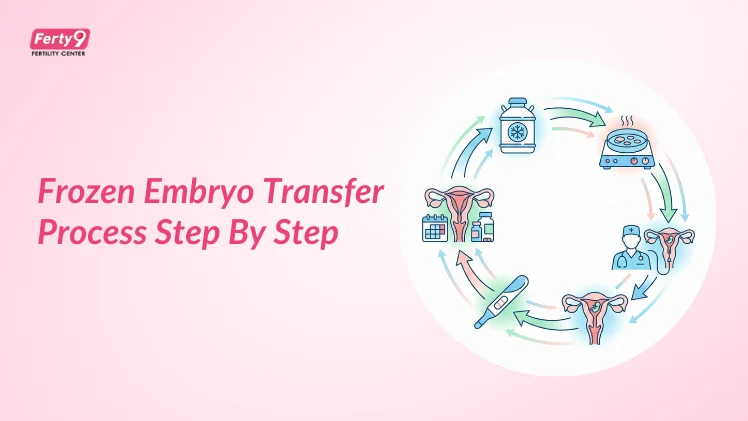
Frozen Embryo Transfer (FET) is a procedure where embryos that were created in a previous IVF cycle and frozen (cryopreserved) are thawed and placed back into the woman’s uterus. Think of it like pausing a movie. The embryo is safely “paused” in our lab at -196°C. When your body is ready, we “press play” by thawing it, and it continues to grow just like a fresh embryo.
How FET Is Different from Fresh Embryo Transfer
- Fresh Transfer: Happens 3 to 5 days after egg retrieval, while your body is still recovering from high-dose hormone injections.
- Frozen Transfer: Happens weeks or months later, when your hormones have returned to normal and your uterus is calm and receptive.
Why Doctors Recommend Frozen Embryo Transfer
Medical Reasons for Choosing FET
Your doctor may suggest FET if:
- OHSS Risk: You are at risk of Ovarian Hyperstimulation Syndrome (swollen ovaries).
- High Progesterone: Your hormone levels rose too quickly during the fresh cycle, making the uterus “out of sync” with the embryo.
- Genetic Testing (PGT-A): You need time to test the embryos for genetic issues before transfer.
Success Rates of FET vs Fresh Transfer
Surprisingly, Frozen transfers often have HIGHER success rates than fresh transfers. This is because the uterine lining (endometrium) is more natural and receptive without the stress of ovarian stimulation drugs.
Who Is an Ideal Candidate for FET?
FET After IVF or ICSI
Anyone who has extra embryos after their first IVF/ICSI attempt is a candidate. It allows you to try for a second baby years later without doing the injections again!
FET for PCOS, Endometriosis, and OHSS Risk
- PCOS: Women with PCOS often over-respond to medication. Freezing allows the ovaries to calm down, making the pregnancy safer.
- Endometriosis: Inflammation from endometriosis can be better managed in a frozen cycle with suppressive therapy (like Lupride) before transfer.
FET After Failed Fresh Transfer
If a fresh transfer didn’t work, FET is the standard next step. It gives us a chance to adjust the protocol and prepare the lining better.
Types of Frozen Embryo Transfer Cycles
Natural Cycle FET
- No Medicines: We track your natural ovulation and transfer the embryo at the right time.
- Best for: Women with very regular, predictable periods.
Modified Natural Cycle FET
- Little Medicine: We track your natural cycle but give a “trigger shot” (HCG) to ensure ovulation happens at the perfect time.
Hormone Replacement Therapy (HRT) FET
- Medicines Used: This is the most common type in India. We take control of your cycle using Estrogen tablets (to thicken the lining) and Progesterone (to support the pregnancy).
- Best for: Women with irregular periods (PCOS) or those who need flexible scheduling.
Pre-FET Evaluation and Preparation
Uterine Evaluation Before FET
Before starting, we check the “home” for the baby.
- Transvaginal Scan (TVS): To check the uterus structure.
- Hysteroscopy: Sometimes done to remove small polyps or verify that the cavity is clear.
Blood Tests and Hormone Monitoring
We check baseline hormones (Estrogen, LH, Progesterone) on Day 2 of your period to confirm the ovaries are quiet.
Endometrial Thickness Assessment
The “bed” for the embryo needs to be just right. We look for a Triple Line Pattern and a thickness of at least 7-8 mm.
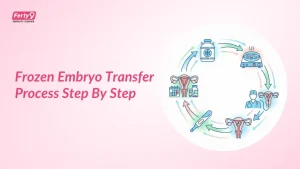
Frozen Embryo Transfer Process Step by Step
Step 1 – Menstrual Cycle Day 1
Call the clinic when your period starts. We usually ask you to come in on Day 2 or Day 3.
Step 2 – Endometrial Preparation
- For HRT Cycles: You start taking Estrogen tablets (e.g., Progynova) daily.
- Goal: To thicken the uterine lining without growing a new egg.
Step 3 – Monitoring and Scans
You will visit Ferty9 for a scan around Day 10 or 12.
- We measure the lining thickness. If it is >8mm and looks good, we plan the next step.
Step 4 – Progesterone Support
Once the lining is ready, you start Progesterone (injections or vaginal gel).
- Important: The transfer is scheduled exactly 5 days after starting progesterone (for Blastocysts). This timing window is critical.
Step 5 – Embryo Thawing
On the morning of the transfer, our embryologists carefully thaw the embryo.
- Survival Rate: With modern “Vitrification” technology, 98-99% of embryos survive the thaw perfectly intact.
Step 6 – Embryo Transfer Procedure
This is the big moment! It happens in the operation theatre but requires no anaesthesia.
What Happens on the Day of Embryo Transfer
How the Transfer Is Performed
- You lie on the table (like a pap smear).
- The doctor cleans the cervix.
- Under ultrasound guidance, a soft, thin catheter carrying the embryo is gently guided into the uterus.
- The embryo is released into the best spot.
Is the Procedure Painful?
No. It feels similar to an IUI or a pap smear. Most women feel only mild pressure, not pain.
Duration and Recovery
- Procedure Time: 10–15 minutes.
- Rest: You rest in our recovery room for 30 minutes, then you can go home.
After Embryo Transfer – What to Expect
Medications After FET
Do not stop your medicines! You must continue Estrogen and Progesterone support until the pregnancy test (and usually until 10-12 weeks of pregnancy).
Activity Guidelines and Restrictions
- Do: Walk, work, and eat normally.
- Don’t: Lift heavy weights, do high-intensity cardio, or take hot baths.
Emotional Changes During the Two-Week Wait
It is normal to feel anxious, bloated, or have mild cramping. These are often side effects of the progesterone, not necessarily signs of pregnancy (or failure).
Pregnancy Testing After FET
When to Do the Beta hCG Test
We schedule a blood test (Beta-hCG) exactly 14 days after transfer.
- Please avoid home urine kits early, as they can give false negatives.
Understanding Pregnancy Test Results
- > 100 mIU/mL: Strong positive.
- < 5 mIU/mL: Negative.
- In between: We repeat the test in 48 hours to see if the number doubles.
Success Rates of Frozen Embryo Transfer
- < 35 years: 50–60% per transfer.
- 35–40 years: 40–50%.
- > 40 years: Depends heavily on egg quality/PGT testing.
Factors That Influence FET Success
- Embryo Quality (Grade A blastocysts are best).
- Endometrial Receptivity (Lining thickness).
- Lab Quality (Thawing techniques).
Common Myths About Frozen Embryo Transfer
Frozen Embryos Are Less Healthy
Myth. Research shows babies born from frozen embryos are just as healthy as fresh ones. In fact, they sometimes have better birth weights because the mother’s hormonal environment is healthier.
FET Has Lower Success Than Fresh Transfer
Myth. In many modern clinics like Ferty9, FET success rates are equal to or higher than fresh transfers.
Risks and Side Effects of FET
Hormonal Side Effects
Estrogen and Progesterone can cause:
- Bloating.
- Breast tenderness.
- Mood swings.
Rare Complications
Since there is no egg retrieval surgery, surgical risks are zero. The main risk is a multiple pregnancy (twins) if more than one embryo is transferred.
Tips to Improve FET Success
Lifestyle Changes Before and After FET
- Hydrate: Drink 3 liters of water.
- Diet: Eat warm, cooked meals. Include protein and fiber.
Diet, Sleep, and Stress Management
- Sleep 8 hours.
- Keep your feet warm (a common holistic tip to improve circulation).
- Avoid raw papaya and pineapple (traditional Indian advice).
When to Consult Your Fertility Specialist
Signs You Should Report Immediately
- Heavy bleeding (soaking a pad in an hour).
- Severe abdominal pain.
- Fever over 101°F.
Planning the Next Step If FET Fails
If the test is negative, we stop medications. A bleed (period) will start in 3-5 days. We can usually start a new cycle immediately or after one month of rest.
Summary
Frozen Embryo Transfer is a safe, highly successful, and patient-friendly procedure. It allows your body to be at its best to receive the pregnancy. By separating the egg collection from the transfer, we give you the best chance of taking a baby home.








 No need to worry, your data is 100% safe with us!