


It is one of the most common questions couples ask when trying to conceive: “How much sperm is actually needed to get pregnant?”
There is a popular saying that “it only takes one sperm.” While this is biologically true—only a single sperm ultimately fertilizes the egg—the journey to that moment is incredibly difficult. For that one sperm to succeed, millions of others are needed to help pave the way.
Pregnancy depends on much more than just the quantity of sperm. It relies heavily on quality, motility (movement), and the timing of intercourse.
At Ferty9, we believe in empowering our patients with facts. In this article, we will break down the science of sperm count, what is considered “normal,” and why quality often matters more than numbers.
Understanding Sperm and Fertilization
To understand sperm count, we first need to understand the role sperm plays. Sperm are the male reproductive cells. Their sole mission is to transport genetic material to the female egg.
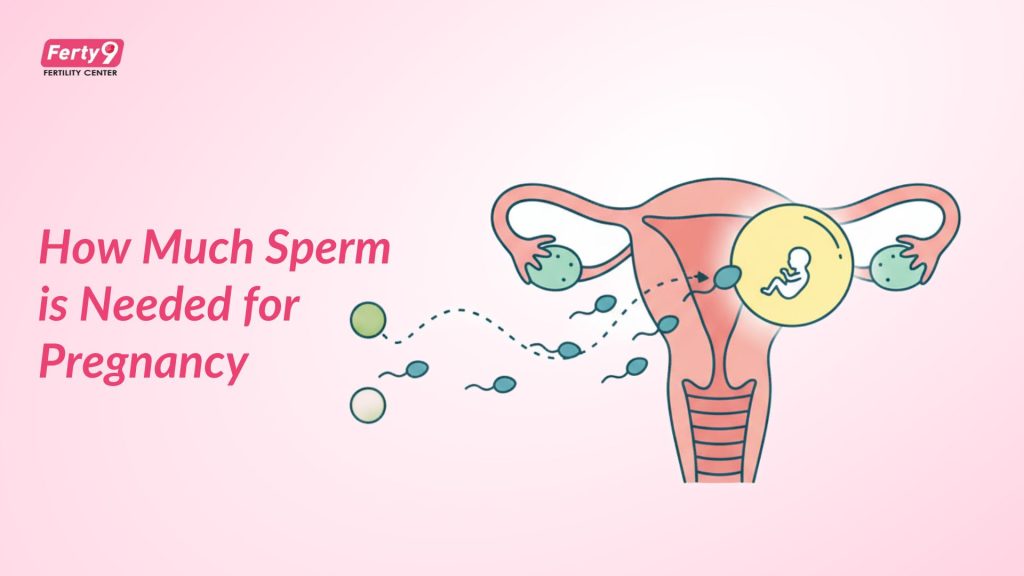
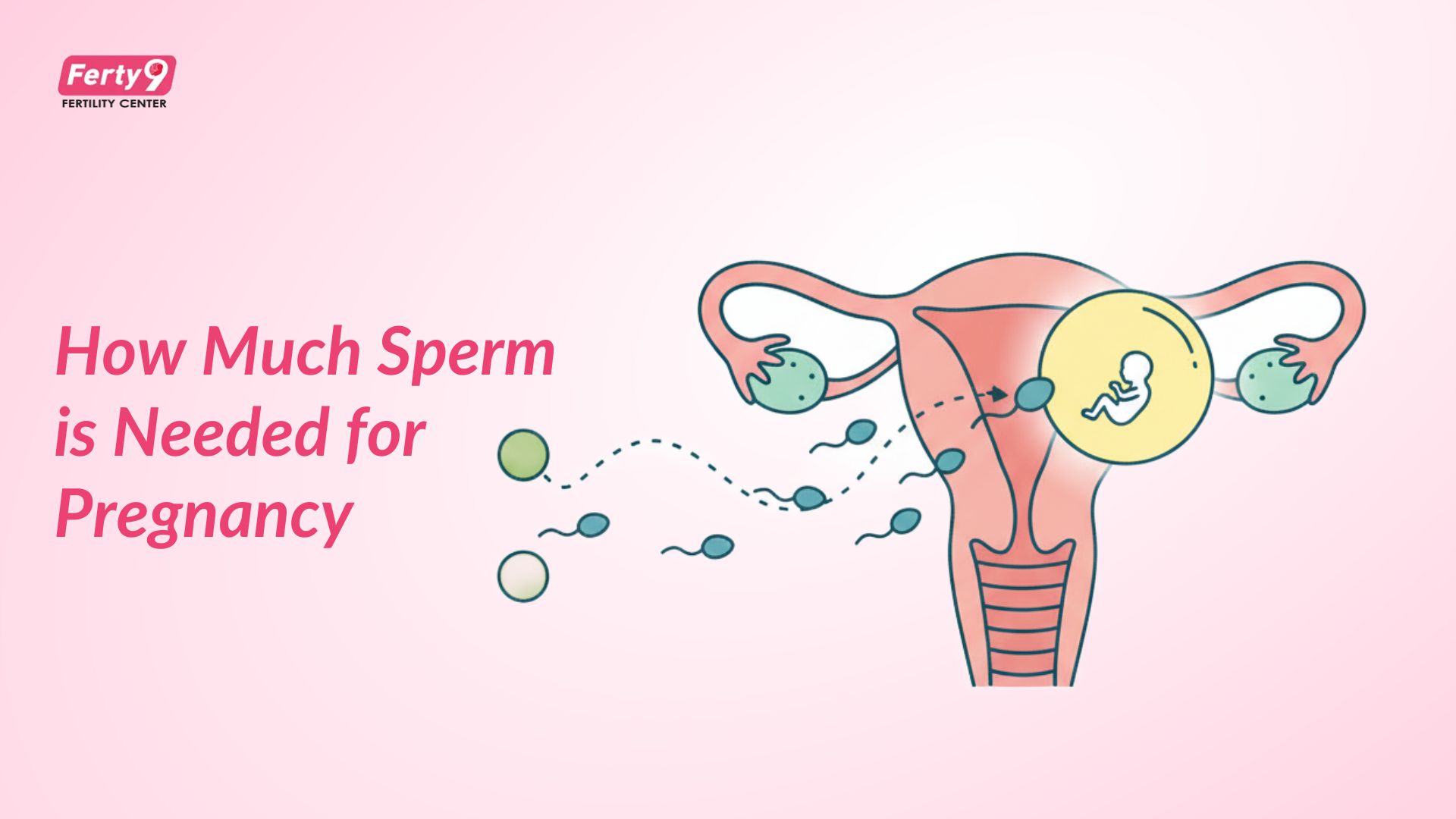
The Great Race: Fertilization is like a marathon where millions of runners start, but only one crosses the finish line.
- The Start: Millions of sperm are released into the vagina.
- The Journey: They must swim through the cervix and uterus to reach the fallopian tubes.
- The Filter: The female reproductive tract acts as a natural filter. It stops sperm that are slow, abnormally shaped, or weak.
- The Finish: Only a few hundred healthy sperm actually reach the egg.
- Fertilization: Finally, just one sperm penetrates the egg’s outer shell to fertilize it.
How Much Sperm Is Released During Ejaculation?
When a man ejaculates, a significant amount of semen is released to maximize the chances of conception. According to the World Health Organization (WHO), here is what happens during a typical ejaculation:
- Volume: The average amount of semen released is between 2 to 6 milliliters (about half to one teaspoon).
- Concentration: Each milliliter should ideally contain at least 15 million sperm.
- Total Count: This means a single ejaculation can contain anywhere from 30 million to over 1 billion sperm.
Why so many? Because the journey to the egg is harsh. The natural acidity of the vagina and immune system responses eliminate the vast majority of sperm before they ever get close to the egg.
The Minimum Sperm Count Needed for Pregnancy
While high numbers are good, you don’t need billions of sperm to conceive naturally. The WHO has established benchmarks for what is considered a “normal” fertile range.
Normal Sperm Parameters:
- Sperm Concentration: At least 15 million sperm per milliliter of semen.
- Total Sperm Count: At least 39 million sperm per total ejaculate.
However, numbers aren’t everything. For pregnancy to occur, the sperm must be functional.
- Motility (Movement): At least 40% of the sperm should be moving efficiently. If they swim in circles or don’t move forward, they cannot reach the egg.
- Morphology (Shape): At least 4% of the sperm should have a “normal” shape (an oval head and a long tail). Normal-shaped sperm are better at penetrating the egg.
Key Takeaway: A lower sperm count with high-quality, fast-moving sperm often results in better fertility than a high sperm count with poor movement.
Factors Affecting Sperm’s Ability to Fertilize an Egg
For natural conception, four main factors must align:
- Sperm Count: While you can conceive with fewer, a count below 15 million/ml (Oligospermia) decreases the odds simply because there are fewer candidates to reach the egg.
- Sperm Motility: The sperm must be able to swim progressively (in a straight line) to travel from the cervix to the fallopian tubes.
- Sperm Morphology: Abnormal sperm (two heads, crooked tails, small heads) usually cannot fertilize an egg.
- Semen Volume:
- Too low: Might indicate a blockage or issues with the seminal vesicles.
- Too high: Might dilute the sperm concentration.
- Timing of Intercourse: Even the healthiest sperm cannot fertilize an egg that isn’t there. Intercourse must happen during the woman’s fertile window (the days leading up to and including ovulation).
What Happens if the Sperm Count Is Low?
If a semen analysis shows a low sperm count (Oligospermia), it does not mean you cannot have children. It simply means natural conception might take longer or require medical assistance.
At Ferty9, we use several advanced Indian treatment protocols to help couples conceive despite low sperm counts:
- IUI (Intrauterine Insemination): We wash and concentrate the best sperm from a sample and place them directly inside the uterus. This gives the sperm a “head start” by bypassing the cervix.
- IVF (In Vitro Fertilization): Sperm and eggs are combined in a laboratory dish. This allows the sperm to fertilize the egg in a controlled environment.
- ICSI (Intracytoplasmic Sperm Injection): This is a game-changer for severe male infertility. A specialist selects a single healthy sperm and injects it directly into the egg. This technique proves that you truly only need one healthy sperm to become a father.
Myths About Sperm and Pregnancy
There are many misconceptions about male fertility. Let’s clear them up:
- Myth 1: More sperm always means higher chances of pregnancy.
- Fact: Once you reach the “normal” threshold, higher numbers don’t necessarily increase pregnancy rates. Quality matters more.
- Myth 2: Ejaculating daily lowers sperm count too much.
- Fact: Daily ejaculation slightly reduces count but increases motility & reduces DNA fragmentation. However, waiting 2 days between attempts is often the “sweet spot.”
- Myth 3: Sperm leakage after sex prevents pregnancy.
- Fact: It is perfectly normal for semen to leak out after intercourse. Millions of sperm swim into the cervical mucus within seconds of ejaculation; leakage does not stop this.
- Myth 4: Certain sexual positions guarantee conception.
- Fact: There is no scientific proof that positions (like keeping legs up) guarantee pregnancy. Timing is the most critical factor.
Tips to Improve Sperm Health Naturally
Sperm production is continuous, meaning lifestyle changes you make today can improve your sperm quality about 3 months from now.
- Eat a Fertility Diet: Focus on foods rich in Zinc (pumpkin seeds), Selenium (eggs, nuts), Vitamin C (citrus fruits), and Folate (leafy greens).
- Exercise: Regular activity boosts testosterone, but avoid excessive cycling, which can put pressure on the testicles.
- Quit Bad Habits: Smoking and excessive alcohol consumption are two of the biggest enemies of sperm health.
- Keep it Cool: Sperm needs a cooler environment than the rest of the body. Avoid hot baths, saunas, tight underwear, and keeping laptops directly on your lap.
- Manage Stress: High cortisol (stress hormone) can interfere with testosterone production.
When to See a Fertility Specialist
You should book a consultation at Ferty9 if:
- You are under 35 and have been trying to conceive for 1 year without success.
- You are over 35 and have been trying for 6 months.
- You have a known history of:
- Low sperm count.
- Erectile or ejaculation difficulties.
- Testicular injury or surgery.
- Hormonal imbalances.
The first step is usually a simple Semen Analysis to check your count, motility, and morphology.
Key Takeaways
- Biologically, only one healthy sperm is needed to fertilize an egg, but millions are required to survive the journey.
- According to WHO, a normal count is 15 million sperm per milliliter or more.
- Quality over Quantity: Sperm that move well (motility) and are shaped correctly (morphology) are crucial for success.
- Low sperm count is a common issue and can be successfully treated with IUI, IVF, or ICSI.
- A healthy lifestyle with a good diet and exercise can significantly improve sperm health.















 No need to worry, your data is 100% safe with us!