


Polycystic Ovarian Disease (PCOD) is one of the most common hormonal issues women face today. If you have been diagnosed with PCOD, your doctor has probably told you: “You need to lose weight” or “Change your diet.”
But what does that actually mean? Do you have to stop eating rice forever? Do you have to live on salads?
At Ferty9 Fertility Center, we believe that managing PCOD is not about starving yourself; it is about eating smart. PCOD is closely linked to Insulin Resistance—meaning your body doesn’t handle sugar well. The right diet helps balance your hormones, regulates your periods, and improves your fertility naturally.
Here is a practical, Indian-friendly PCOD Diet Chart to help you take control of your health.
The Golden Rule: The Glycemic Index (GI)
Before looking at the food list, understand this simple rule:
- High GI Foods (Bad): These digest quickly and spike your blood sugar instantly (e.g., Maida, Sugar, White Rice).
- Low GI Foods (Good): These digest slowly, keeping your sugar and insulin stable (e.g., Whole grains, Dal, Vegetables).
Your Goal: Eat mostly Low GI foods.
Foods to Eat (The Green Zone)
Fill your plate with these nutrient-dense foods that fight inflammation and balance hormones.
1. High-Fibre Vegetables
Fiber acts like a sponge that slows down sugar absorption.
- Include: Spinach (Palak), Methi, Okra (Bhindi), Bottle Gourd (Lauki), Bitter Gourd (Karela), Broccoli, and Cauliflower.
- Tip: Start your lunch with a bowl of cucumber and tomato salad (Kuchumber).
2. Complex Carbohydrates (Whole Grains)
You don’t need to quit carbs, just switch them.
- Include: Brown rice, Red rice, Quinoa, Oats, Barley (Jau), and Millets (Ragi, Jowar, Bajra).
- Switch: Replace white bread with Multigrain bread and Maida rotis with whole wheat or Jowar rotis.
3. Plant-Based Proteins
Protein is crucial for metabolic health.
- Include: All Dals (Lentils), Chickpeas (Chana), Kidney Beans (Rajma), Green Moong, and Sprouts.
- Tip: Eating a bowl of sprouts daily is excellent for PCOD.
4. Healthy Fats & Seeds (Seed Cycling)
Fat doesn’t make you fat; sugar does. Healthy fats are needed to produce hormones.
- Include: Walnuts, Almonds, Flaxseeds (Alsi), Chia seeds, and Pumpkin seeds.
- Cooking Oil: Use Ghee (in moderation), Olive oil, or Mustard oil. Avoid refined vegetable oils.
5. Anti-Inflammatory Spices
Indian kitchens are a pharmacy!
- Include: Turmeric (Haldi), Cinnamon (Dalchini), and Fenugreek (Methi) seeds.
- Tip: Drink warm water with a pinch of cinnamon in the morning to lower insulin levels.
Foods to Avoid (The Red Zone)
These foods trigger insulin spikes, increase acne, and worsen PCOD symptoms.
1. Refined “White” Carbs
- Avoid: Maida (found in biscuits, white bread, pizza, pasta, momos), White Rice (in excess), and Suji (Semolina).
2. Sugary Treats
Sugar is the biggest enemy of PCOD.
- Avoid: Cakes, pastries, soda, packed fruit juices, and Indian sweets (Mithai).
- Substitute: If you crave sweet, eat a small piece of dark chocolate or a date.
3. Fried & Processed Foods
- Avoid: Chips, Bhujia, Samosas, and Pakoras. The trans fats in these foods increase inflammation in the ovaries.
4. Dairy (The Controversy)
For many women with PCOD, milk can trigger acne and bloating due to hormones present in dairy.
- Limit: Full-fat milk and creamy paneer.
- Safe Options: Buttermilk (Chaas) and Curd (Dahi) are usually fine because they are fermented.
Sample 1-Day Indian PCOD Diet Chart
Here is how a perfect day looks on a plate:
| Meal Time | What to Eat |
| Early Morning | Warm water with 1 tsp soaked Methi seeds + 5 soaked Almonds. |
| Breakfast | 2 Moong Dal Chillas (Pesarattu) with mint chutney OR 1 bowl Vegetable Daliya (Broken Wheat) + Tea (No sugar). |
| Mid-Morning | 1 Fruit (Apple / Pear / Papaya / Guava) + Green Tea. |
| Lunch | 1 bowl Salad + 2 small Jowar/Multigrain Rotis + 1 bowl Dal/Sabzi + 1 cup Curd. |
| Evening Snack | A handful of Roasted Chana (Chickpeas) or Makhana (Fox nuts). |
| Dinner | (Eat by 8 PM) Grilled Chicken/Fish OR 1 bowl Khichdi with lots of veggies OR Stir-fried Paneer and Veggies. |
| Bedtime | A cup of Chamomile tea or warm water with Turmeric. |
3 Lifestyle Tips for Success
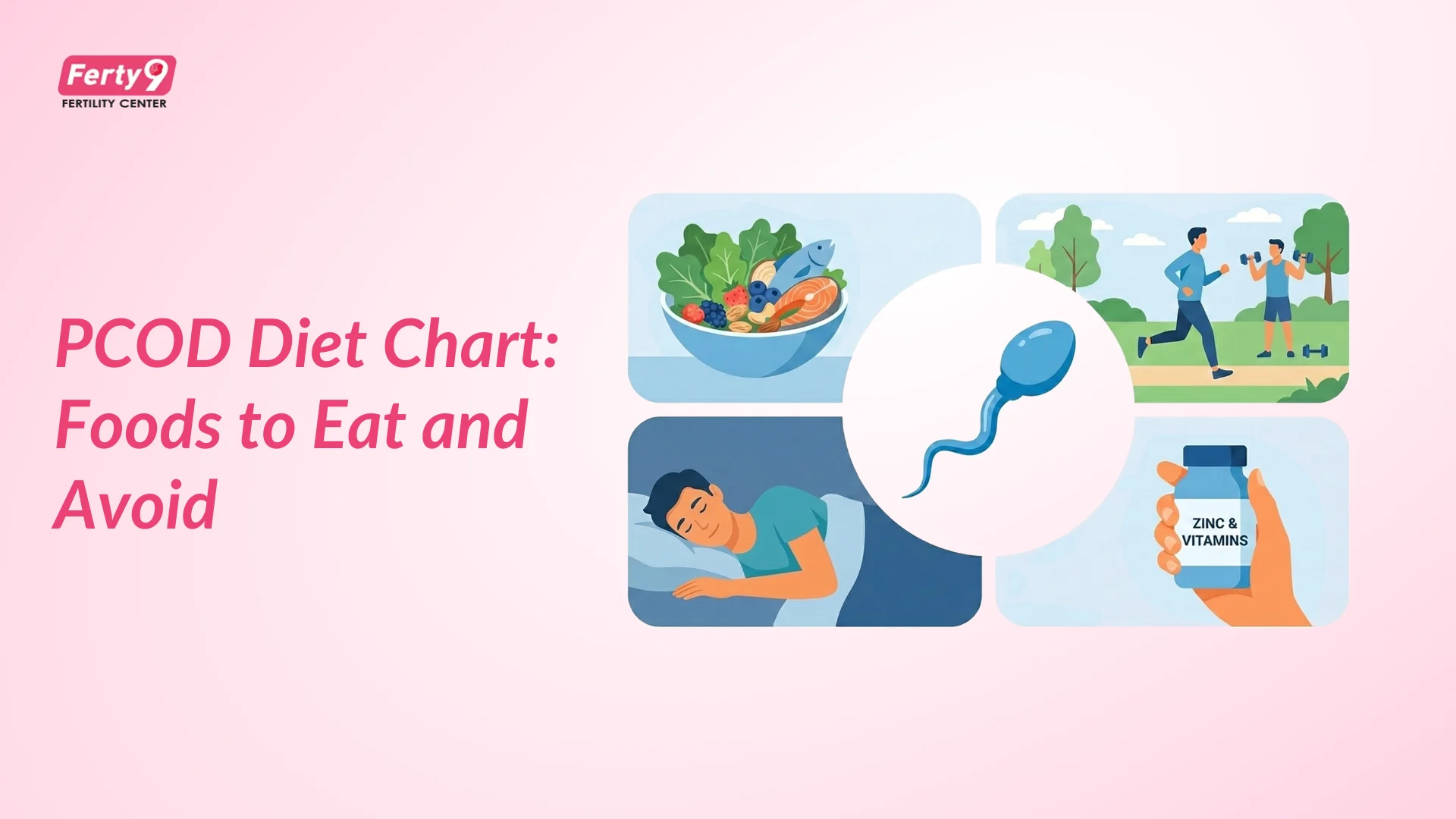
- The 30-Minute Walk: Diet alone isn’t enough. Walking for 30 minutes daily improves insulin sensitivity significantly.
- Sleep: Lack of sleep increases cortisol (stress hormone), which leads to weight gain. Aim for 7-8 hours.
- Hydration: Drink 3 liters of water. Sometimes thirst is confused with hunger.
Summary
PCOD is a journey, not a sprint. You don’t have to change everything overnight. Start by removing sugar and adding more protein to your breakfast. Small changes lead to big hormonal improvements. Struggling with weight gain or irregular periods? Sometimes diet needs medical support. Book a consultation with Ferty9 Fertility Center to get a personalized treatment plan combined with expert dietary guidance.