When considering IVF, one of the first questions couples ask is, “What are my chances of success?”
IVF success rates provide a general estimate, but your actual chances depend on factors like your age, fertility condition, and how your body responds to treatment. At Ferty9, every case is carefully evaluated to create a personalised treatment plan that improves your chances at each stage. With advanced IVF labs and experienced specialists across Andhra Pradesh and Telangana, the focus is on delivering the best possible outcome with clear guidance and realistic expectations.
What is IVF Success Rate?
IVF success rate refers to the chance of achieving pregnancy in one treatment cycle. It may be measured as pregnancy rate or live birth rate, but for most patients, it simply means the likelihood of having a baby through IVF. IVF is not always successful in one attempt. While some patients conceive in the first cycle, others may need multiple cycles depending on their age and fertility condition. At Ferty9, IVF is planned as a step-by-step process, where each stage from ovarian stimulation and egg retrieval to fertilisation and embryo transfer is carefully managed to maximise your chances of success.
Dr. G Poornima explaining about IVF Treatment Success Rate in Telugu
IVF Success Rate in India
In India, IVF success rates typically range between 30% to 55% per cycle, depending on factors like age, fertility condition, and the treatment approach used.
IVF Success Rate in Andhra Pradesh and Telangana
In Andhra Pradesh and Telangana, including cities like Hyderabad, Vijayawada, Visakhapatnam, and Guntur, success rates are comparable to leading centres in India. This is due to advanced lab facilities, experienced fertility specialists, and the use of modern IVF techniques. Patients can access high-quality IVF treatment locally without compromising on outcomes.
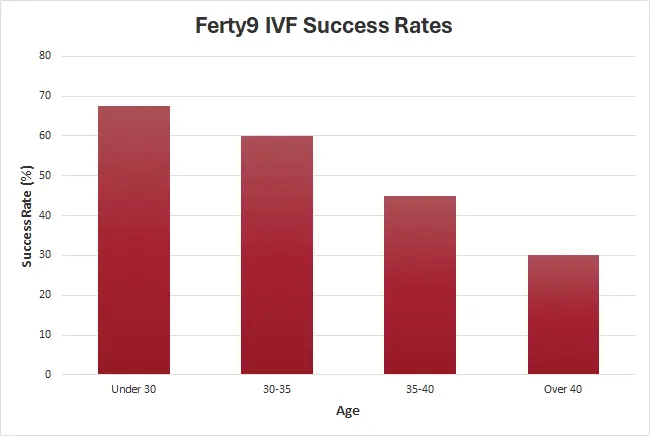
IVF Success Rates by Age
Age is one of the most important factors affecting IVF success, as egg quality and ovarian reserve naturally decline over time.
Women under 30 years: Highest success rates (around 65% to 70%) due to excellent egg quality and ovarian reserve
30 to 35 years: Strong success rates (around 55% to 65%) with good reproductive potential
35 to 40 years: Moderate success rates (around 40% to 50%) as egg quality begins to decline
40 years and above: Lower success rates (around 25% to 35%) due to reduced egg quality and higher chances of chromosomal abnormalities
Early evaluation and timely treatment planning can significantly improve outcomes across all age groups.
Age-Based Success Rates
IVF Success Rate in First Attempt
The IVF success rate in the first attempt typically ranges between 30% to 50%, depending on factors such as age, embryo quality, and overall reproductive health. While some couples may achieve pregnancy in their first cycle, it is common for IVF to require more than one attempt. Success rates often improve with subsequent cycles due to better protocol adjustments and embryo selection. Consulting an experienced fertility specialist and following a personalised treatment plan can significantly improve first-cycle outcomes.
IVF Success Rate by Number of Embryos Transferred
The number of embryos transferred can affect IVF success, but quality is more important than quantity. Transferring healthy, high-quality embryos gives better chances of implantation compared to simply increasing the number.
Earlier, multiple embryos were transferred to improve success rates, but this also increased the risk of multiple pregnancies. Today, the focus is on transferring fewer, high-quality embryos, especially at the blastocyst stage, to ensure better outcomes and safer pregnancies. At Ferty9, embryo transfer decisions are always based on individual clinical assessment.
Frozen Embryo Transfer (FET) Success Rate
Frozen embryo transfer (FET) success rates generally range from 40% to 60% per transfer, depending on embryo quality, uterine receptivity, and overall health conditions. In many cases, FET cycles can offer comparable or even better outcomes than fresh transfers, as the body gets more time to prepare for implantation. Advances in cryopreservation techniques have significantly improved embryo survival and success rates in recent years.
Cumulative IVF Success Rate (Multiple Cycles)
IVF success can improve over multiple cycles. While one cycle may not always result in pregnancy, continuing treatment can increase the overall chances of success over time. Many couples achieve pregnancy within 1–3 IVF cycles, with cumulative success rates increasing significantly across attempts, reaching around 80–85% after three cycles in younger women.
Each cycle also provides valuable insights into how the body responds, including egg development, embryo quality, and implantation patterns. This helps doctors adjust and optimise the treatment plan, improving the likelihood of success in subsequent cycles.
Donor Egg IVF Success Rate at Ferty9
Donor egg IVF is recommended when egg quality is significantly reduced. In this approach, eggs from young, healthy donors are used, which can improve the chances of successful fertilisation and pregnancy.
Women with PCOS often have a good number of eggs, but ovulation may be irregular. With the right stimulation and monitoring, IVF outcomes are usually favourable.
IVF bypasses the fallopian tubes completely, making it a very effective treatment option in such cases.
Advanced Maternal Age (35+)
Declines with age
Egg quality reduces with age, which impacts embryo quality. Early treatment planning can help improve chances.
Unexplained Infertility
Moderate to good
When no clear cause is identified, IVF helps by controlling and optimising each step of fertilisation and implantation.
Repeated IVF Failure
Varies, needs evaluation
Success depends on identifying underlying issues like embryo quality, uterine factors, or genetics, and adjusting the treatment plan accordingly.
Key Factors Affecting IVF Success Rate
IVF success depends on multiple factors working together. Here’s what matters most:
1. Egg Quality & Ovarian Reserve: Good egg quality is one of the most important factors. With increasing age, both the number and quality of eggs decline, which can affect fertilisation and embryo development.
2. Sperm Quality: Sperm health is equally important. Factors like count, movement, and structure influence how well fertilisation happens.
3. Uterine Health & Endometrial Lining: For implantation to occur, the uterus needs to be healthy and the lining should be well-prepared to support the embryo.
4. Hormonal Balance: Hormones control every stage of the IVF cycle. Proper balance helps in egg development, ovulation, and successful implantation.
5. Underlying Medical Conditions: Conditions such as PCOS, endometriosis, fibroids, or thyroid issues can impact IVF outcomes and may require proper management before treatment.
6. Lifestyle Factors: Simple lifestyle changes can make a difference. Maintaining a healthy weight, managing stress, and avoiding smoking or alcohol can improve outcomes.
7. IVF Lab & Clinical Expertise: The quality of the IVF lab and the experience of the medical team play a key role in embryo development and overall success rates.
How to Improve Your IVF Success Rate?
While some factors cannot be changed, there are several steps that can help improve IVF outcomes and success:
Timely and proper treatment planning: Starting treatment at the right time and following a structured plan can improve overall outcomes.
Following medical advice during the cycle: Adhering to medications, injections, and instructions is essential for the success of each stage.
Maintaining a healthy lifestyle: A balanced diet, regular activity, and proper sleep support better reproductive health.
Managing stress levels: Lower stress can positively influence hormonal balance and overall well-being during treatment.
Avoiding smoking and alcohol: These habits can negatively affect egg and sperm quality, reducing success chances.
Choosing a well-equipped IVF centre with experienced specialists and advanced lab support: The quality of care, technology, and expertise plays a key role in improving outcomes.
At Ferty9, our Infertility treatment plans are carefully customised to optimise results based on your specific health condition, ensuring personalised care at every step.
Dr. Sruthi explaining about how to improve IVF Success Rates in Telugu
Why Choose Ferty9 For Better IVF Success Rates?
Ferty9 combines experienced fertility specialists, advanced technology, and patient-focused care to improve IVF outcomes.
Expert Specialists: Skilled team managing simple to complex fertility cases with personalised care
Advanced IVF Technology: Modern labs with systems like the RI Witness IVF Tracking System for accuracy and safety
Personalised Treatment: Detailed evaluation and customised plans for better results
Continuous Monitoring: Careful tracking and cycle optimisation at every stage
Safety & Ethical Practices: Transparent, responsible, and patient-first approach
Compassionate & Affordable Care: Emotional support with cost-effective treatment options
With centres across Andhra Pradesh and Telangana, Ferty9 makes advanced fertility care accessible and convenient.
Common Questions About IVF Success Rate
Is IVF 100% Successful?
IVF is not 100% successful, and success rates vary depending on multiple factors such as age, fertility condition, and treatment quality. While IVF has helped millions of couples conceive, no fertility treatment can guarantee pregnancy in every case. However, with advanced techniques, personalised protocols, and multiple cycles, the overall chances of success can improve significantly.
IVF Success Rate at Age 40
At the age of 40, IVF success rates typically range between 20% to 30% per cycle, as both egg quality and quantity decline with age. However, success is still possible with the right medical approach, and options such as donor eggs or advanced fertility techniques can further improve the chances of pregnancy.
How to Improve IVF Success Rate
Improving IVF success rates involves a combination of medical expertise and lifestyle factors. Maintaining a healthy weight, reducing stress, avoiding smoking and alcohol, and following a balanced diet can positively impact fertility. Additionally, choosing a well-equipped fertility centre, adhering to prescribed medications, and attending regular follow-ups play a crucial role in achieving better IVF outcomes.
Ready to Understand Your IVF Chances?
IVF success rates are important, but they need to be understood in the context of your individual condition. A detailed consultation helps assess your fertility profile and define the most suitable treatment plan.
*Disclaimer The information on this website, including IVF success rates, costs, and treatment details, is for general informational purposes only. Success rates and costs are indicative and may vary based on individual factors such as age, medical condition, diagnosis, treatment type, and centre location, and do not guarantee outcomes or final charges. All treatments and recommendations are based on individual medical evaluation, and this content should not be considered medical advice. For accurate and personalised information, please consult a fertility specialist at Ferty9.
Have More Questions About IVF Success Rates? Ask Our Experts









 No need to worry, your data is 100% safe with us!