



Those desiring to have a child if childless, need not worry about IVF costs in Hyderabad hospitals. They can also visit Test tube baby centers in Hyderabad for all the required information.
- IVF and Test Tube Baby Are the Same – There is no difference between IVF and test tube baby treatment. “Test tube baby” is a common term used to describe a baby conceived through IVF.
- IVF Happens Outside the Body – In IVF, eggs and sperm are fertilized in a laboratory, and the resulting embryo is then transferred into the uterus for pregnancy.
- IVF Helps Treat Many Fertility Problems – IVF is commonly recommended for conditions such as blocked fallopian tubes, male infertility, ovulation disorders, unexplained infertility, and other reproductive challenges.
- Treatment Is Personalized – Every IVF treatment plan is based on factors such as age, fertility diagnosis, medical history, and reproductive goals to improve the chances of success.
- Expert Care Improves Outcomes – Consulting a fertility specialist helps you understand the IVF process, choose the right treatment plan, and receive care tailored to your individual needs.
IVF vs. Test Tube Baby: Are They Really Different?
There is no difference between IVF and test-tube babies as they both are used interchangeably to describe the same treatment, which is in vitro fertilization. IVF cost in Hyderabad hospitals will not deter a person from opting for it.
Refinements in laboratory technological processes cum clinical practice have allowed IVF and Test tube babies to be evolved into a medical procedure that is efficient, safe, readily accessible, and also relatively affordable. Test tube baby centers in Hyderabad do conduct such procedures well.
A test tube baby gets its roots from the fact that sperm, as well as the eggs, are combined and then kept to form an embryo (fertilized) in a test tube. In simple terms, it is the process whereby a baby is rather conceived artificially. IVF and test tube babies have the same process since they are rather utilizing the same procedures for conception.
Even in IVF Centers, a test tube baby does get its roots from the fact that sperms and eggs are rather combined and kept to form an embryo (fertilized) in a test tube. It is thus the process where a baby is conceived artificially.
Some couples are rather unable to conceive a child due to infertility issues or a blocked fallopian tube in the case of women. As medical science has kept on advancing, new methods were discovered to develop an egg artificially in a glass container.
Also read: How Exercise Affects Fertility and IVF Outcomes
What is a test tube baby?
A test-tube baby happens to be a baby who is conceived by IVF. The fertilization is carried out outside the uterus in a glass vessel by combining a female egg with sperm.
IVF, as well as test-tube babies, are the same with no difference at all. It is just that doctors do make use of the term IVF instead of test-tube babies.
Step-by-Step IVF (Test Tube Baby) Treatment Process
Conceiving a baby via a test takes quite some time. To start with, the doctor has to check the ovarian reserve and other tests also. A USG is performed to check the condition of the ovaries as well as the other reproductive organs. After discussing all the legal as well as emotional issues, the process begins.
- Stimulation
As IVF requires multiple eggs, fertility drugs are administered to the woman in the initial stage. The patient will be under the doctor’s observation with regular blood tests as well as USGS.
- Egg Retrieval
This happens to be a surgical procedure where a needle will be inserted via a woman’s vagina into the ovaries, and an egg containing the follicle shall be removed by suction. This procedure is also known as follicular aspiration.
- Insemination
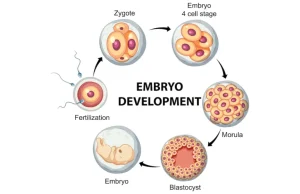
In this type of procedure, the sperm from the semen sample is mixed with the egg in a petri dish. The sperm then fertilize the eggs overnight.
- Culture of the embryo
This glass dish does need to be kept under a doctor’s supervision in a laboratory and will then be monitored regularly to check whether the egg is being divided or developing. In this stage, the embryos do undergo genetic testing.
- Transfer
Three to five days after fertilization, the embryo is big enough, and it is then implanted into a woman’s uterus by making use of a catheter. Then the later process of pregnancy takes place in the embryo, and it takes 6-10 days.
Success Rates: IVF vs. Test Tube Baby Procedures
Since “IVF” and “test tube baby” refer to the same medical procedure, their success rates are identical and depend on biological factors rather than the name used. The most critical factor is the woman’s age, as younger patients generally have higher egg quality and better outcomes. Other key elements include the specific cause of infertility, lifestyle habits like BMI or smoking, and the quality of the embryos developed in the lab. At Ferty9, we use advanced technology and personalized care to optimize these factors and provide the highest possible chance of a successful pregnancy.
Are there any Risks or Complications?
Doctors consider the IVF treatment rather safe, and there are good chances of egg fertilization. There can be complications like:
- Miscarriage
- Multiple pregnancies
- An ectopic pregnancy whereby the egg is implanted outside the woman’s uterus.
- Some patients tend to develop Ovarian Hyperstimulation Syndrome (OHSS), and this means excess fluid fills the abdomen as well as the chest.
- Bleeding
Final Thoughts
IVF and ‘test tube baby’ are interchangeable terms for the same medical procedure where conception happens in a specialized lab. Modern refinements have made this treatment more efficient and accessible than ever before. If you have further questions about the process or the costs involved, consulting with a fertility expert is the best way to get personalized answers for your path to parenthood.




















 No need to worry, your data is 100% safe with us!