


The best fertility center in Hyderabad can do the needful for childless couples keen on having a healthy baby. Fertility centers in Hyderabad operate professionally and provide excellent services.
Learn more about the Period Calculator in our detailed guide.
Progesterone is an endogenous steroid and progestogen sex hormone that occurs in the menstrual cycle, pregnancy, and embryogenesis of humans as well as other species. It does belong to a group of steroid hormones referred to as the progestogens and happens to be a major progestogen in one’s body.
- How Progesterone Supports Pregnancy – Progesterone prepares the uterus for implantation and helps maintain early pregnancy by supporting the uterine lining.
- Who May Benefit – Progesterone may be recommended for women with low progesterone levels, recurrent miscarriages, or those undergoing fertility treatments like IVF.
- It Does Not Help Everyone – Progesterone is most effective when a hormone deficiency is present and should only be used under medical guidance.
- Available in Different Forms – Progesterone can be prescribed as vaginal tablets, gels, injections, or oral medicines based on individual treatment needs.
- Medical Evaluation Is Important – A fertility specialist can determine if progesterone therapy is needed based on symptoms, hormone tests, and fertility history.
Progesterone has indeed a variety of important functions in one’s body. It also happens to be a crucial metabolic intermediate in the production of other endogenous steroids, which include the sex hormones and corticosteroids, and also play an important role in brain function as a neurosteroid.
It is a good idea to visit the best fertility center in Hyderabad to clarify doubts about pregnancy in case of being childless.
Progesterone is a pregnancy hormone, when the level is increased enhances one’s chances of getting pregnant and also having a successful pregnancy. Some doctors also do prescribe progesterone in infertility treatments.
If couples are trying to conceive, then they would like to know the chances of getting pregnant. Progesterone plays a critical role in pregnancy.
Progesterone happens to be a female reproductive hormone required for supporting implantation as well as pregnancy, and for this reason, it is also known as the “pregnancy hormone.” Along with estrogen, it happens to be one of the main hormones that help regulate the cycles.
During the first half of one’s cycle — the follicular phase — progesterone happens to be low, while estrogen is elevated. Estrogen does help thicken the uterine lining in preparation for pregnancy.
Then, after ovulation is over, the second phase of the cycle — also referred to as the luteal phase — begins. During this phase, the follicle from which the egg got released does turn into the corpus luteum.
The corpus luteum does start producing progesterone, which makes the thickened uterine lining rather “sticky” for an embryo to be comfortably implanted.
The corpus luteum happens to be a temporary structure, which will indeed stop secreting progesterone and also disintegrate right before one’s next period if pregnancy does not occur.
This does cause one’s uterus to shed its lining, which means starting one’s period.
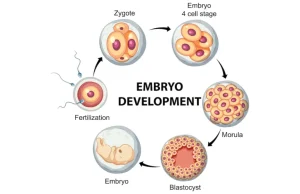
In case the egg gets fertilized by sperm and it gets implanted into the uterine lining, the corpus luteum will then continue secreting progesterone to help sustain the pregnancy.
It continues to do so until the end of the first trimester when the placenta then takes over.
During pregnancy, progesterone ensures the uterus and fetus get the nutrients and oxygen required. It also prevents premature contractions.
Complete details can be had at fertility centers in Hyderabad.
WHAT HAPPENS IF MY PROGESTERONE IS LOW?
Lack of enough progesterone would mean that the uterine lining may not be prepared or “sticky” enough to receive an embryo.
The uterine lining happens to be receptive as long as enough progesterone happens to be present.
Also If the progesterone level rises to an optimal level but then drops too soon, this can lead to a chemical pregnancy or rather as per the recent study, early miscarriage. Why so? This is so, as the uterine lining might be receptive for only a short period of time, thus giving the embryo a chance to implant, but without progesterone production, the pregnancy cannot really be sustained.
Low progesterone may lead to other symptoms such as a short luteal phase, premenstrual syndrome (PMS), menstrual cramps, or spotting before one’s period.
Some women, particularly, those with PCOS, may rather experience anovulation (lack of ovulation) which does lead to no progesterone production.
In case no egg is released then there is no corpus luteum to produce progesterone. If doubts about not ovulating or producing progesterone, then it is better to consult the doctor.
SYMPTOMS OF LOW PROGESTERONE
- Irregular periods
- Severe PMS
- Low libido
- The short luteal phase, usually under 10-11 days
- Anxiety
- Sore breasts
- Infertility
- Recurrent early pregnancy loss











 No need to worry, your data is 100% safe with us!