 No need to worry, your data is 100% safe with us!


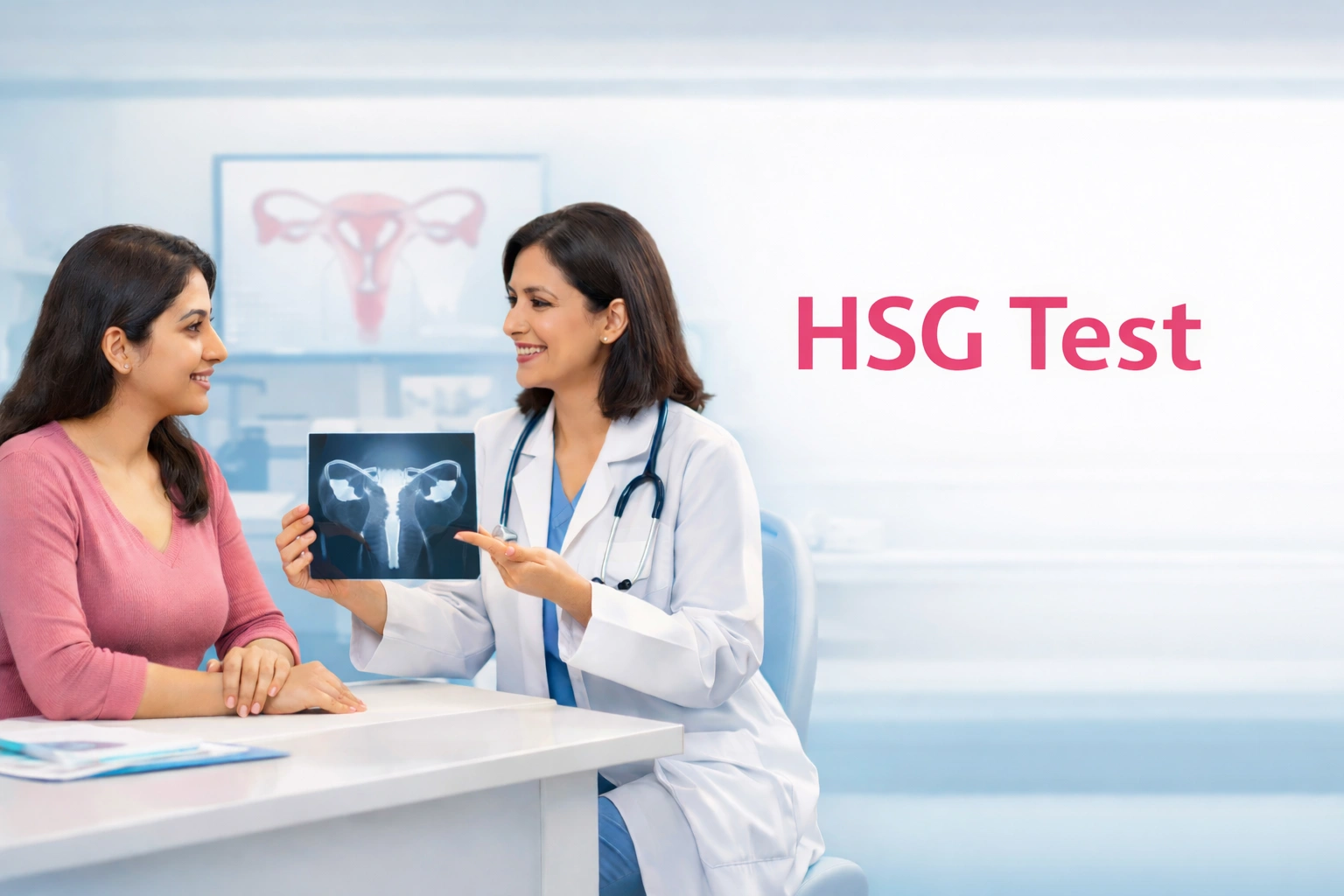
HSG Test
What is an HSG (Hysterosalpingography) Test?
The HSG (Hysterosalpingography) test is a special type of X-ray used to get a clear picture of the inside of your uterus and to check if your fallopian tubes are open. Think of it like creating a roadmap of your reproductive system. We use a special, safe dye to highlight the path, allowing our doctors to see if there are any roadblocks that could be preventing pregnancy.
It is a vital and common diagnostic procedure for women who are facing challenges with conception.
Why is an HSG Test Required?
The HSG test is a cornerstone of infertility diagnosis. Our specialists at Ferty9 recommend this test primarily to investigate two of the most important factors in female fertility:
- The health of the Fallopian Tubes: Blocked fallopian tubes are a very common cause of infertility. The HSG test is the best way to determine if the tubes are open and clear for the egg and sperm to meet.
- The health of the Uterus: The test allows us to examine the shape and structure of the inside of your uterus to check for any abnormalities that might interfere with an embryo implanting.
Reasons for Performing Hysterosalpingography Test
Your doctor may recommend an HSG test to diagnose or investigate several conditions, including:
- Blocked Fallopian Tubes: Often caused by past infections (like PID), endometriosis, or previous surgeries.
- Uterine Abnormalities: To detect issues like uterine fibroids, polyps, or scar tissue (Asherman’s syndrome).
- Congenital Uterine Shape Issues: To identify an unusually shaped uterus from birth, such as a septate or bicornuate uterus.
- Recurrent Miscarriages: To see if a structural problem in the uterus could be the cause of repeated pregnancy loss.
- Post-Surgery Check: To confirm the success of a tubal ligation (family planning surgery) or to assess the tubes before a reversal procedure.
How to Prepare Before the Test
Preparation for an HSG test is simple.
- Timing is Key: The test must be performed after your period has ended but before you ovulate. This is typically between Day 6 and Day 10 of your menstrual cycle (with Day 1 being the first day of your period).
- Inform Your Doctor: Please tell your doctor if you have any allergies, especially to iodine or X-ray contrast dye, or if you have an active pelvic infection.
- Pregnancy Test: We will ensure you are not pregnant before the procedure.
- Pain Relief: Your doctor may advise you to take a common over-the-counter pain reliever (like ibuprofen) about an hour before the test to minimize any discomfort.
- Antibiotics: In some cases, your doctor may prescribe a short course of antibiotics as a precaution against infection.
Procedure of HSG Test (How is Hysterosalpingography Performed?)
The entire HSG procedure is quick, typically taking only 10 to 15 minutes. Our team will ensure you are as comfortable as possible throughout.
- Positioning: You will lie on your back on an X-ray table with your feet raised, similar to a regular gynecological exam.
- Speculum Insertion: The doctor will gently insert a speculum into your vagina to get a clear view of your cervix.
- Catheter Placement: A very thin, soft tube (catheter) is then carefully placed into the opening of your cervix.
- Dye Injection: A special, safe liquid called contrast dye is slowly and gently injected through the catheter.
- X-ray Images: As the dye fills your uterus and moves into your fallopian tubes, the doctor will take a series of X-ray images. The path of the dye shows the shape of your uterus and whether your tubes are open. You may be asked to change positions slightly to get the best pictures.
Is Sedation Necessary for HSG Test?
No, sedation is generally not necessary for an HSG test. Most women experience some mild to moderate cramping, similar to period pain, especially when the dye is injected. This sensation is temporary and usually subsides as soon as the test is over. Taking a painkiller before the procedure helps significantly in managing this discomfort.
What Do the Test Results Indicate?
Your Ferty9 specialist will discuss the results with you right after the procedure.
- Normal Result: If the dye flows freely through the uterus and spills out of the ends of both fallopian tubes, it means your tubes are open. This is a positive sign for natural conception.
- Abnormal Result:
- If the dye stops and does not spill out, it indicates a blockage in one or both fallopian tubes.
- If the X-ray shows an irregular shape inside the uterus, it can point to the presence of fibroids, polyps, or scar tissue.
These results are crucial for planning your next steps, whether it’s further treatment for the tubes or considering options like IVF.
Risk Factors and Side Effects
The HSG test is a very safe procedure with minimal risks.
- Common Side Effects: The most common side effects are temporary and mild, including cramping during the test and some light spotting or a sticky, watery discharge for a day or two afterward.
- Rare Risks: There is a very small risk (less than 1%) of developing a pelvic infection or having an allergic reaction to the contrast dye. We take all necessary precautions to minimize these risks.
What are the Benefits of an HSG Test?
- Accurate Diagnosis: It provides invaluable information about your reproductive health that cannot be obtained from a regular ultrasound.
- Guides Treatment: The results directly help your doctor create the most effective and personalized fertility treatment plan for you.
- Therapeutic Benefit: Interestingly, some women get pregnant naturally in the months following an HSG test. It is believed that the pressure of the dye can sometimes help flush out minor blockages or mucus plugs in the tubes.
Cost of HSG Test in India
We believe in transparent and affordable care. In India, the cost of an HSG test typically ranges from ₹3,000 to ₹8,000, depending on the city and the facility. At Ferty9, we will provide you with a clear cost breakdown before your HSG procedure.
Why Choose Ferty9 for HSG Test?
- Expertise and Precision: Our experienced fertility specialists and radiologists perform the HSG test with the utmost care and precision, ensuring the clearest results with minimal discomfort.
- Advanced Technology: We use modern, low-radiation digital X-ray equipment for superior image quality and patient safety.
- Patient Comfort: Your comfort is our priority. We provide a supportive and reassuring environment and ensure all your questions are answered.
- Integrated Care: An HSG test at Ferty9 is part of a comprehensive fertility evaluation. We don’t just give you results; we interpret them in the context of your overall health and use them to create a successful path to parenthood.

- Normal Result: The dye flows freely through the uterus and spills out of both fallopian tubes, meaning the tubes are open.
- Abnormal Result: The dye is blocked from spilling out, indicating a tubal blockage. The test can also reveal issues like fibroids or polyps inside the uterus.
You will get your results very quickly. Your fertility specialist will typically discuss the findings with you immediately after the procedure is completed.
Interestingly, yes. Some women become pregnant naturally in the months following an HSG test. It is believed that the pressure of the dye can sometimes help flush out minor blockages or mucus plugs in the fallopian tubes, increasing the chances of conception.
The HSG test is very safe. The most common side effects are mild and temporary, including cramping and light spotting for a day or two. There is a very small risk of infection or an allergic reaction to the dye.
The test must be done at a specific time in your menstrual cycle: after your period has finished but before you ovulate. This is usually between Day 6 and Day 10 of your cycle.
Preparation is simple. You should inform your doctor of any allergies (especially to iodine), ensure you are not pregnant, and take any prescribed painkillers or antibiotics as advised.
Sedation is not usually needed for an HSG test. Most women experience mild to moderate cramping, similar to period pain, when the dye is injected. This discomfort is temporary and usually ends right after the procedure. Taking a simple painkiller beforehand can help.
An HSG (Hysterosalpingography) test is a special X-ray procedure that uses a safe dye to get a clear picture of the inside of your uterus and fallopian tubes. It helps doctors see if your fallopian tubes are open.