 No need to worry, your data is 100% safe with us!



Fertility Tests
At Ferty9, we know that dealing with fertility issues can be discouraging, yet you are not alone. Our extensive fertility tests for men and women assist in identifying possible reasons impacting conception, facilitating customized infertility treatment plans. Through cutting-edge diagnostics and professional guidance by our Fertility Doctors, Ferty9 equips you with the insights and help necessary for your path to becoming a parent.



Wondering Which Test will be Helpful in your Current Condition? Talk to our FERTILITY SPECIALISTS
Contact Us
Ferty9 utilizes a variety of revolutionary diagnostic tests to pinpoint the cause of infertility and guide treatment recommendations. These tests may include:
- Hormonal Evaluations: To check hormone levels and ovarian function.
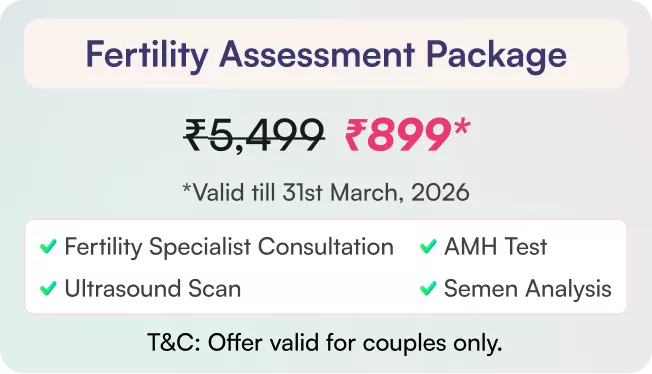
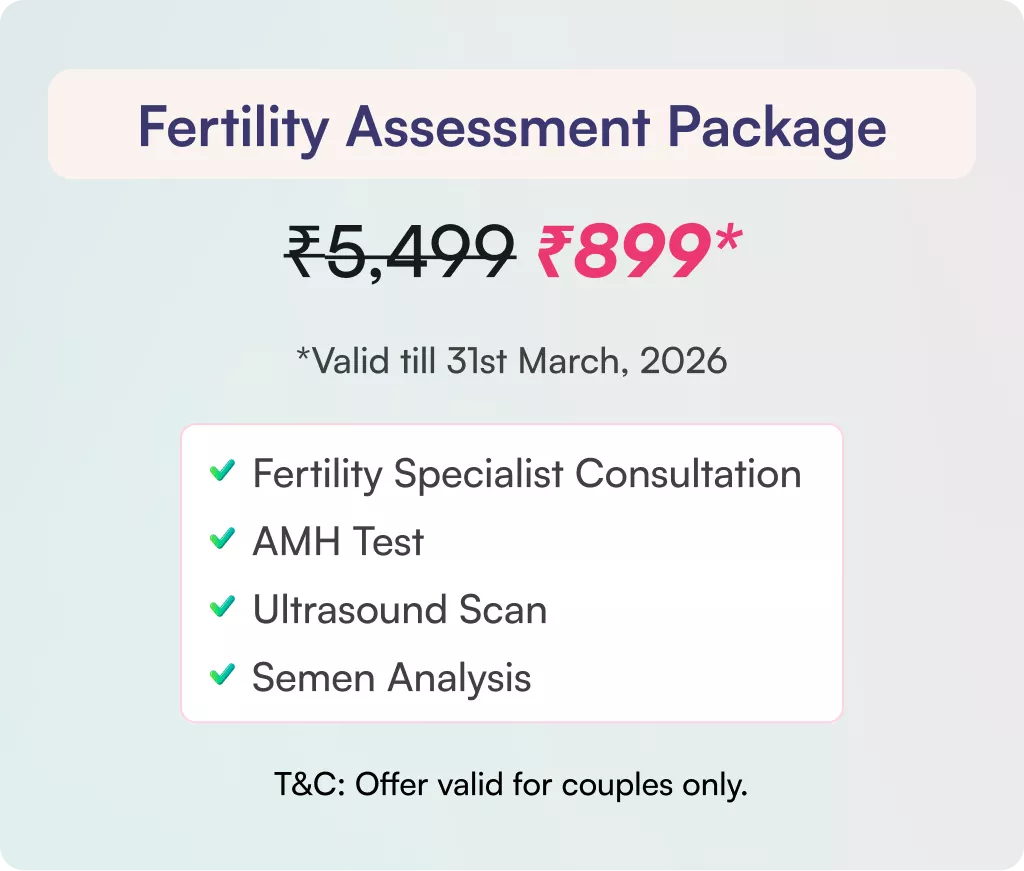
- Semen Analysis: To assess sperm count and quality.
- Ultrasound Scans: To examine the reproductive organs.
- Hysterosalpingography (HSG): To check the condition of the fallopian tubes and uterus.
At Ferty9, whether you are getting PGT-A (Preimplantation Genetic Testing for Aneuploidies), PGT-M (for monogenic/single gene disorders), or PGT-SR (for structural rearrangements), the treatment charges depend on the number of embryos to be scanned.
Absolutely! Ferty9 offers advanced genetic tests like Preimplantation Genetic Testing (PGT) to analyze embryos for chromosomal abnormalities. This allows for selecting healthy embryos with the highest chance of successful implantation and a healthy baby. Understanding potential issues early on can promote a smoother, more worry-free pregnancy journey.
Ferty9 Kurnool provides an extensive array of diagnostic tests to assess various fertility concerns. These tests include detailed hormonal assessments, semen analysis, ultrasound scans, and other specialized evaluations. Each test is carefully selected to pinpoint the underlying causes of infertility, ensuring the best treatment plans and positive results.
A standard semen analysis can suggest an infection if a high number of white blood cells are present. However, to confirm an infection, a separate test called a semen culture is required.
No, the semen analysis test is completely painless. The collection process is non-invasive, and the analysis is done in the laboratory.
While some clinics may allow home collection in special cases, it is highly recommended to provide the sample at our Ferty9 centre in Hyderabad. The sample must be analyzed within 60 minutes of collection to ensure accuracy, and our private, comfortable rooms make the process discreet and convenient.
It is recommended to abstain from any sexual activity, including ejaculation, for 2 to 5 days before your test. This ensures the sperm count and quality in your sample are at their optimal level for accurate analysis.
You will get your results very quickly. Your fertility specialist will typically discuss the findings with you immediately after the procedure is completed.
Interestingly, yes. Some women become pregnant naturally in the months following an HSG test. It is believed that the pressure of the dye can sometimes help flush out minor blockages or mucus plugs in the fallopian tubes, increasing the chances of conception.
The test must be done at a specific time in your menstrual cycle: after your period has finished but before you ovulate. This is usually between Day 6 and Day 10 of your cycle.
Preparation is simple. You should inform your doctor of any allergies (especially to iodine), ensure you are not pregnant, and take any prescribed painkillers or antibiotics as advised.
Sedation is not usually needed for an HSG test. Most women experience mild to moderate cramping, similar to period pain, when the dye is injected. This discomfort is temporary and usually ends right after the procedure. Taking a simple painkiller beforehand can help.
An HSG (Hysterosalpingography) test is a special X-ray procedure that uses a safe dye to get a clear picture of the inside of your uterus and fallopian tubes. It helps doctors see if your fallopian tubes are open.
It is not recommended. A home pregnancy test at 7 days is likely to be negative even if you are pregnant because the hCG hormone levels are still too low to be detected in urine.
Early home pregnancy tests are not recommended after IVF. Testing too soon can lead to a false negative because the pregnancy hormone (hCG) might not be high enough to be detected yet. It can also lead to a false positive if you had an hCG “trigger shot,” as the hormone can remain in your system. The most accurate and reliable confirmation is the beta hCG blood test scheduled by your doctor.
Preparation involves comprehensive medical evaluation, following pre-treatment instructions, optimizing general health, and maintaining open communication with the healthcare team throughout the process.
Treatment approaches for pregnancy test one day after implantation bleeding range from lifestyle modifications to advanced medical interventions. The optimal strategy depends on individual diagnosis, severity, and patient preferences discussed with healthcare providers.
Evaluation should be considered when experiencing fertility challenges, irregular symptoms, or concerns about reproductive health. Early consultation with fertility experts helps identify issues and implement timely interventions.
The impact of pregnancy test one day after implantation bleeding on fertility varies by individual factors including age, overall health, and specific medical history. Fertility specialists evaluate each case to optimize treatment protocols and maximize success rates.
Understanding pregnancy test one day after implantation bleeding is important for making informed fertility decisions. This condition/procedure requires comprehensive evaluation by fertility specialists to determine appropriate treatment approaches and expected outcomes based on individual circumstances.
Preparation involves comprehensive medical evaluation, following pre-treatment instructions, optimizing general health, and maintaining open communication with the healthcare team throughout the process.
Treatment approaches for what if a missed period is still a negative pregnancy test range from lifestyle modifications to advanced medical interventions. The optimal strategy depends on individual diagnosis, severity, and patient preferences discussed with healthcare providers.
Evaluation should be considered when experiencing fertility challenges, irregular symptoms, or concerns about reproductive health. Early consultation with fertility experts helps identify issues and implement timely interventions.
The impact of what if a missed period is still a negative pregnancy test on fertility varies by individual factors including age, overall health, and specific medical history. Fertility specialists evaluate each case to optimize treatment protocols and maximize success rates.
Understanding what if a missed period is still a negative pregnancy test is important for making informed fertility decisions. This condition/procedure requires comprehensive evaluation by fertility specialists to determine appropriate treatment approaches and expected outcomes based on individual circumstances.
The impact of pregnancy test after implantation on fertility varies by individual factors including age, overall health, and specific medical history. Fertility specialists evaluate each case to optimize treatment protocols and maximize success rates.
If you are searching for “where to get an AMH test,” look no further. You can easily book your test at any of our Ferty9 locations.
Insurance coverage for fertility tests is not available at Ferty9.
The AMH test cost in India is generally affordable. For the most accurate and current pricing, please contact Ferty9 directly.
At Ferty9, we are committed to providing affordable healthcare. The cost of an AMH test at our Hyderabad center is very competitive. While the exact price can vary slightly based on any ongoing offers or packages, we ensure it is one of the most budget-friendly options available. For the precise and current cost, please call our Hyderabad center directly.
Booking your AMH test at Ferty9 in Hyderabad is simple and convenient. You can:
- Call Us Directly: Speak with our front desk to schedule an appointment at a time that works for you.
- Walk-In: You can visit our Ferty9 Fertility Center in Hyderabad directly. As no prior preparation like fasting is needed, you can get the test done whenever you are ready.
- Online Inquiry: Visit our Ferty9 website and fill out the appointment booking form, and our local team will get in touch with you.
Our center is centrally located in Hyderabad, making it easily accessible for you.
Absolutely. Positive lifestyle changes can significantly improve sperm health. This includes eating a balanced diet, exercising regularly, maintaining a healthy weight, quitting smoking, reducing alcohol consumption, and managing stress.
Yes, infections in the male reproductive tract can negatively affect semen analysis results. They can reduce sperm count and motility (movement) and even cause inflammation that damages sperm. Treating the underlying infection often improves these parameters.
No, the test is not painful at all. The analysis is performed on a semen sample in a lab. The collection process itself is done privately through masturbation and is non-invasive, so there is no physical pain involved.
Yes, it can be very worthwhile. The test provides valuable information about your ovarian reserve, which can help you and your doctor make informed decisions about your fertility, family planning, and potential treatments.
Yes, the AMH test can be done at any time, including during your period. The results are not affected by your menstrual cycle.
No, fasting is not required for an AMH test. You can eat and drink normally before the test.
A major advantage of the AMH test is that it can be done at any time during your menstrual cycle. The hormone levels remain stable, so you don’t need to schedule it for a specific day.
The AMH test is a simple blood test for women that measures the level of Anti-Müllerian Hormone. This hormone level helps to indicate the number of eggs a woman has left, which is known as her ovarian reserve.
A semen analysis test typically assesses several factors: sperm count (number of sperm), sperm motility (movement ability), sperm morphology (shape and structure), semen volume, and pH levels. These parameters provide crucial insights into male fertility potential and help in determining appropriate treatments.
Men trying to conceive with their partner should undergo a semen analysis as part of the initial fertility evaluation. Depending on the results and treatment progress, follow-up tests may be recommended periodically to monitor sperm health and guide fertility strategies.
Sperm washing is the process of isolating the sperm from the seminal fluid and other components of the semen sample, often used in assisted reproductive techniques like IUI. On the other hand, semen analysis is a diagnostic test that evaluates the characteristics of the semen, such as sperm count, motility, and morphology, to assess male fertility.