


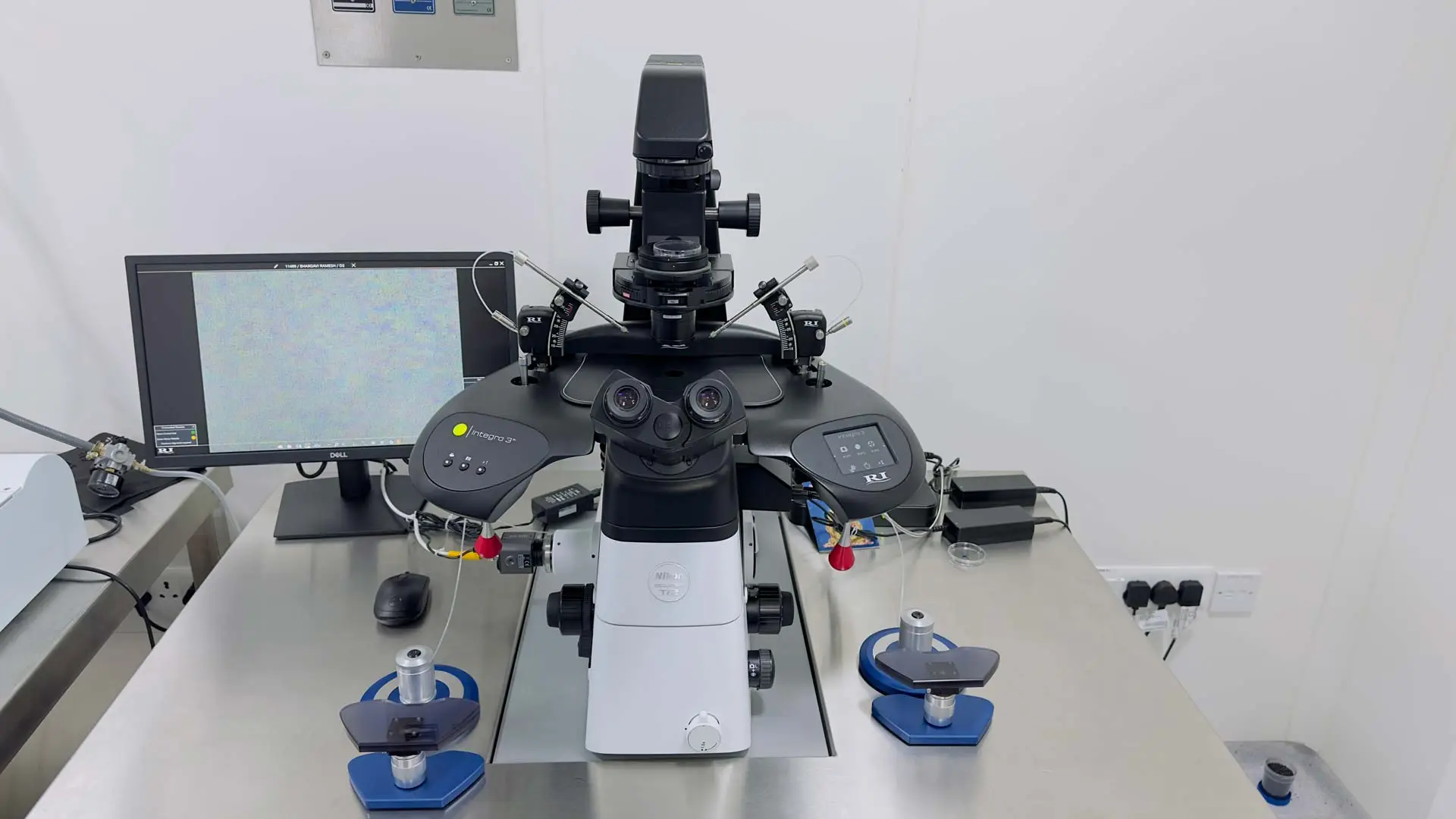
ICSI Success Rate
Success Rates of ICSI Treatment
When considering Intracytoplasmic Sperm Injection (ICSI), the most common question patients ask is, “How successful is it?”
It is important to understand that “success” in ICSI is measured in two different ways:
- Fertilization Rate: How many eggs successfully become embryos.
- Pregnancy Rate: How many of those embryos result in a positive pregnancy test and a healthy baby.
At Ferty9, we believe in giving you the complete picture so you can approach your treatment with confidence and realistic expectations. Our results consistently aim for the higher end of these averages (often exceeding 50% in younger patients) due to specific factors in our lab.
Here is a breakdown of why Ferty9 is positioned to beat the average:
- Experienced Embryologists: ICSI is a manual skill. The success depends entirely on the steady hand and experience of the person injecting the sperm. Our senior embryologists have performed thousands of these delicate procedures.
- Advanced Sperm Selection: We do not just pick any moving sperm. We use advanced selection methods to find sperm with the best structure (morphology), which directly impacts fertilization rates.
- Blastocyst Transfer: We typically culture embryos to Day 5 (Blastocyst stage) before transferring. Day 5 embryos have a significantly higher implantation potential than Day 3 embryos, pushing our success rates higher than clinics that rely on Day 3 transfers.
1. The Fertilization Rate (Creating the Embryo)
This is where ICSI truly shines. Because the sperm is injected directly into the egg, bypassing natural barriers, the fertilization rate is exceptionally high.
- Average Fertilization Rate: 70% to 80%.
- What this means: If we collect 10 healthy eggs, typically 7 to 8 of them will successfully fertilize and become embryos.
- Comparison: This is significantly higher than standard IVF for couples with male factor infertility, where fertilization might fail completely without the help of ICSI.
2. The Clinical Pregnancy Rate (Conceiving a Baby)
Once the embryos are created, they are transferred to the uterus. From this point, the success rate depends on whether the embryo implants and grows. The success rates for ICSI are generally comparable to, or slightly higher than, standard IVF.
Average Success Rates by Age (Per Cycle):
| Age of Female Partner | Estimated Pregnancy Rate |
| Under 35 years | 40% – 50% |
| 35 – 37 years | 30% – 40% |
| 38 – 40 years | 20% – 30% |
| Over 40 years | 10% – 15% |
Note: These are general estimates based on Indian fertility data. Your personal success depends on your unique medical history.
Factors That Influence Your ICSI Success
While ICSI solves the problem of sperm entering the egg, the final outcome depends on several critical factors:
- Age of the Female Partner
This is the single most important factor. Even with the best sperm selection:
- Younger women (<35): Generally produce eggs with high energy and healthy DNA, leading to better embryos and higher pregnancy rates.
- Older women (>37): The eggs may be more fragile. Even if injected successfully, older eggs are less likely to develop into healthy embryos or implant in the uterus.
- Egg Quality
For ICSI to work, the egg must be strong enough to survive the micro-injection.
- Maturity: Only mature eggs (M2 stage) can be injected.
- Quality: Poor quality eggs may not survive the injection process or may stop developing after a few days in the incubator.
- Sperm DNA Integrity (DNA Fragmentation)
This is a crucial “hidden” factor. ICSI selects the best-looking sperm, but it cannot always see the DNA inside.
- If the sperm has high DNA Fragmentation (damage to the genetic code), the egg may fertilize, but the embryo might stop growing or result in an early miscarriage.
- If your doctor suspects this, additional sperm selection techniques (like IMSI or MACS) may be recommended to improve success.
- Uterine Health (The Soil)
Even a perfect embryo needs a healthy place to grow. Factors that can lower success rates include:
- Thin uterine lining (Endometrium < 7mm).
- Polyps or fibroids inside the uterus.
- Infections in the uterus.
- Embryologist Expertise
Unlike standard IVF, which relies partly on nature, ICSI is a highly technical, manual procedure. The skill and steady hand of the Embryologist performing the injection are vital. A highly experienced embryologist ensures the egg is not damaged during the delicate injection process, directly boosting survival and fertilization rates.
Does ICSI Fix All Male Infertility Issues?
ICSI is a powerful tool, but it is not a magic wand.
- It Does: Successfully treat low sperm count, poor motility, and abnormal shape. It allows men with Azoospermia (using surgically retrieved sperm) to become fathers.
- It Does Not: Automatically fix genetic issues within the sperm or egg. If the sperm carries a genetic defect, it can still pass to the embryo.
Cumulative Success Rates
Just like other fertility treatments, persistence pays off. If the first cycle is not successful, the likelihood of pregnancy often increases with subsequent attempts, especially if there are frozen embryos available from the first cycle.
Many couples achieve success within 2 to 3 cycles of ICSI.
Summary
ICSI offers the highest chance of fertilization for couples facing male infertility. While age and egg quality remain the biggest drivers of the final result, ICSI removes the most difficult barrier—getting the sperm into the egg—opening the door to parenthood for thousands of couples who otherwise would not have had a chance.
This page was last updated on :
9 Jan 2026

 No need to worry, your data is 100% safe with us!
Book an Appointment
✔ No need to worry, your data is 100% safe with us!